Quick Summary
The best order management software (OMS) for mid-market eCommerce and B2B handles your messiest orders without workarounds. For most growing merchants, that's Brightpearl if you want orders and accounting in one ready-made system. Pick SkuNexus if you run your own fulfillment and want routing built around your process, or NetSuite if you're moving finance, inventory and orders onto one ERP.
What Your Order System Has to Handle as You Grow
If your order system doesn't fit how you sell, it gets expensive fast, even for big companies like Tennant Company. In November 2025, it moved its North American business onto a new ERP system. Afterward, ERP constraints limited its ability to fulfill orders. The company estimates its ERP problems cut fourth-quarter adjusted EBITDA, a measure of operating profit, by $22 million.
Lamb Weston's new ERP cut an estimated $135 million from fiscal 2024 net sales. Its quarterly filing says higher-margin mixed-product loads took a bigger hit than single-product orders. Complex orders are often where your margin is, too.
For a mid-market merchant, the warning signs are smaller but familiar. Routing calls live in one person's head, and your store, inventory app and shipping tool each show different numbers because nothing talks to each other. Add a second warehouse or a dropship vendor, and the spreadsheet holding it all together breaks.
We compared five order management tools across three types, focusing on how they route orders, handle B2B, and who owns the rules after go-live.
Why Listen to Us?
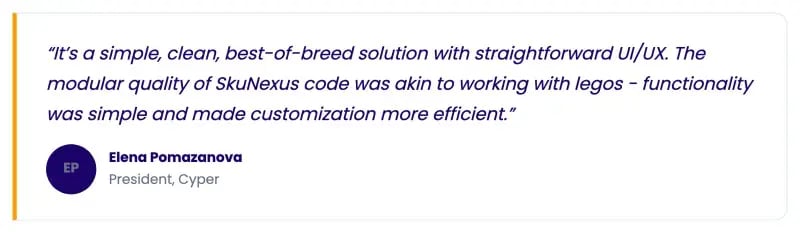
Switching order systems is where Tennant and Lamb Weston got hurt. New Look Vision Group, Canada's largest eyewear retailer, moved its orders, warehouses and shipping onto SkuNexus across 477 locations in nine months with zero disruption to its operations. Implementation partner Cyper ran the rollout.
Graeter's Ice Cream shows what comes after go-live. Every order now runs automatically, and its annual pint shipments grew from 270,000 to more than 550,000 without adding order-processing staff.
Building order management for operations like New Look's and Graeter's is how we've seen where each type of tool stops fitting.
What Is Order Management Software?
Order management software (or an order management platform) tracks every order from the moment it's placed until it's delivered or returned. It pulls in orders from every channel, like your online store, a wholesale portal or EDI (the electronic orders big retailers send). Then it checks stock, picks which warehouse, store or supplier ships each item, and keeps everyone updated.
Picking who ships each item is called order routing, and it's where tools differ most.
Why Is Order Management Software Important?
Five reasons stand out.
- Online orders keep growing: E-commerce made up 17.1% of US retail sales in the second quarter of 2026, seasonally adjusted, says the US Census Bureau.
- B2B buyers want to serve themselves: Gartner found 70% of B2B buyers prefer a completely digital, self-service buying experience, which needs accurate stock and order status.
- Mixed messages cost you customers: McKinsey found inconsistent information across teams is now the top reason B2B buyers switch suppliers.
- Your team stops touching every order: Rules route the routine orders. Your team steps in only on exceptions like fraud flags or stockouts.
- Returns get back on the shelf faster: NRF and Happy Returns estimated 19.3% of online sales would be returned in 2025. Each return has to be traced back to its order.
5 Best Order Management Software Tools
Our picks are Brightpearl, SkuNexus, Cin7 Omni, NetSuite and Manhattan ActiveOrder. These tools fall into three buckets, based on how much of your process you can change:
- Ready-made SaaS (Brightpearl, Cin7 Omni): They're quick to start, with proven workflows you set up within the vendor's options.
- Configurable platforms (SkuNexus): Rules, workflows and integrations are built around your process, and you can keep changing them.
- Enterprise suites (NetSuite, Manhattan ActiveOrder): They're broad platforms, bought as part of a bigger system with a bigger rollout.
Each tool gets its own section below.
1. Brightpearl
Brightpearl by Sage calls itself a Retail Operating System for retail and wholesale brands. It suits mid-market brands that want the whole back office, accounting included, in one ready-made system.
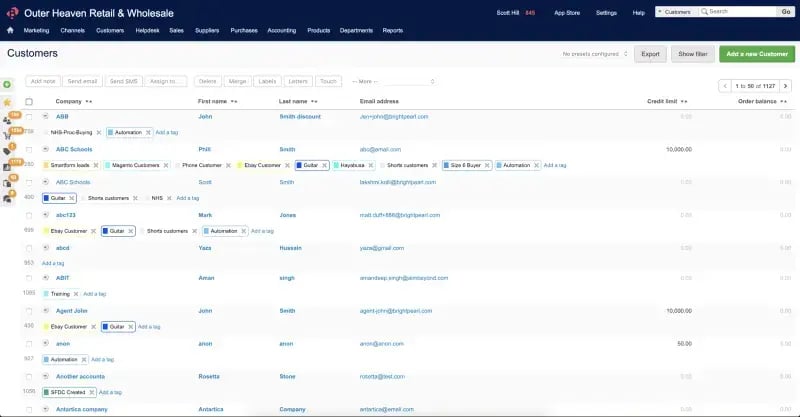
SkuNexus and Cin7 Omni leave the books to a connected accounting system like QuickBooks or Xero.
Its Automation Engine builds rules from pre-built conditions and actions, like automatically sending a PO to a dropshipper when an order comes in.
Key Features
- Integrated accounting: Account for cost of goods sold at shipment or invoice, track landed costs and see a real-time P&L, or connect Xero or QuickBooks.
- Warehouse management: Run batch or wave picking with mobile scanning and serial, lot and expiry tracking.
- Wholesale pricing: Set price lists by account or salesperson, and take deposits and part payments.
- POS app: Take in-store orders alongside online ones.
Pricing
Brightpearl doesn't publish prices. You'll get tailored pricing built around your setup. Unlimited users and 24/7 support are included.
Pros
- Accounting entries post automatically as orders ship and invoices go out.
- You can set up automation rules in a few clicks.
- Brightpearl scopes your whole project at its own expense before you sign anything.
Cons
- Non-standard integrations are built by partners and take six weeks on average.
- Wholesale ordering websites run through Shopify Wholesale or a separate site built by a Shopify partner.
- Retail EDI runs through partner integrations, like SPS Commerce, built by b.solutions.
2. SkuNexus
SkuNexus is an inventory, order and warehouse management platform for eCommerce merchants who run their own fulfillment. We built it for mid-market brands shipping 50 to 20,000 orders a day that have outgrown starter tools but don't want an enterprise suite. That includes brands selling wholesale and direct-to-consumer.
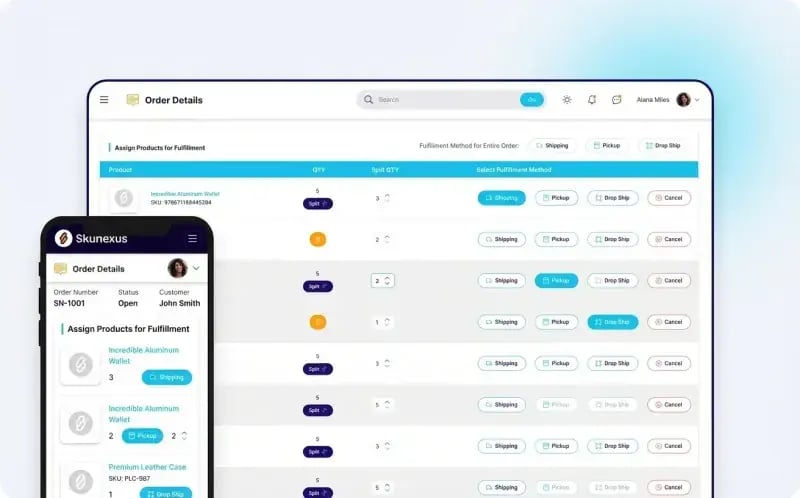
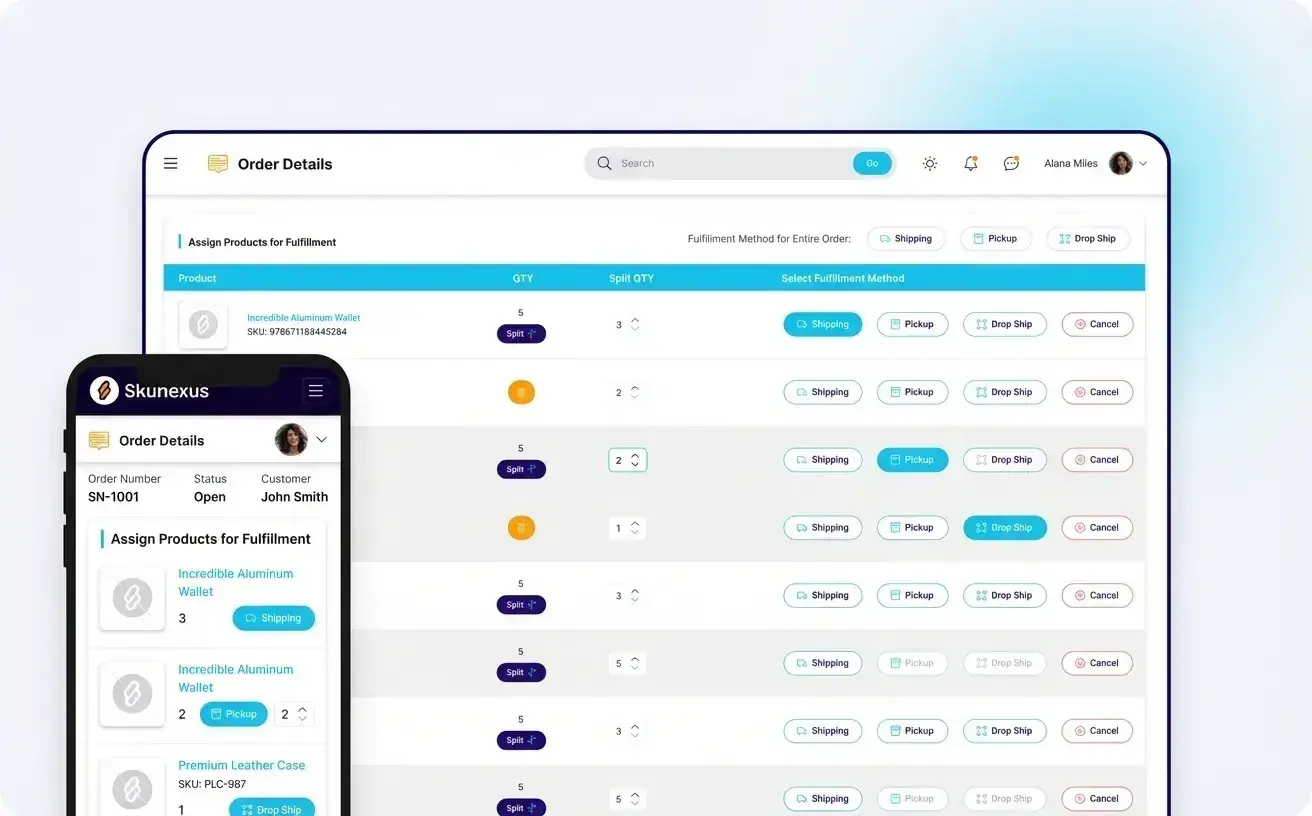
Our Auto-Decision Engine checks every order line against IF/THEN rules you set. Then each line goes to a warehouse, a dropship vendor, a store or a 3PL (a third-party logistics warehouse). Brightpearl and Cin7 Omni automate routing too, but they rely on pre-built conditions and branch-routing rules. With ours, a rule can use any order detail, even custom attributes you've added. And when an order needs a person, like a fraud risk or a first-time wholesale order, it goes to an exception dashboard, so it doesn't ship on a guess.
During setup, a business analyst maps your workflows, and we prototype them visually so you approve them before coding starts. You also get your own dedicated instance with separate dev, staging and production environments where routing changes are tested first.
Carewell, a 100% dropship business on BigCommerce, adds new dropship partners through configuration alone. Most merchants handle 80% of their needs that way. And if you've got developers in-house, our enterprise tier adds full source code access.
Key Features
- Split Fulfillment and BOPIS: Split one order across your warehouse, a dropship vendor and buy-online-pick-up-in-store, with tracking for each shipment.
- Backorder & Pre-Order Handling: Release queued orders automatically when out-of-stock inventory arrives.
- Priority Routing: Fast-track VIP and express orders through their own priority queues.
- B2B and wholesale orders: Run wholesale orders through their own configured workflow, separate from your direct-to-consumer orders.
- Returns & Reverse Logistics: Receive returns against a return authorization (RMA), then restock, quarantine or send them back to the vendor.
- Integrations and EDI: Connect Shopify, BigCommerce, Adobe Commerce, WooCommerce, Shopware 6, Walmart Marketplace and QuickBooks Online, plus EDI, which we build as integration work with no separate network subscription to buy.
Pricing
We scope first and quote second, so you get custom pricing scoped to your operation. Unlimited users are included.
Pros
- VIP customers, fraud risks and first-time wholesale orders can each follow their own path.
- You build and document the routing rules yourself, so they don't live in one person's head.
- Orders and warehouse work run in one system. Routed orders drop straight into the pick queue with no sync delay.
Cons
- There's no direct Amazon or eBay connector. Those orders come in through your storefront's marketplace feed or as scheduled SFTP files.
- Since there's no public pricing or free trial, you'll need a scoping call to see a number.
- It's not a fit if a 3PL handles all your fulfillment, since it's built for merchants who do their own.
3. Cin7 Omni
Cin7 Omni is the more customizable of Cin7's two inventory and order management products, built for businesses with complex operations.
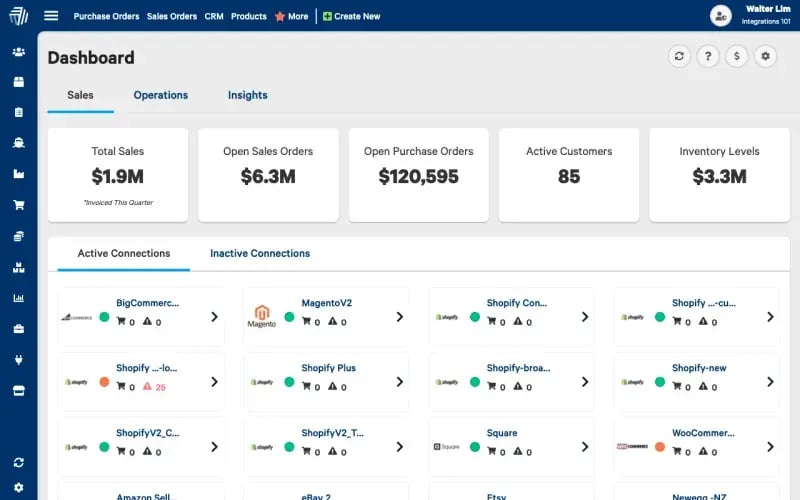
If you're outgrowing Cin7 Core, Cin7 positions Omni as the next step beyond Core's plans. It fits B2B sellers best when big-box retail matters, since Omni has built-in EDI connections to retailers like Walmart, Target and Costco. Brightpearl runs that same work through EDI partners.
Its automation bots process jobs like dropship orders and branch replenishment in bulk, on demand or on a schedule.
Key Features
- Branch routing: Assign orders to a branch by shipping address and method, and split them across branches.
- Warehouse Management (WMS): Receive, rack, pick, pack and count stock with barcode scanning.
- Multi-entity support: Run several companies with automated intercompany stock and price adjustments.
- 3PL connections: Sync sales orders, purchase orders and branch transfers with your 3PLs.
Pricing
Cin7 doesn't publish Omni pricing. You'll get a custom quote covering a set number of users and connections. The B2B portal and POS are add-ons.
Pros
- You don't need a separate SPS or TrueCommerce subscription for retailer EDI.
- The Omni plan includes unlimited inventory locations.
- Omni connects to Amazon, Shopify, BigCommerce, Xero and QuickBooks Online.
Cons
- Omni's WMS doesn't support partial shipping or EDI fulfillment yet.
- The add-on B2B online store can't create sales orders across multiple branches.
- Even with the dropship bot, you still receive each dropship purchase order and complete the original sales order yourself.
4. NetSuite
NetSuite Order Management is part of Oracle NetSuite's ERP. It fits best if you're ready to move accounting, inventory and orders onto one suite at once. That's a bigger step than adding SkuNexus or Brightpearl to your current systems.
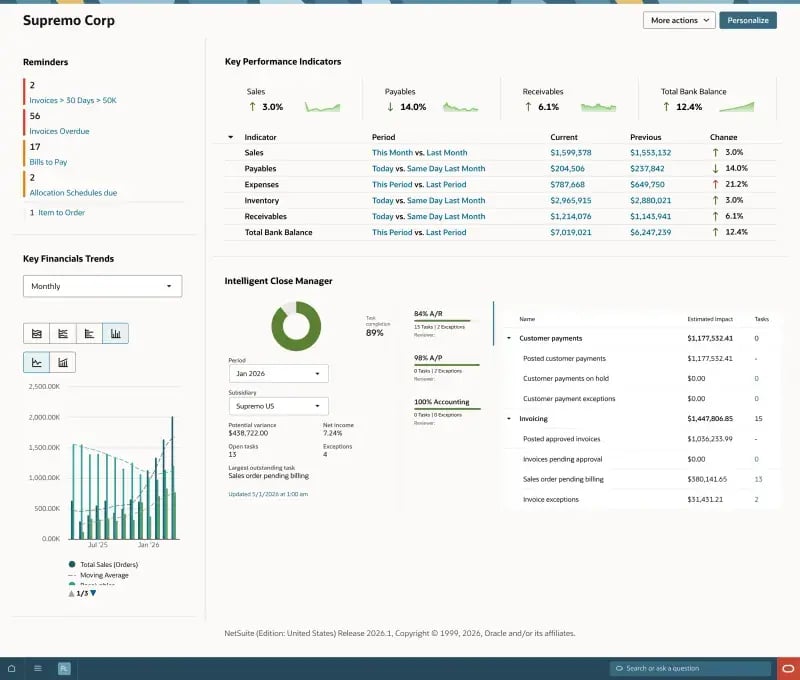
Your admins build approval and order workflows in SuiteFlow, a point-and-click tool.
Key Features
- Multichannel order management: Apply fulfillment rules using inventory availability across your warehouses, stores and suppliers.
- Advanced Order Management: Assign fulfillment locations to order lines automatically, based on your business rules.
- Sales order management: Automate order-to-cash, from approval and scheduling through fulfillment and payment.
- Returns management: Accept returns from any channel and handle exchanges and credits.
Pricing
NetSuite doesn't publish pricing. Order management comes with the NetSuite platform license.
Pros
- Orders, inventory and accounting run in one system, allowing finance to see each order as it's placed.
- NetSuite says its SuiteSuccess approach can take companies from zero to cloud in 100 days.
- Saleable returns from any channel go straight back into available inventory.
Cons
- Automatic location assignment needs setup and configuration before it runs on sales orders.
- NetSuite Connector, which links stores like Shopify and marketplaces like Amazon, is an add-on module.
- Custom logic beyond SuiteFlow's point-and-click workflows needs SuiteScript, which takes JavaScript developers.
5. Manhattan ActiveOrder
Manhattan ActiveOrder is Manhattan Associates' order management product, which runs orders, inventory and delivery-date promises as one solution. Since September 22, 2026, it's been sold in three Editions, which Manhattan says suit growing businesses too. Store fulfillment orchestration comes in every edition, fitting for retailers and brands with stores.

ActiveOrder is cloud-native, and Manhattan offers its own professional services and a partner network to help you implement it. Unlike NetSuite, it doesn't come with an ERP. It works alongside your existing finance system.
Key Features
- Inventory Availability: Control which stock each selling channel can sell, using Manhattan's available-to-commerce view.
- Core Order Orchestration: Source each order by geo-proximity and handling cost.
- Omnichannel Fulfillment: Orchestrate ship-to-home, buy-online-pick-up-in-store, ship-to-store and ship-from-store orders.
- Core Customer Service: Give service teams order visibility, edits and returns.
Pricing
There's no public pricing. Your edition (Essentials, Enterprise or Enterprise Premier) sets what's included.
Pros
- Updates arrive every 90 days with no downtime.
- Order management, promising and customer engagement share one data model. What you promise matches what you deliver.
- You can upgrade from Essentials to Enterprise Premier on the same platform.
Cons
- With no published implementation timeline, you'll only get one from sales.
- Curbside pickup, same-day delivery and reserve pickup aren't in Essentials.
- Point of sale is a separate Manhattan product, ActiveStore.
How We Evaluated These Tools
Five factors decided the list:
- How order routing works, and who can change the rules
- How it handles B2B orders, account terms and EDI
- Whether orders and warehouse work run in one system
- Who handles implementation and later changes
- How pricing is structured
We left out small-business inventory apps, manufacturing-first tools and 3PL-focused warehouse systems, since they're built for other buyers.
How to Choose an Order Management System
Start with the orders that give your team the most work, then match them to a bucket:
- Map your hardest orders first: List the orders your team still touches by hand, like mixed warehouse and dropship lines, wholesale orders on account terms or retailer EDI orders. Those decide what the system has to do.
- Ready-made SaaS fits standard processes: You go live faster on proven workflows, but you work within the vendor's options when your process changes.
- Enterprise suites fit when you're replacing more than order management: Finance or store operations come in the same rollout, which makes it a bigger implementation.
- Configurable platforms fit orders that don't fit a template: Rules and workflows are built around you, so expect more scoping up front.
- Ask who changes the rules after go-live: If it's one person or a paid developer, you'll feel it every time you add a warehouse or vendor.
Whichever way you lean, ask each vendor to run 10 of your messiest orders through a demo.
Which Order Management Software Is Right for You?
Every tool here can run a simple order. The difference shows up on your hardest ones, in whether you can change the rules at all as you grow, and in who gets to change them.
If your process is fairly standard and you want accounting in the same system, Brightpearl gets you live on proven workflows. Cin7 Omni makes more sense when big-box retail drives your wholesale revenue, because Cin7's engineers build the retailer EDI connections for you.
If you're replacing your accounting system anyway, NetSuite puts finance, inventory and orders in one ERP. If you run stores and want ship-from-store at scale, Manhattan ActiveOrder orchestrates store fulfillment in every edition. Both are bigger rollouts, so plan around that.
Then there's the middle. Maybe you've outgrown starter tools and nothing talks to each other anymore, but an enterprise suite is more system than you need. SkuNexus is configured around your orders and fits merchants who mix warehouse and dropship lines or run wholesale and direct-to-consumer orders side by side.
If that's what you need, book a 30-minute SkuNexus demo and we'll run your own orders through it.
Frequently Asked Questions About Order Management Software
1. What are the top order management systems?
Rankings vary by business size, so there's no single top-10 list. For mid-market eCommerce and B2B merchants, our five picks cover the three main types. Brightpearl and Cin7 Omni are ready-made SaaS, SkuNexus is a configurable platform, and NetSuite and Manhattan ActiveOrder are enterprise suites. Start with the type that matches how standard your orders are.
2. Is Shopify an order management system?
Yes. Shopify says its platform has a built-in order management system that routes orders using rules you set. Once you add wholesale accounts, extra warehouses or dropship vendors, it's worth connecting a dedicated OMS. Our Shopify order management guide covers when you've reached that point.
3. What are the four stages of order management?
Order management runs from the moment an order comes in until it's delivered or returned. Grouped into four stages, that's order capture and validation, inventory allocation and routing, fulfillment (picking, packing and shipping), and delivery, tracking and returns.
4. What is the difference between an OMS and a WMS?
An OMS decides which location fulfills an order. A WMS runs the work inside that warehouse, like receiving, picking, packing and labeling. If you run your own warehouse, you'll need both jobs covered, in two connected systems or one. Our breakdown of OMS vs WMS goes deeper.
5. How long does it take to implement order management software?
Plan on a few months for a ready-made system and closer to a year for an ERP-led rollout. Brightpearl says it aims to get customers live within 90 days on average. Panorama Consulting's 2026 ERP Report found a median project timeline of nine months among the 170 organizations it surveyed.
Ready to Transform Your Operations?
See how SkuNexus gives you full control over inventory, orders, warehouse, and shipping.
Schedule a Free Demo →
Keep Reading