Inventory, order, and warehouse management that bends to your operation - no vendor workflow to adopt, no open-source project to maintain.



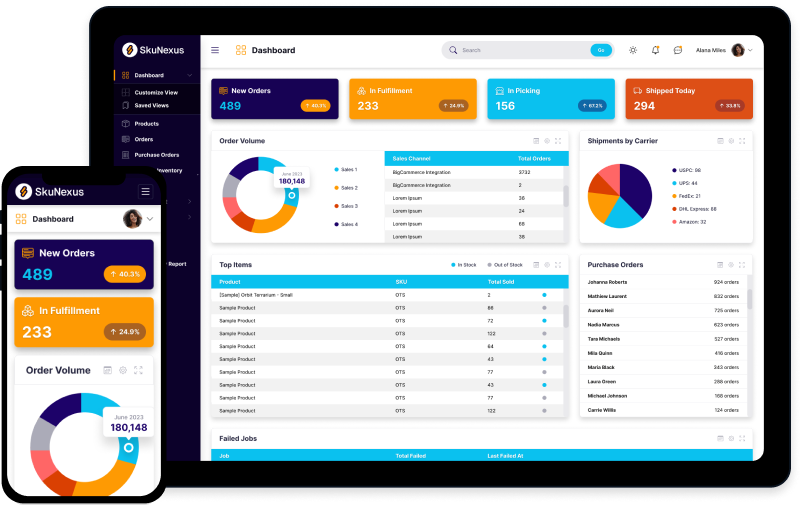


Trusted by operations teams from startups to Fortune 500
You’ve outgrown your inventory management software. You know it. Your warehouse team knows it.
You’re running ShipStation for labels, a spreadsheet for inventory counts, and your eCommerce platform as a pseudo-WMS. Nothing talks to each other. Orders fall through the cracks. Inventory counts are wrong by the time someone finishes counting. Or you bought Cin7 or ShipHero three years ago and now feature requests go unanswered, the integration breaks monthly, and your warehouse team is working around the software instead of with it. Meanwhile, your order volume doubled and the system that worked at 200 orders a day is buckling at 800. And while your competitors are using AI to automate order routing and demand forecasting, you’re still manually allocating inventory in a spreadsheet.
Too many disconnected tools
ShipStation for labels. A spreadsheet for inventory counts. Your Shopify admin for order status. Maybe an app your ops manager found for barcode scanning. Five browser tabs open, nothing in sync, and every discrepancy means a phone call, a recount, or a wrong shipment. This is what happens when you stitch point solutions together instead of running one system.
Your current platform hit a wall
You’ve outgrown Cin7, ShipHero, SkuVault, or Extensiv. Feature requests go nowhere and support is a ticket queue. You’re building workarounds in Google Sheets to express routing rules your OMS cannot. The vendor roadmap does not include what you need, and the API will not carry the integrations you already have.
Enterprise is overkill
The enterprise suites answer with a warehouse module, a systems integrator, and a consulting bench to keep it running. You need wave picking, directed putaway, order routing, and demand forecasting. You do not need to buy the rest of the suite, or the people who operate it, to get them.
One system for everything that happens after the order is placed.
Stock tracking, order processing, warehouse work, multi-carrier shipping, vendor purchasing, and workflow automation run on one database. No middleware. No duct tape. One source of truth from the moment an order is placed to the moment it’s delivered.
Zero human interaction from order placed to shipping label printed.
Inventory Management
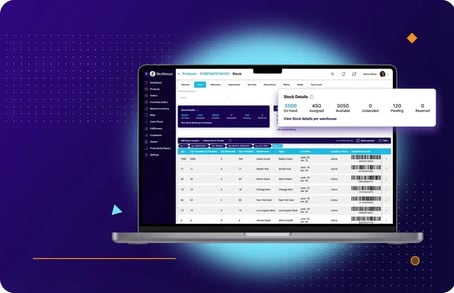
Stock visibility across every warehouse, retail location, and sales channel. SkuNexus tracks quantities, lot numbers, serial numbers, and expiration dates, with barcode scanning at every touchpoint. Demand forecasting reads velocity trends, seasonality, and lead times to time your reorders. Reorder alerts, scheduled cycle counts, and ABC analysis keep counts honest without shutting the floor down once a year. One SKU, one truth, whether it sits in your warehouse, your retail store, or your 3PL.
Explore inventory management →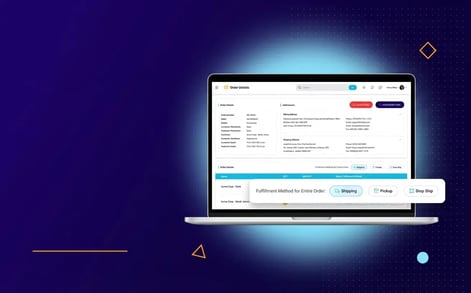
Order Management
Orders from Shopify, BigCommerce, Magento 2, WooCommerce, Shopware 6, Walmart, and EDI trading partners land in one queue. The Auto-Decision Engine evaluates every line and picks the fulfillment path: ship from the nearest warehouse, dropship from the vendor, split across locations by what is actually available, or hold for review. Routing weighs proximity, carrier cost, stock position, and the delivery date you promised, all at once. No manual allocation. No copy-pasting between systems. It runs at 50 orders a day and it runs at 20,000.
See our order management →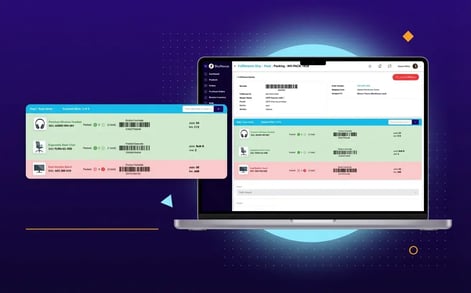
Warehouse Management
Directed putaway, zone-based wave picking, barcode verification at every scan point, and bin-level tracking. Pick paths are sequenced by zone and bin so a picker walks the wave once instead of crossing the floor per line. Putaway tells the receiver which bin to use rather than letting stock land wherever there is room. Wave planning groups orders by SKU overlap, carrier cutoff, and zone. Cycle counts run along a walk path on a schedule, so counting is a shift task and not an annual shutdown. Built for operations that ship 50 to 20,000 orders per day.
View warehouse management →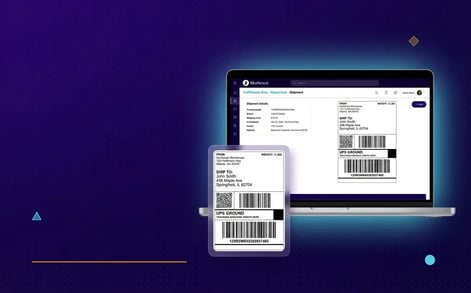
Shipping & Fulfillment
Rate shopping compares UPS, FedEx, USPS, DHL, and regional carriers on every shipment, scored on package dimensions, weight, destination, and the delivery date the customer was promised. Labels generate as soon as the pack is verified, so the label is a by-product of packing rather than a second station. Packing rules insert the right materials, promotional inserts, and gift messages from your own business logic. Tracking numbers sync back to the sales channel within minutes of shipment.
See how rate shopping works →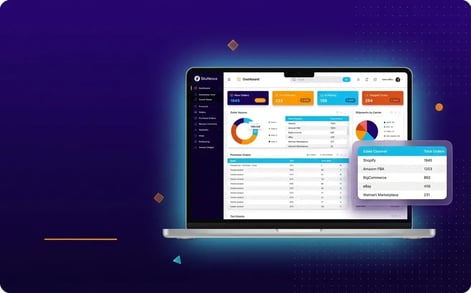
Multi-Channel Inventory Sync
Sell on Shopify, BigCommerce, Magento 2, WooCommerce, Shopware 6, Walmart, and your own website without overselling. Available quantity pushes out to every connected channel on that connector’s sync interval after each pick, receipt, or adjustment. Sell five units on Walmart and the Shopify listing comes down on the next sync rather than at the end of the night. Safety stock buffers are set per channel from historical velocity, so a slow channel does not sit on stock a fast one needs. That is the end of the spreadsheet gymnastics behind most stockouts.
Explore multi-channel inventory →What makes this different from everything else you looked at.
Fully customizable at the code level
Every operation is different. SkuNexus is built to adapt to yours, not the other way around. Custom fulfillment workflows, your own routing rules, proprietary packing logic, specialized scanning sequences, and automation rules that match how the business actually runs. When other vendors say “it’s on the roadmap,” we ask “how many hours.” Enterprise customers get full source code access for unlimited modifications. Every tier gets a platform that bends to your workflows instead of forcing you into someone else’s.
Everyone who touches an order gets a login
Ops, the warehouse floor, customer service, finance, and your vendors all work in the same system, each with role-based permissions instead of a shared account and a screenshot. Nobody is left guessing because they were kept out of the tool. Commercial terms get scoped against your operation before anything is signed.
“So the system works for you. You don’t work for the system.” - Owner, hardware retailer, recorded SkuNexus demo
One platform, not five
Replaces ShipStation + Cin7 + ShipHero + the spreadsheets you pretend don’t exist. Inventory, orders, warehouse, shipping, vendors. One login. One source of truth. One place where your operations team sees current stock, pending orders, active picks, and shipping status without switching between tabs.
We build with you, not just for you
Every implementation starts with a business analyst mapping your workflows. We prototype in Figma before writing code, so you approve screens instead of a spec document. We run three environments, and you see the build in the staging one while it is still changeable. And we’re honest about what we can’t do yet. The work covers data migration, integration setup, workflow configuration, and staff training, scoped against your operation before anything gets built.
Don’t take our word for it.
Built for eCommerce merchants who run their own fulfillment.
From 50 shipments a day to 20,000. Running Shopify, Magento 2, BigCommerce, Shopware, Adobe Commerce, or something custom. One warehouse or ten. It fits a single-channel D2C brand and it fits a B2B/B2C hybrid selling through marketplaces, its own site, wholesale accounts, and retail locations at the same time. The automation absorbs the extra complexity instead of your headcount doing it.
Not for everyone. On purpose.
If you outsource fulfillment entirely to a 3PL, we’re not the right fit. If you’re running a simple operation with 20 SKUs, no warehouse complexity, and 50 orders a week, there are simpler tools. SkuNexus is built for merchants whose operation is more complicated than the software running it. Merchants who’ve outgrown the starter tools and do not want to buy an enterprise suite to get automation on the floor.
Three operations that were too complicated for off-the-shelf software.

Graeter’s Ice Cream needed dry-ice quantity calculated per shipment across three warehouses for a perishable D2C operation. Their previous system could not express temperature-sensitive fulfillment rules, seasonal demand swings, or the shipping constraints of frozen product with a tight delivery window.

Carewell runs branded dropship across dozens of vendors, with a purchase order generated for each line. Every line has to reach the right supplier, the PO has to go out with it, and fulfillment has to be tracked across a network of independent vendors, none of it backed by stock Carewell owns.

New Look Vision unified pick-pack-ship across a national retail footprint, tied to Magento 2, an ERP, the POS, and the CMS. It needed omnichannel allocation, BOPIS routing, and ship-from-store, with stock counts that every store and the website could both trust.
How the pieces connect.
Most eCommerce operations run three to five separate tools for stock, orders, warehouse work, and shipping. Each tool keeps its own version of the truth, and the gaps between them are where the mistakes live. SkuNexus closes the gaps by running all of it on one database with one set of business rules.
Barcode Scanning & Inventory Tracking
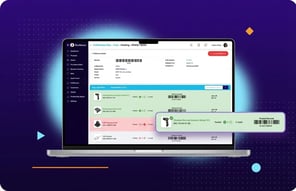
Every warehouse touchpoint is barcode-verified: receiving, putaway, picking, packing, and shipping. When your receiving team scans a pallet, inventory increments instantly across all connected channels. When a picker scans an item, available quantity decrements immediately. No batch updates. No overnight syncs. Variance checks flag an unexpected count at the scan instead of at the next audit. SkuNexus supports RF guns, mobile devices, and Bluetooth scanners out of the box.
See barcode inventory tracking →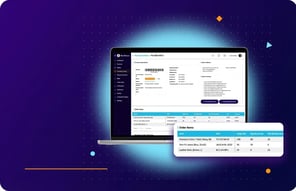
Vendor & Purchase Order Management
Purchase orders are drafted from demand forecasting, reorder points, safety stock levels, and supplier lead times. When a fast-moving SKU approaches its threshold, SkuNexus drafts the PO, routes it for approval, and sends it to the vendor before you stock out. Predictive reordering uses historical velocity, seasonal trends, and current sell-through rates to time purchases precisely. Track receiving against POs with barcode verification, flag discrepancies automatically, and update inventory the moment goods hit your dock.
Explore vendor and PO management →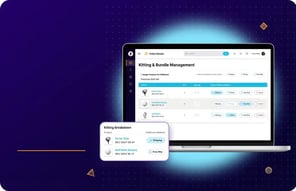
Kitting & Bundle Management
Build, track, and sell product bundles and kits with component-level inventory visibility. SkuNexus tracks each component SKU independently, calculates available kit quantity based on the lowest component stock, and generates assembly work orders when kit inventory runs low. Subscription box operations, gift sets, and promotional bundles all run through configurable kitting workflows that keep component inventory accurate across every sales channel.
See kitting and bundles →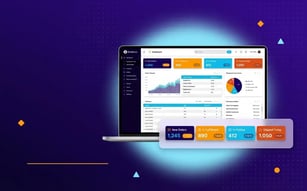
AI-Powered Automation & Intelligent Workflows
Build any fulfillment workflow without writing code. The Auto-Decision Engine routes orders on rules you set: proximity, current stock position, carrier cost, and the delivery date promised. It is deterministic, so you can read why any order went where it went. Demand forecasting is the predictive half, reading historical sales by product, channel, season, and day of week to time reorders. Custom rules trigger actions across your entire operation: hold high-value orders for fraud review, prioritize VIP customers, split multi-warehouse orders, route hazmat items to certified stations, auto-select the cheapest carrier for low-priority shipments, and escalate exceptions to the right team member.
Explore AI and automation →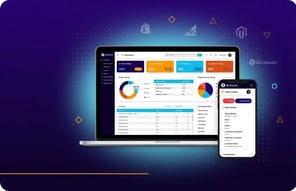
Connectors and the API
Working connector adapters ship for Shopify and Shopify Plus, BigCommerce, Magento 2 and Adobe Commerce, WooCommerce, Shopware 6, Walmart, and QuickBooks Online. Order ingestion is polling-primary: a background worker checks each connected platform on its own interval, five minutes by default on Shopify and sixty on the others, so expect up to one interval between a channel order and its arrival here. Webhooks are registered where the platform supports them, but they catch changes between polls rather than replace polling. Shipping confirmations and tracking numbers push back on the same schedule. EDI handles retail trading partners, and the REST API covers anything without a connector.
View our integrations ecosystem →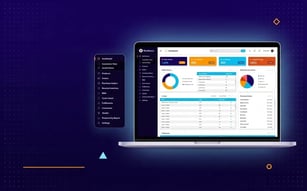
Customization Built for Your Operation
SkuNexus adapts to your workflows, not the other way around. Every business rule, fulfillment path, automation trigger, and reporting view is configurable. Build custom dashboards, design unique picking workflows, create proprietary packing logic, and define AI routing rules that no off-the-shelf platform supports. Enterprise customers get full source code access for unlimited modifications. Every tier gets a platform flexible enough to handle the edge cases that made your last system break.
See customization and source code →What we’ve written down.

AI Warehouse Operations: From Pilot to Production in 90 Days

What is an OMS? A Warehouse Manager’s Guide to Order Management Systems

Pick and Pack Software Implementation: From Selection to ROI