Complete Vendor Lifecycle

Vendor & Purchase Order Management That Keeps Your Supply Chain Tight

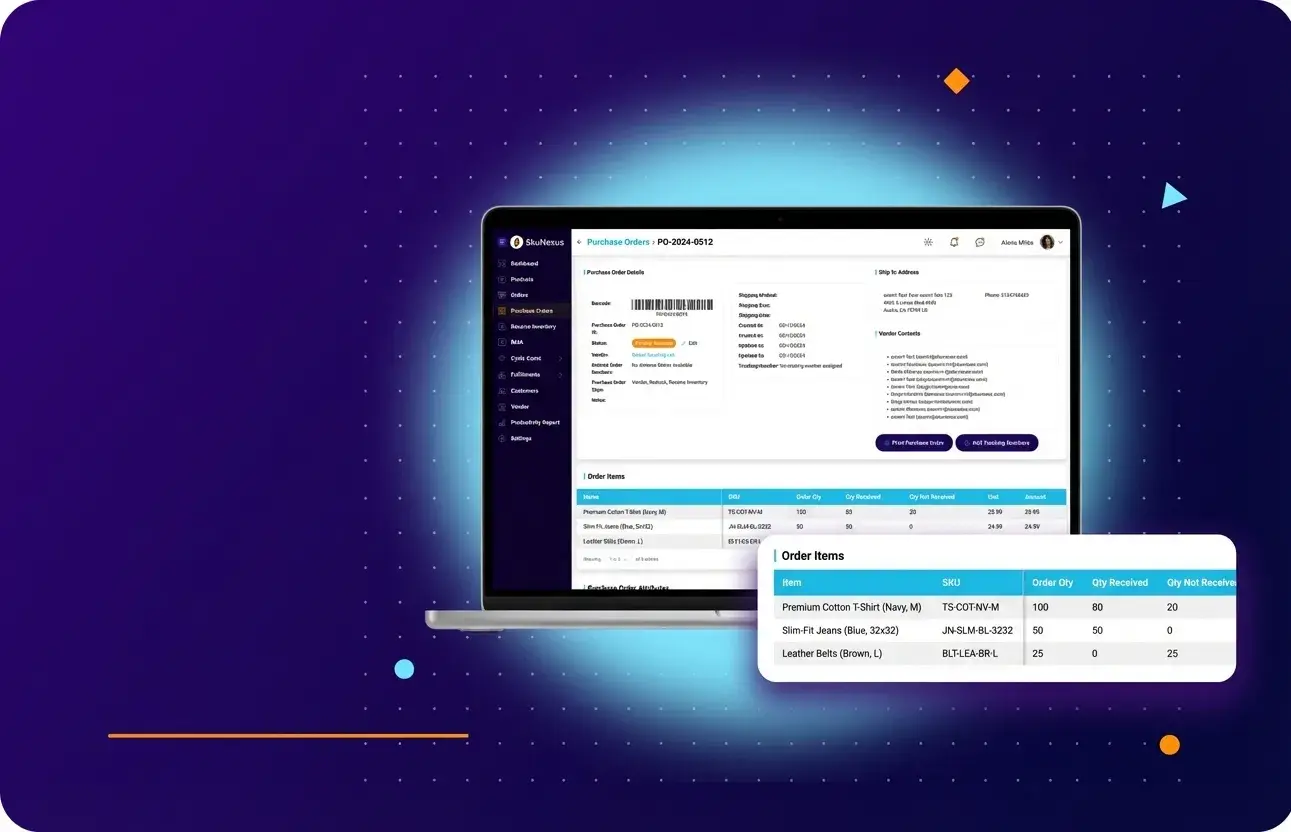
Stop chasing vendors with emails and spreadsheets. SkuNexus tracks every purchase order from creation through receiving, scores vendor performance, and triggers reorders before you run out of stock.
No credit card required Free personalized demo Unlimited vendors included
Vendor & PO Management — SkuNexus product screenshot
What Is It

What is Vendor Management Software?

Vendor management software tracks the complete lifecycle of your supplier relationships — from purchase order creation through receiving, performance scoring, and reorder automation. It replaces the spreadsheets, email threads, and disconnected tools that make vendor management reactive instead of proactive.

In SkuNexus, vendor management is integrated directly with inventory and warehouse operations. When you receive against a PO, inventory adjustments happen instantly, directed putaway kicks in, and available stock updates across all sales channels. The gap between purchasing and inventory — where vendor errors hide — doesn't exist.

For merchants sourcing from multiple vendors, managing dropship relationships, or dealing with international suppliers, vendor management software is the difference between a supply chain you control and one that controls you.

See PO Management Live
100%
PO-to-receiving match rate with scan verification

Key Capabilities

  • PO creation, tracking, and lifecycle management
  • Scan-verified receiving against POs
  • Vendor performance scoring
  • Auto-reorder triggers

Trusted by leading brands processing millions of orders

SN_TCM SN_Graeters SN_newlook SN_Carewell SN_DPP
★★★★★ 4.8/5 on G2 ISO 9001 Certified GDPR Compliant
The Challenge

Sound Familiar?

"Purchase orders live in spreadsheets. I'm chasing vendors by email for updates."

Without a system tracking PO status, you won't know a vendor shipped late until boxes show up at your dock unannounced — or don't show up at all.

Spreadsheet POs

"The vendor shorted us by 50 units. We didn't find out until we ran out of stock."

Without scan-verified receiving matched to POs, vendor errors hide until they become customer-facing stockouts.

Receiving Gaps

"We have vendors who consistently underperform, but we have no data to prove it."

Without performance scoring, vendor decisions are based on gut feeling. You can't hold vendors accountable without the receipts.

No Accountability

There's a better way

SkuNexus tracks every PO from creation through receiving, scores vendor performance with real data, and triggers reorders before you run out.

See How It Works
How It Works

How Vendor & PO Management Works in SkuNexus

1

Step 1: Create and Send Purchase Orders

Build purchase orders directly in SkuNexus with full product details, quantities, pricing, and expected delivery dates. POs reference your vendor catalog, so you're selecting from pre-configured vendor-product relationships. Send the PO to your vendor via automated email or API, and the system starts tracking it from that moment.
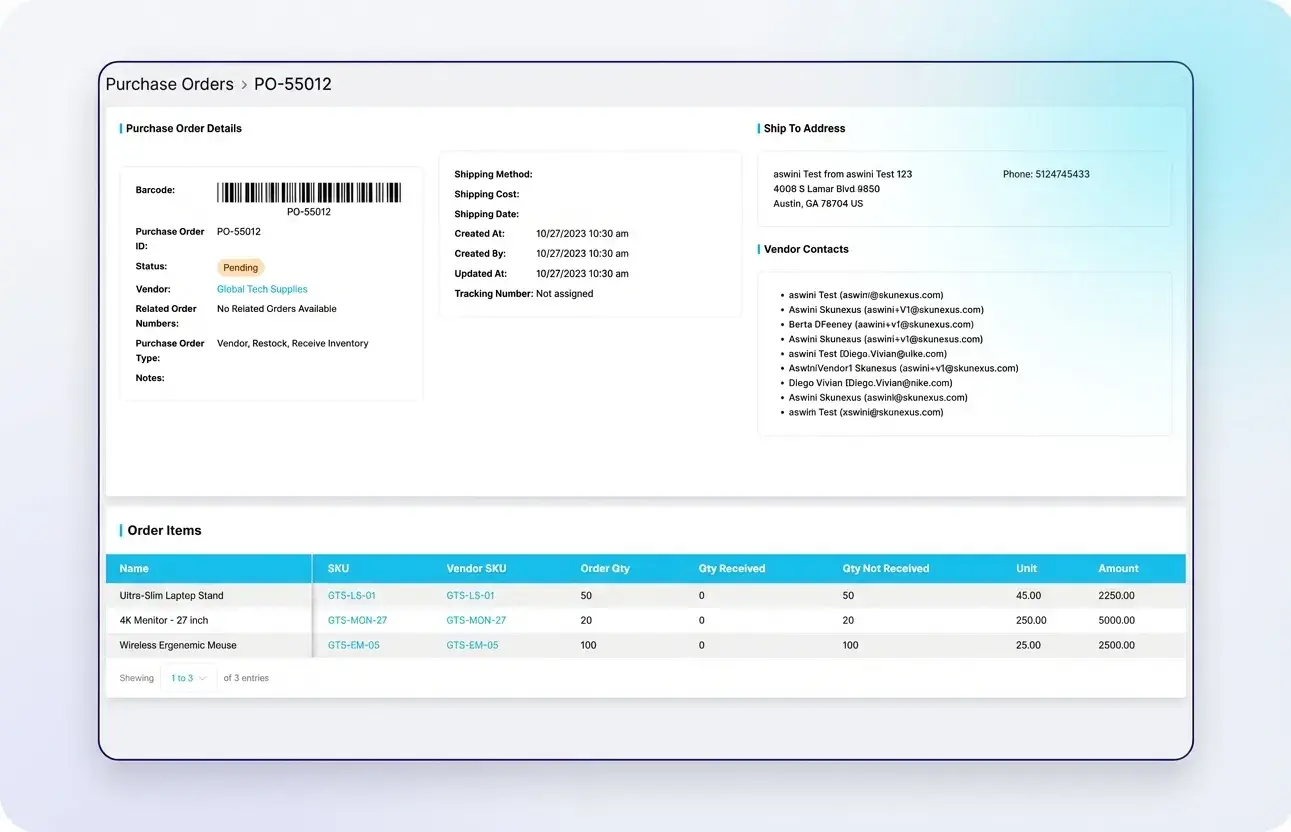
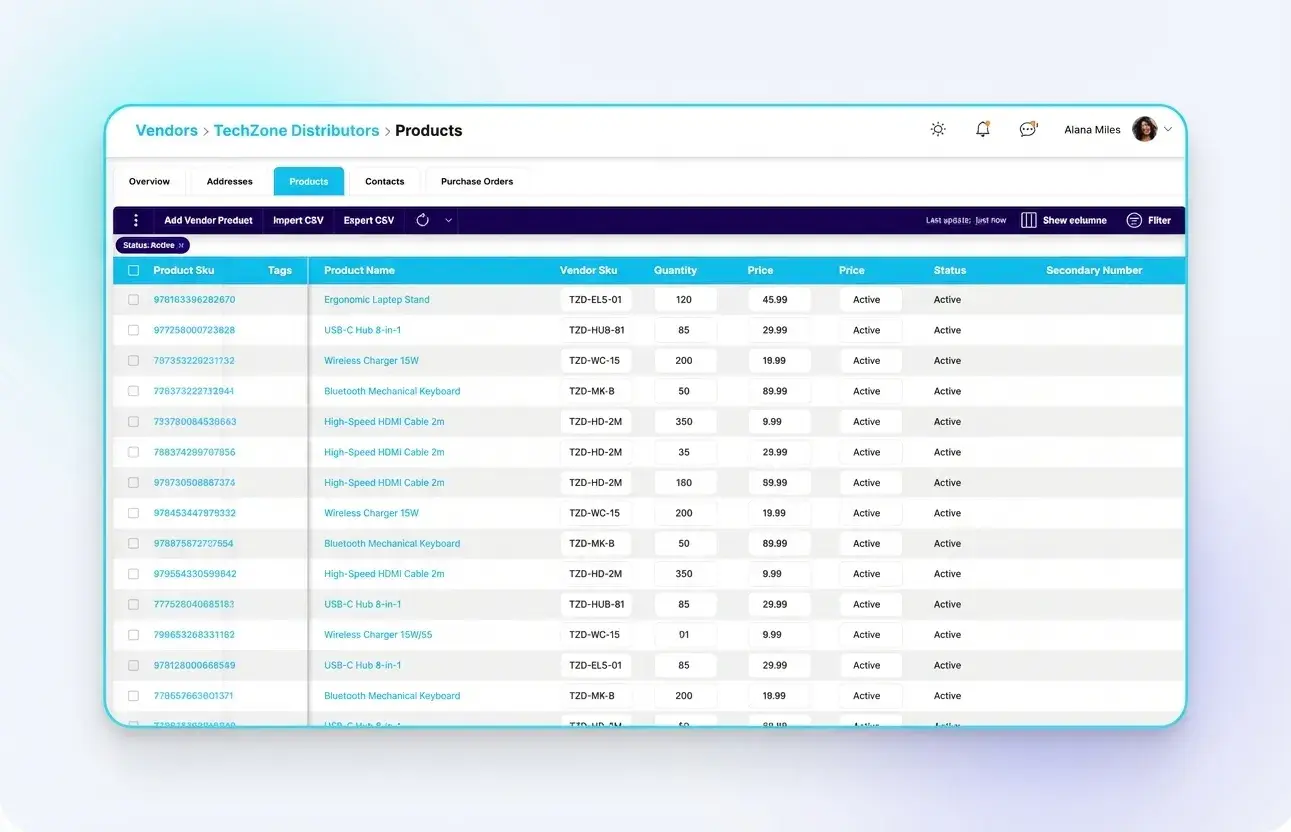
PO creation screen
2

Step 2: Track Status Through the Lifecycle

Every PO moves through a clear status workflow: Created → Sent → Acknowledged → Shipped → Partially Received → Fully Received → Closed. If a vendor hasn't acknowledged a PO within your expected timeframe, the system flags it. If a shipment is late, you know immediately.
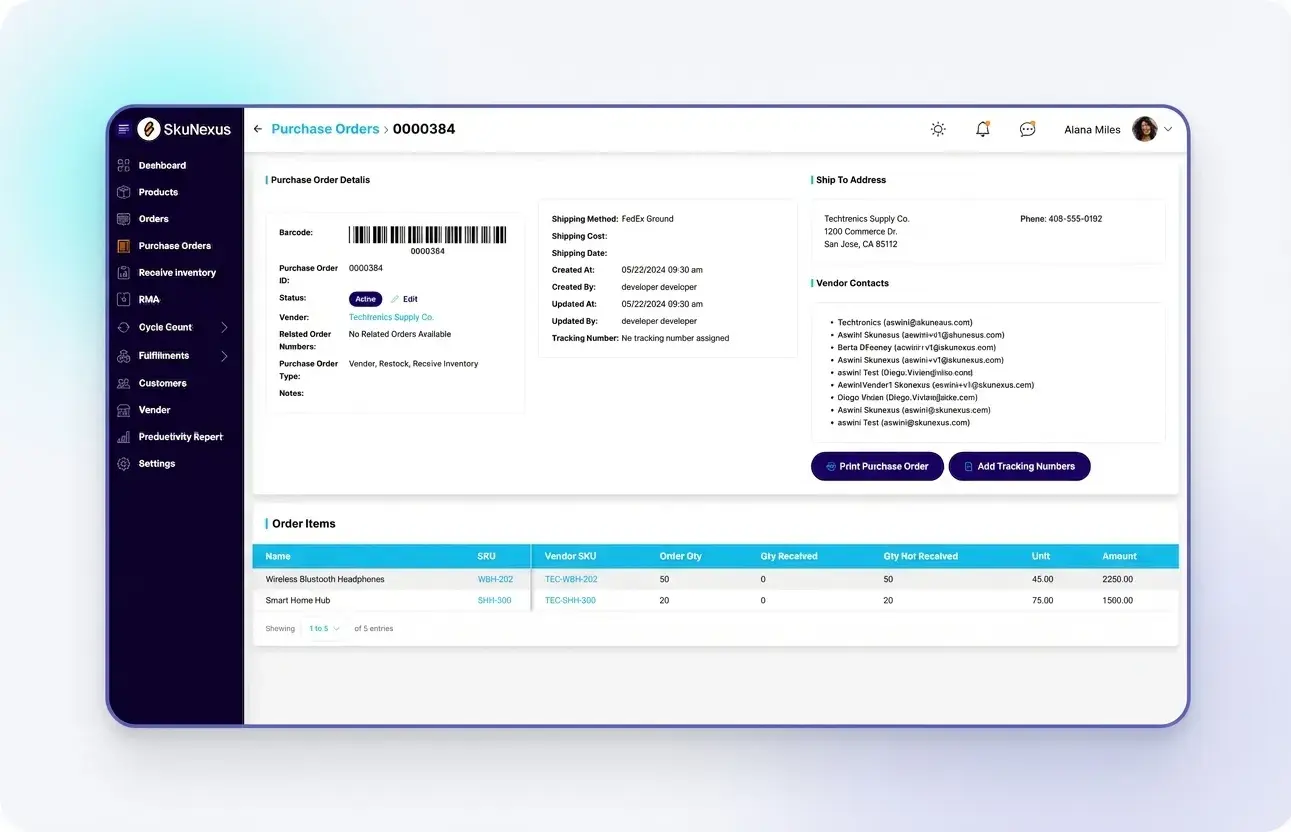
PO status tracking list
3

Step 3: Receive Against the Purchase Order

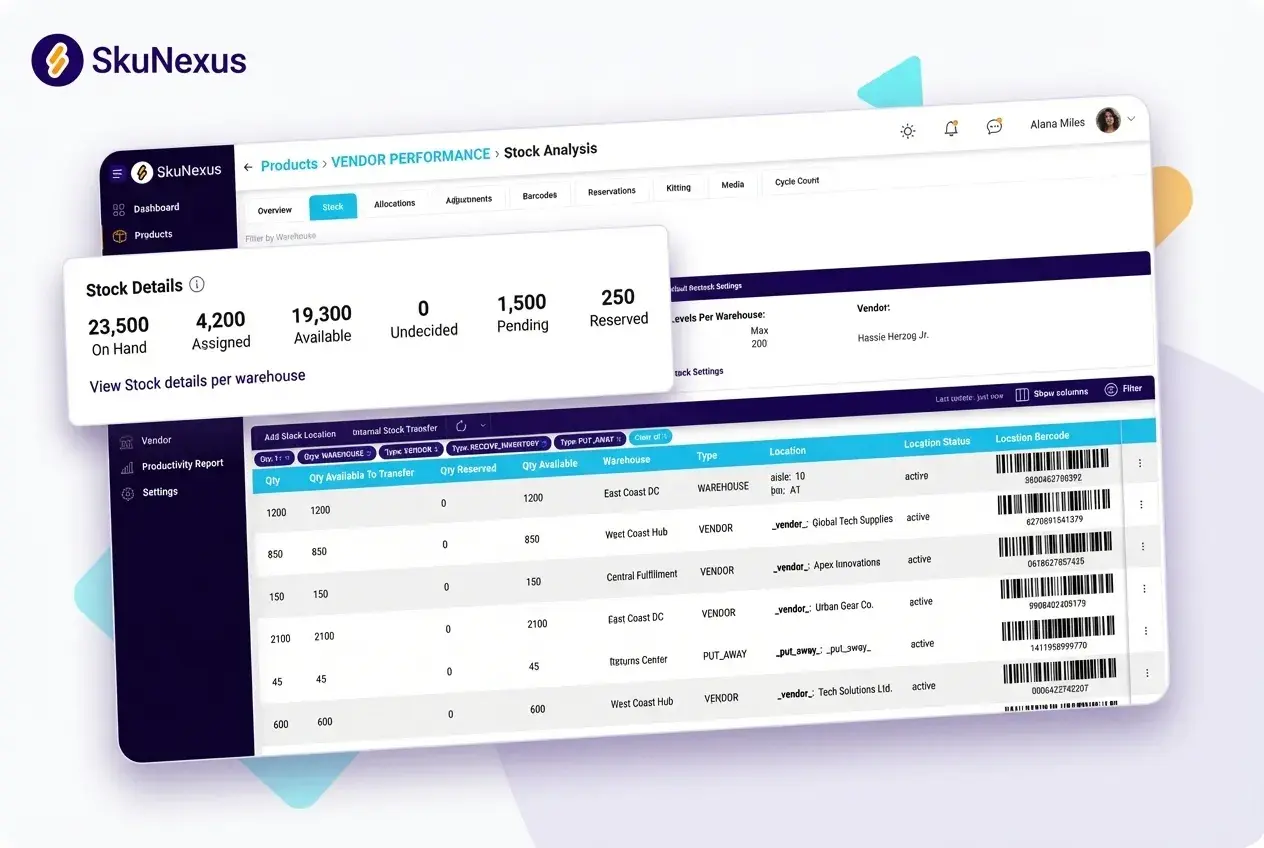
When inventory arrives, your receiving team scans items against the PO. The system matches each scan to the expected line item and quantity. Over-shipments, under-shipments, and wrong items are flagged in real time. Once receiving is complete, inventory is added and directed to the appropriate bin location.
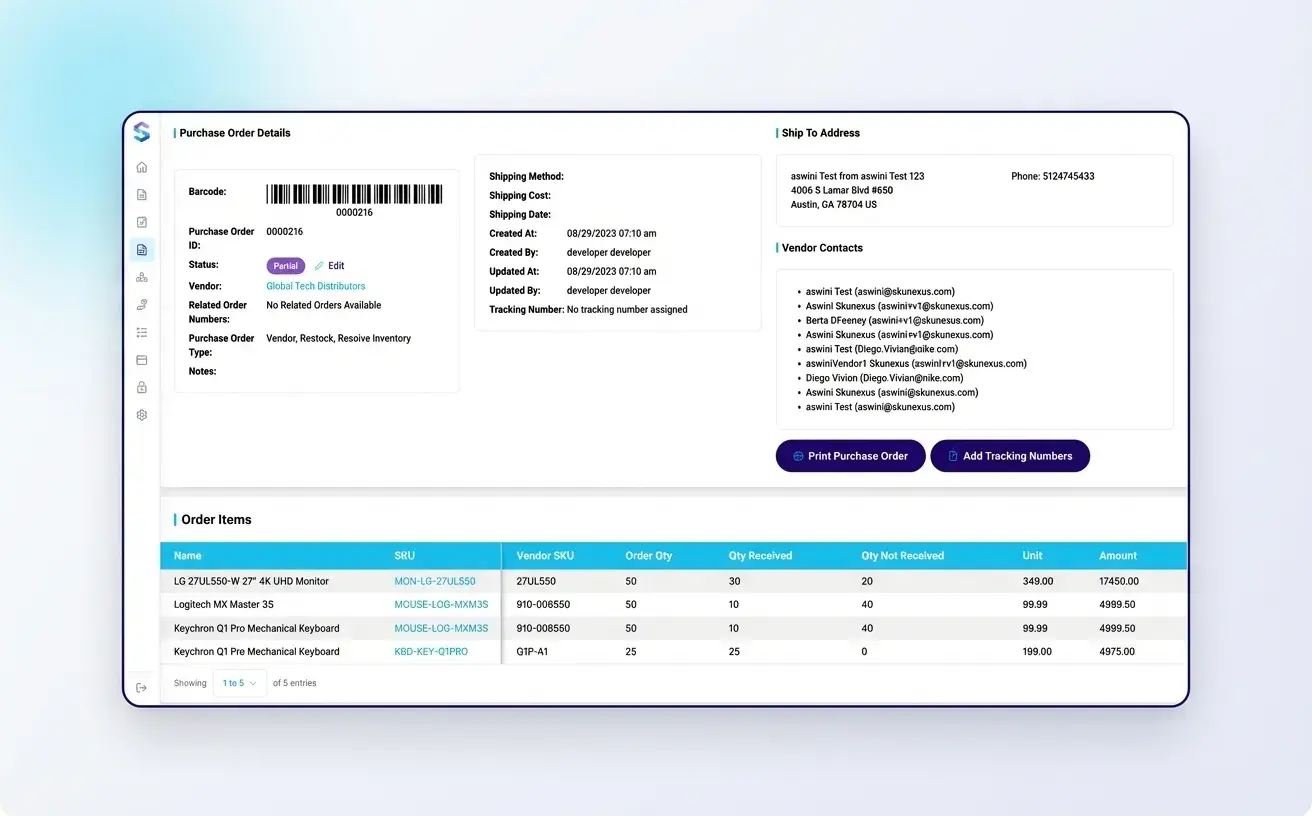
Scan-to-receive against PO
4

Step 4: Score Vendor Performance

Over time, SkuNexus builds a performance profile for each vendor: on-time delivery rate, fill rate, quality rate, and lead time accuracy. This gives you the data to renegotiate terms, consolidate to better vendors, or hold underperformers accountable.

Vendor performance scorecard
Key Benefits

Everything You Need for Vendor & PO Operations

Why Teams Choose SkuNexus

📋

Full PO Lifecycle Tracking

Create, send, and track purchase orders through every status. Every change logged with timestamps.

📊

Vendor Performance Scoring

Track on-time delivery, fill rate, quality, and lead time for every vendor. Data replaces gut feeling.

🔄

Auto-Reorder Triggers

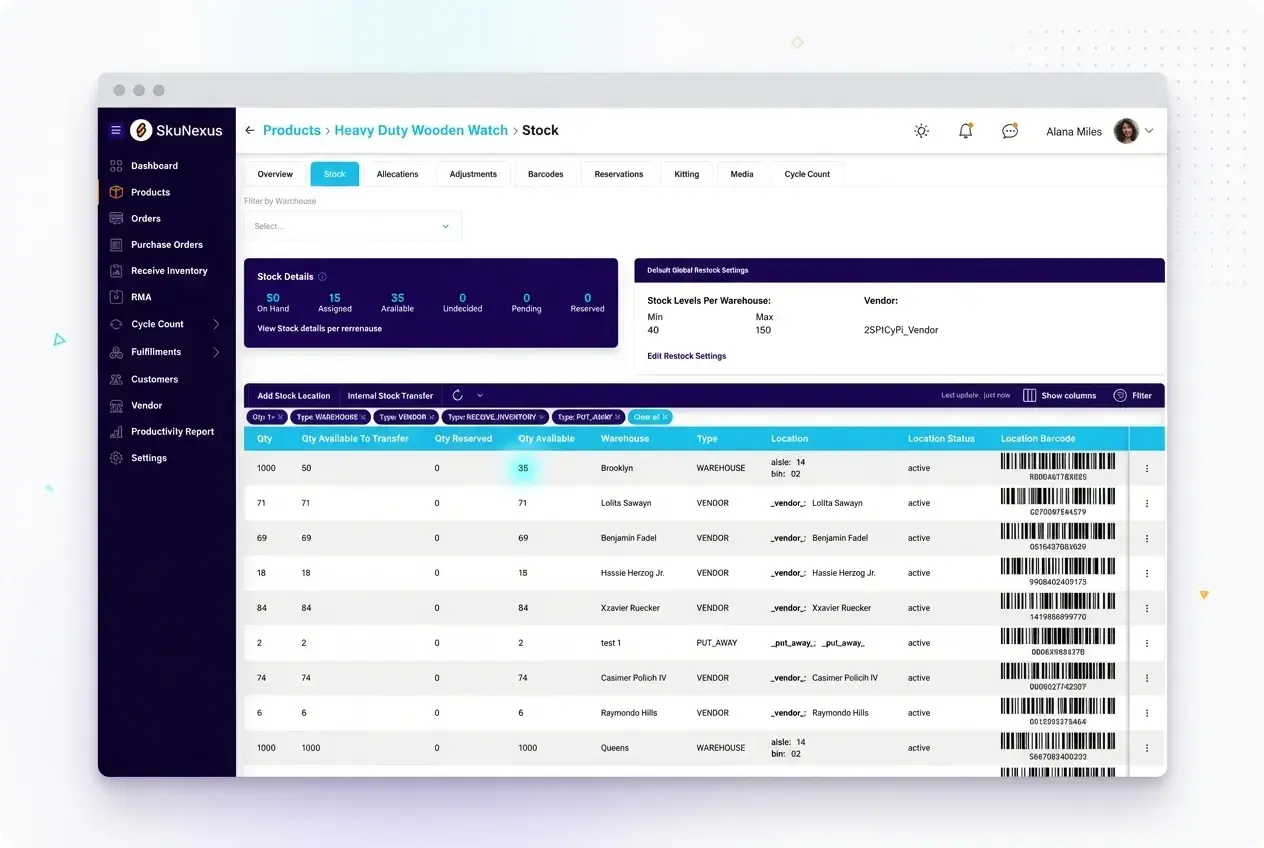
Set reorder points by product and location. The system triggers PO recommendations or auto-generates POs when stock drops.

Vendor & PO Management feature 1 — SkuNexus
Feature

Scan-Verified Receiving

Receive inventory against POs using barcode scanning. Discrepancies are flagged in real time — over-shipments, under-shipments, and wrong items caught at the dock door.

This receiving-to-PO matching is the link most tools miss. It's how you catch vendor errors at the dock instead of discovering them when a customer's order can't be filled.

  • Scan-to-receive against PO line items
  • Real-time discrepancy flagging
  • Partial receiving support
  • Directed putaway after receiving
Vendor & PO Management feature 2 — SkuNexus
Feature

Multi-Vendor Product Sourcing

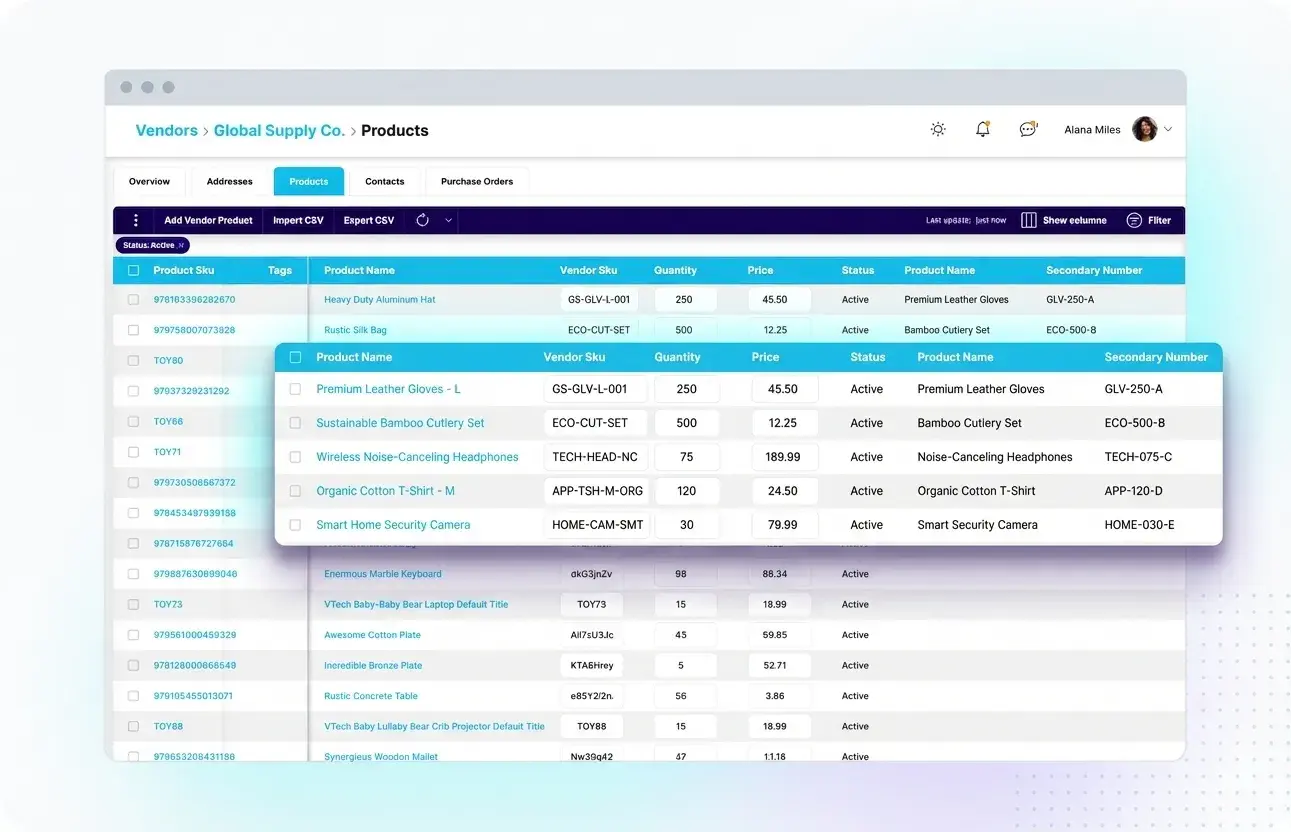
Products can be sourced from multiple vendors. The system selects the vendor based on rules: cheapest, fastest, best performance score, or geographic proximity.

The same vendors you manage POs with can also serve as dropship fulfillment sources. One vendor relationship across purchasing AND fulfillment.

  • Multiple vendors per product
  • Rules-based vendor selection
  • Dropship vendor coordination
  • Vendor catalog management
Vendor & PO Management feature 3 — SkuNexus
Feature

Landed Cost & Multi-Currency

Track the full cost of inventory including purchase price, shipping, duties, and other fees. Work with international vendors in their local currency.

Accurate landed costs feed into margin calculations, pricing decisions, and profitability analysis. No more guessing what your inventory actually cost to acquire.

  • Full landed cost tracking
  • Multi-currency PO support
  • Duty and freight cost allocation
  • Margin-accurate inventory valuation
The SkuNexus Difference

Why Merchants Choose SkuNexus for Vendor Management

🔗

POs and Inventory Live in the Same System

Most merchants track POs in one system and inventory in another. The gap between them is where vendor errors hide. In SkuNexus, PO receiving feeds directly into inventory — scanned and verified. No manual reconciliation. No overnight batch sync.

I can see how this workflow would be really, really nice for purchasing. It seems just much more purpose built.

Megan
🔄

Vendor + Fulfillment in One View

The same vendors you manage POs with can serve as dropship fulfillment sources. The Auto-Decision Engine routes orders to vendors, and the vendor management system tracks their fulfillment performance. One relationship across purchasing AND fulfillment.

♾️

Unlimited Vendors, No Per-Vendor Fees

Add as many vendors as your supply chain requires. No fee per vendor, per PO, or per receiving event. Your vendor network grows with your catalog without scaling software costs.

Case Study

A 150-year-old premium ice cream brand selling DTC, wholesale, and through national retail partners.

⚠️ The Challenge

Megan's team tracked purchase orders in spreadsheets and email threads. Vendor performance was measured by gut feeling, and receiving discrepancies weren't caught until downstream stockouts.

The Solution

SkuNexus PO lifecycle tracking with scan-verified receiving catches vendor errors at the dock. Performance scoring gives data for vendor negotiations.

📈 The Results

47%
Faster fulfillment
99.2%
Inventory accuracy
0
Oversells in Q4
100%
PO visibility improvement

"Our Smoothest Peak Season Ever"

An architectural hardware retailer managing 50+ vendors with complex product sourcing requirements.

Director of Operations, Graeter's Ice Cream
Vendor onboarding in 2 weeks
Integrations

Connects to Everything You Already Use

Native integrations with leading eCommerce platforms, shipping carriers, and accounting tools.

100+ Native
Integrations
+ many more
Comparison

Still Managing Vendors in Spreadsheets?

If your purchase orders live in spreadsheets and your vendor communication happens over email, you're managing blind.

Spreadsheet PO Tracking SkuNexus Vendor Management
POs in spreadsheets and email Full lifecycle tracking in one system
No receiving verification Scan-verified receiving against POs
Vendor performance unknown Data-driven performance scoring
Manual reorder decisions Automated reorder triggers
Receiving disconnected from inventory Instant inventory updates on receiving
No landed cost tracking Full cost visibility per unit

Purchase orders are where everything starts. If the PO process is broken, everything downstream is broken. SkuNexus fixes it at the source.

See It Live

Free demo • No credit card required

FAQ

Frequently Asked Questions About Vendor & PO Management

Vendor management tracks every supplier relationship alongside your inventory and orders in one system - purchase orders, receiving against those POs, vendor product catalogs with vendor-specific SKUs and pricing, lead times, and performance history. Without it, vendor relationships live in email chains, spreadsheets, and phone calls with no audit trail and no data to drive better purchasing decisions.

The connection to inventory is direct: your vendors supply the products you sell. When vendor management lives in a separate system from inventory and orders, the data that should inform purchasing decisions (what's selling fast, what's running low, which vendor delivers on time) is disconnected from the data that triggers those decisions. SkuNexus links every PO to its vendor, tracks scan-verified receiving against ordered quantities, maintains a full product catalog per vendor with SKU mapping, and connects reorder triggers directly to PO creation so the purchasing workflow is continuous and data-driven.

You create a PO specifying the vendor, products, quantities, costs, and expected delivery date. The system tracks the PO through its full lifecycle: created > sent to vendor > in transit > partially received > fully received > closed. As items arrive at your warehouse, your team scans them against the PO line items, and the system updates quantities received versus not received in real time.

Partial receiving is critical because vendors rarely deliver everything at once. A PO for 500 units might arrive in three shipments over two weeks. Your system needs to track how many units arrived in each shipment, reconcile against the ordered quantity, and flag discrepancies (short shipments, wrong items, damaged goods). SkuNexus supports scan-verified partial receiving - your team scans each item as it arrives, the system matches it against the PO, and you always know exactly what's been received, what's still outstanding, and what came in wrong.

Yes. You set a minimum stock threshold per product - either a simple quantity or a calculated value based on sales velocity and vendor lead time - and when inventory drops below that level, the system either alerts your purchasing team or auto-generates a purchase order to the assigned vendor. This prevents the reactive scramble of discovering you're out of stock when a customer order can't be fulfilled.

The difference between basic and smart reorder points is the calculation behind the threshold. Basic: reorder when stock drops below 50 units. Smart: reorder when stock drops below (average daily sales x vendor lead time in days) + safety buffer. The smart approach accounts for how fast you're selling and how long the vendor takes to deliver, so the PO arrives before you run out. SkuNexus connects reorder triggers directly to PO creation with vendor, product, and quantity pre-populated, so the workflow from trigger to purchase order is continuous.

A vendor product catalog maps each vendor to the products they supply, including the vendor's own SKU numbers, their pricing, minimum order quantities, and lead times. This means when you need to reorder Product A, the system already knows which vendor supplies it, what they call it in their system, at what price, how many you need to order minimum, and how long delivery takes.

This mapping is essential for two reasons. First, your internal SKU and the vendor's SKU are often different - without the mapping, someone has to look up the vendor's product code every time they create a PO. Second, when you have multiple vendors who can supply the same product, the catalog lets you compare pricing, lead times, and performance data to choose the best option. SkuNexus maintains a full product-level catalog per vendor with vendor SKU mapping, so PO creation pulls the right vendor product codes, pricing, and quantities automatically.

Dropship vendor management automates the workflow when a vendor ships directly to your customer instead of sending inventory to your warehouse. When an order is routed to a dropship vendor through the Auto-Decision Engine, the system generates and sends the vendor a PO or notification with the customer's shipping address and order details. The vendor ships directly and provides tracking, which pushes back to the customer through the sales channel.

The challenge with dropship is that one platform couldn't handle leaving dropship items alone during fulfillment - it kept trying to adjust inventory for items the merchant never physically stocked. This is a common frustration: systems built for warehouse fulfillment that bolt on dropship as an afterthought. SkuNexus treats dropship as a native fulfillment path at the line-item level, routing dropship items through the Auto-Decision Engine alongside warehouse and store pickup items on the same order.

Track vendors by measuring on-time delivery rate (did the shipment arrive when promised), fill rate (what percentage of the ordered quantity was actually delivered), lead time accuracy (how does actual delivery time compare to quoted lead time), and defect rate (what percentage of received items fail inspection). These four metrics tell you whether a vendor is reliable and getting better or worse over time.

The data has to come from your actual receiving records, not from the vendor's self-reported metrics. Every time your warehouse team receives against a PO - scanning items, comparing quantities, noting discrepancies - those events generate the data that feeds vendor scorecards. SkuNexus records every PO lifecycle event from creation through scan-verified receiving, giving you the raw data to measure vendor performance objectively and hold suppliers accountable with facts rather than gut feelings.

Yes. PO data - vendor, line items, quantities, costs, receiving dates, and payment terms - should flow directly to your accounting system so purchasing and accounts payable stay aligned without manual journal entries or duplicate data entry. When a PO is received in the warehouse, the inventory asset value in your accounting system should update automatically.

The alternative is manual reconciliation: someone receives inventory in the WMS, then logs into the accounting system and enters the same data again. This creates lag, introduces transcription errors, and means your financial records are always slightly behind operational reality. SkuNexus integrates with QuickBooks and other accounting platforms so PO data, COGS, and inventory valuation sync natively. The event happens once in SkuNexus - receiving a PO, shipping an order, adjusting inventory - and the financial record updates in your accounting system without a second touch.

Still have questions?

Talk to Our Team

Your Vendors Are Only as Good as Your Ability to Manage Them

Stop chasing POs through email threads and spreadsheets. SkuNexus gives you complete vendor lifecycle management in the same system managing your orders and warehouse.

Free demo No commitment See your data live