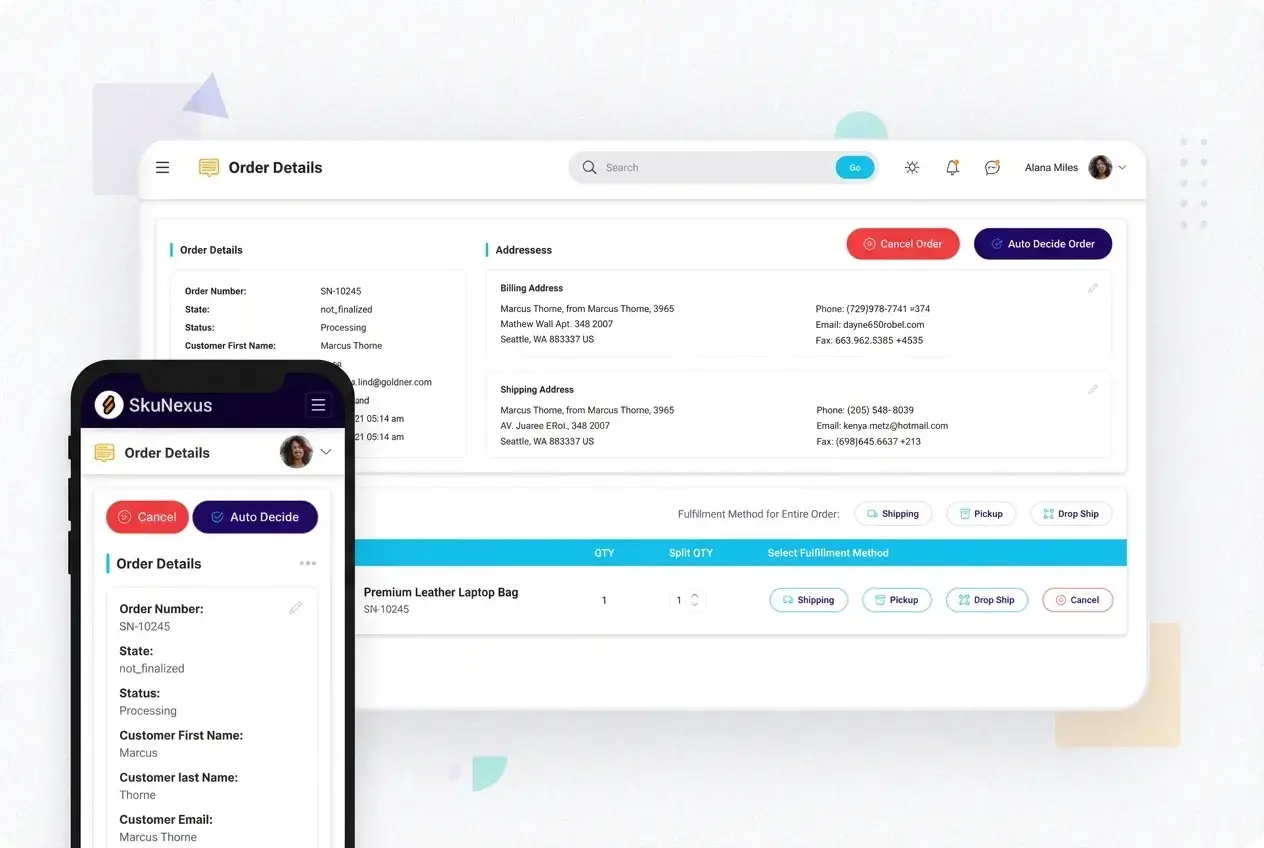
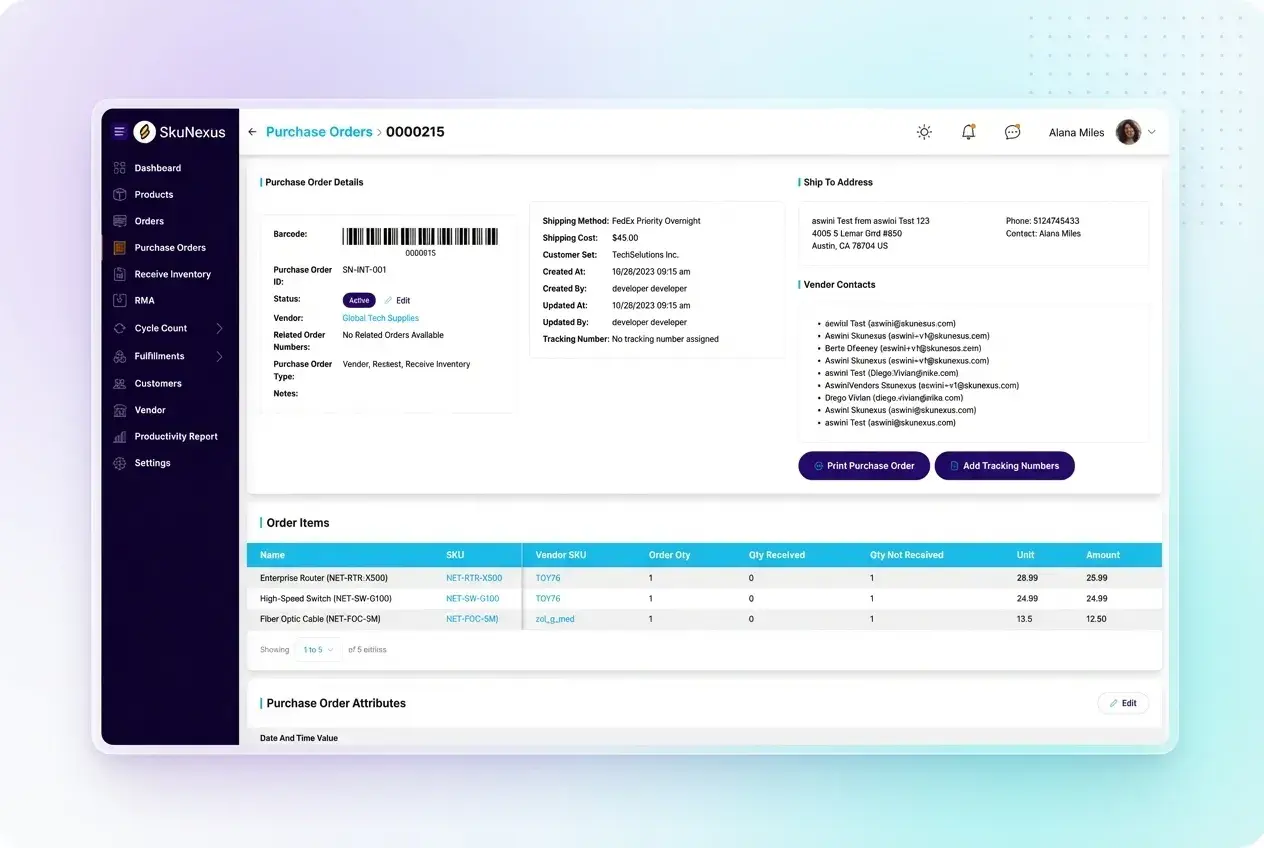
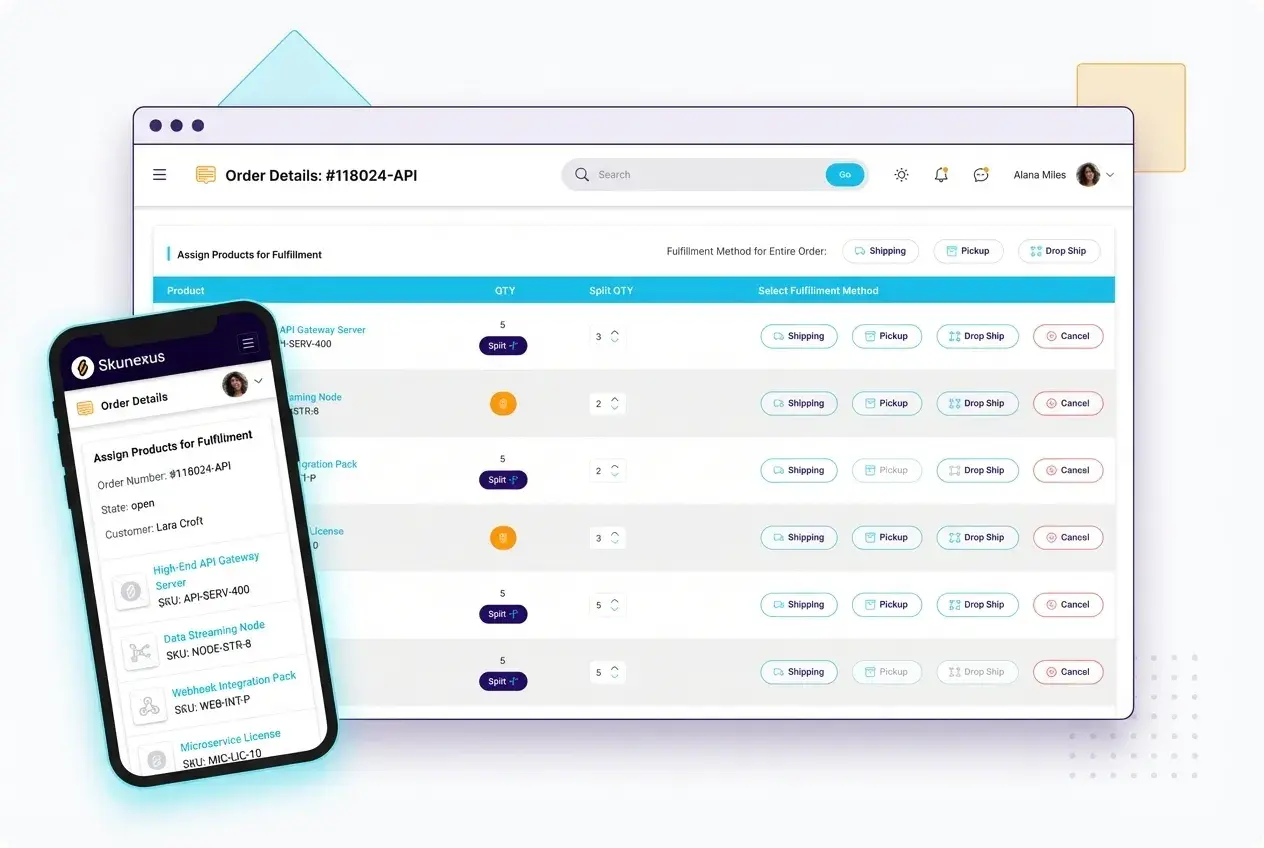
SkuNexus is an order management system that allows users full access to the source code, allowing complete control.
7400 Skokie Blvd, Skokie, IL 60077.
Shopify. Magento. Amazon. QuickBooks. Your carrier accounts. Your vendors. SkuNexus integrates with the platforms your business runs on — and replaces the tools you've been using to bridge gaps between them.
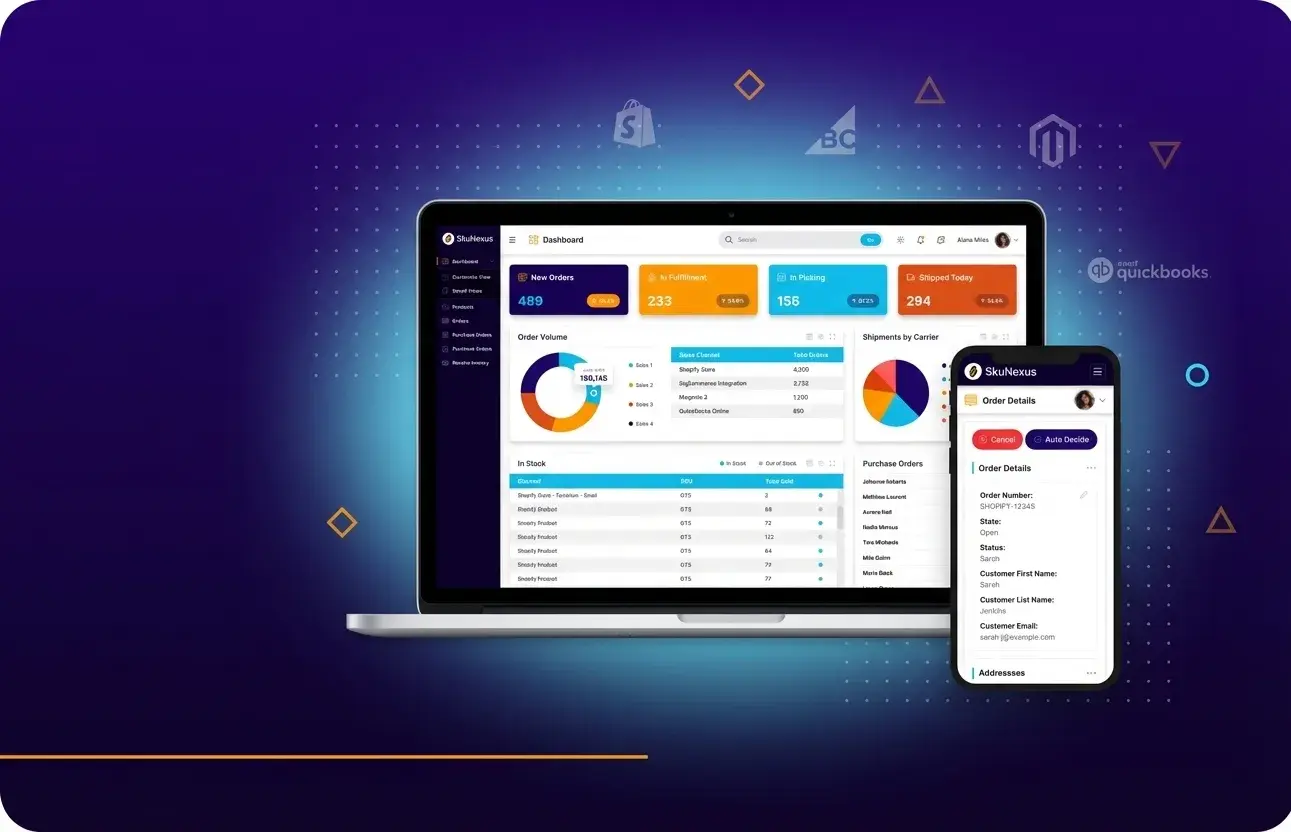
eCommerce integrations connect your sales channels, warehouse operations, shipping carriers, accounting systems, and vendor platforms into one unified workflow. They replace the manual data transfers, CSV exports, and multi-login juggling that fragment your operation.
SkuNexus integrations aren't just connections — they're replacements. When you connect Shopify + SkuNexus, you no longer need a separate shipping tool, inventory tool, or WMS. The integration count goes down, not up.
Built by a team with 20+ years of enterprise eCommerce integration experience (Magento, Shopify, BigCommerce, ERPs), SkuNexus integrations are event-driven and real-time — not scheduled batch syncs that create data lag.
Trusted by leading brands processing millions of orders
"We're running five tools to manage our operation. Each one talks to the others through integrations that break."
Five tools, five logins, five potential sync failures. Hours spent reconciling data discrepancies between systems.
Tool Sprawl"We asked about connecting to QuickBooks. The answer was vague, expensive, or 'we can't do that.'"
ERP integration shouldn't be a luxury feature. Your financial data needs to flow without CSV exports and manual imports.
ERP Disconnect"Magento is getting fat and heavy with extensions. Shopify's native inventory is too basic."
Using your eCommerce platform as a pseudo-WMS because nothing else connects cleanly. It's a compromise, not a solution.
Platform LimitationsSkuNexus connects to your essential platforms while replacing the tools that were just filling gaps between them.
See How It WorksShopify (unlimited stores), Magento/Adobe Commerce, BigCommerce, Shopware, WooCommerce, Amazon, eBay, Walmart — each connects via API. Real-time bidirectional sync for orders, inventory, and tracking. Over 60% of SkuNexus clients run on Shopify.
"My fascination with this is that you also understand Magento."
— Larry I.
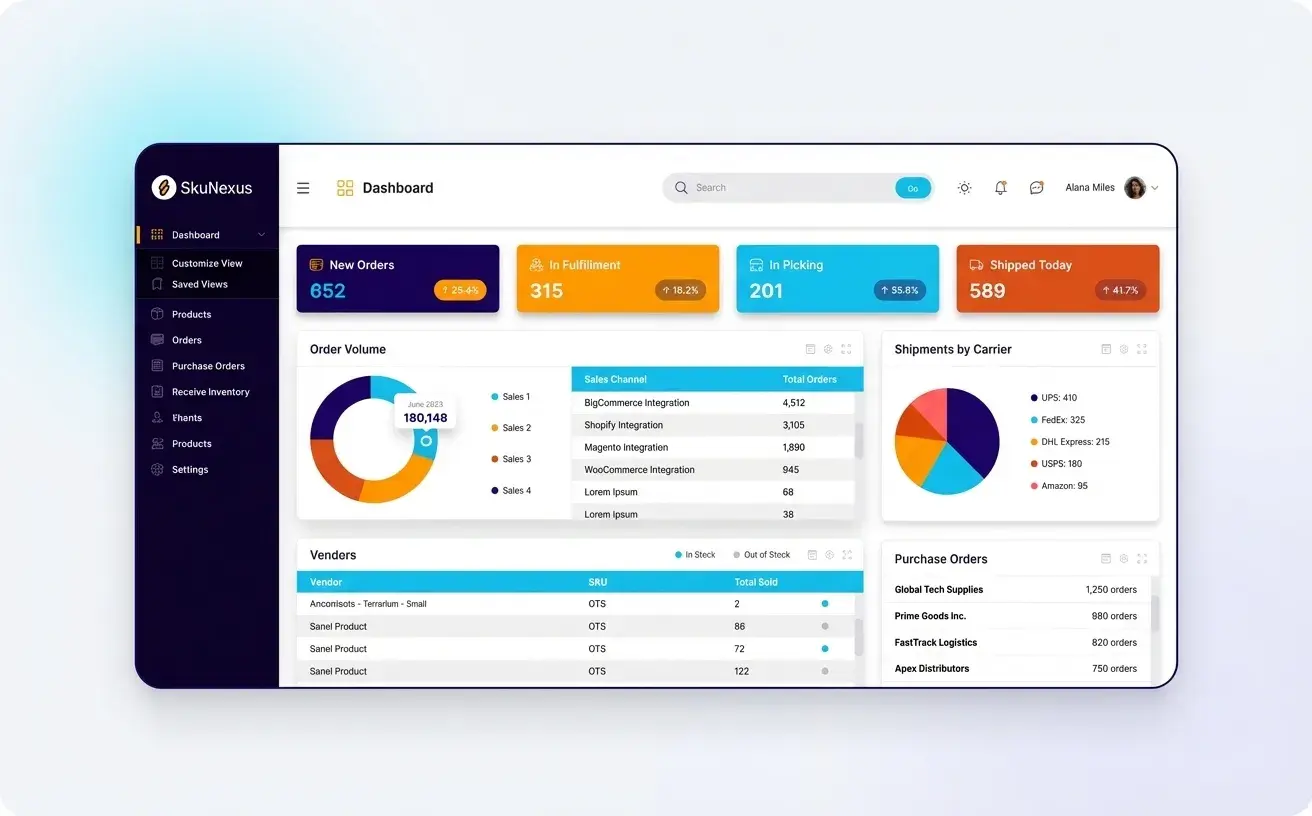
FedEx, UPS, USPS, DHL, regional carriers, and international services. Use EasyPost as a shipping aggregator or connect carriers directly. Your negotiated rates are used for accurate rate shopping.
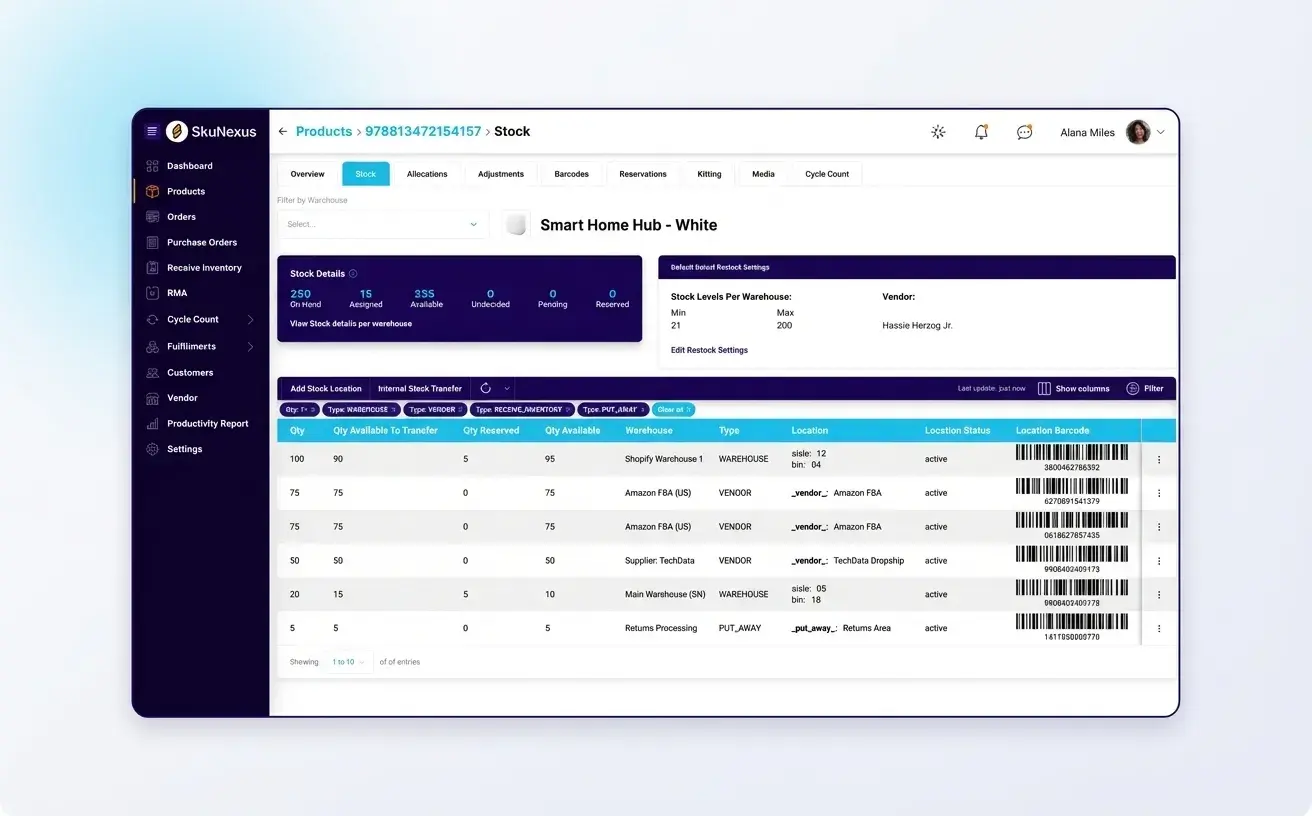
QuickBooks (Online & Desktop), Sage 100, and enterprise ERPs. Sync orders, invoices, and inventory adjustments. Replace your ERP's underperforming WMS module while keeping your ERP for financial management.
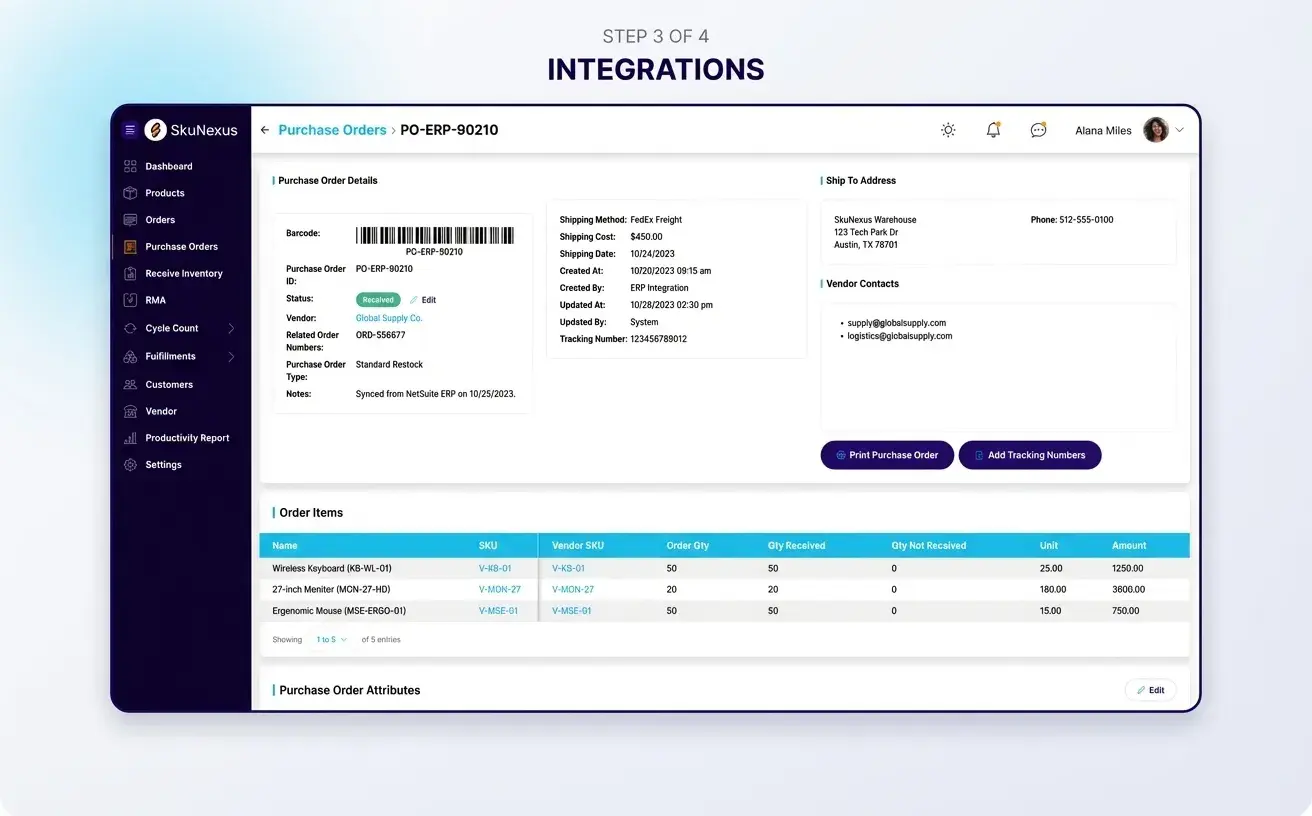
Every SkuNexus function is accessible via RESTful API with full Swagger documentation. Build custom integrations with CRM, marketing automation, analytics, or any system with an API. Webhook subscriptions for real-time event notifications.
"This is amazing. This is kind of like top-tier stuff."
— Adam W.
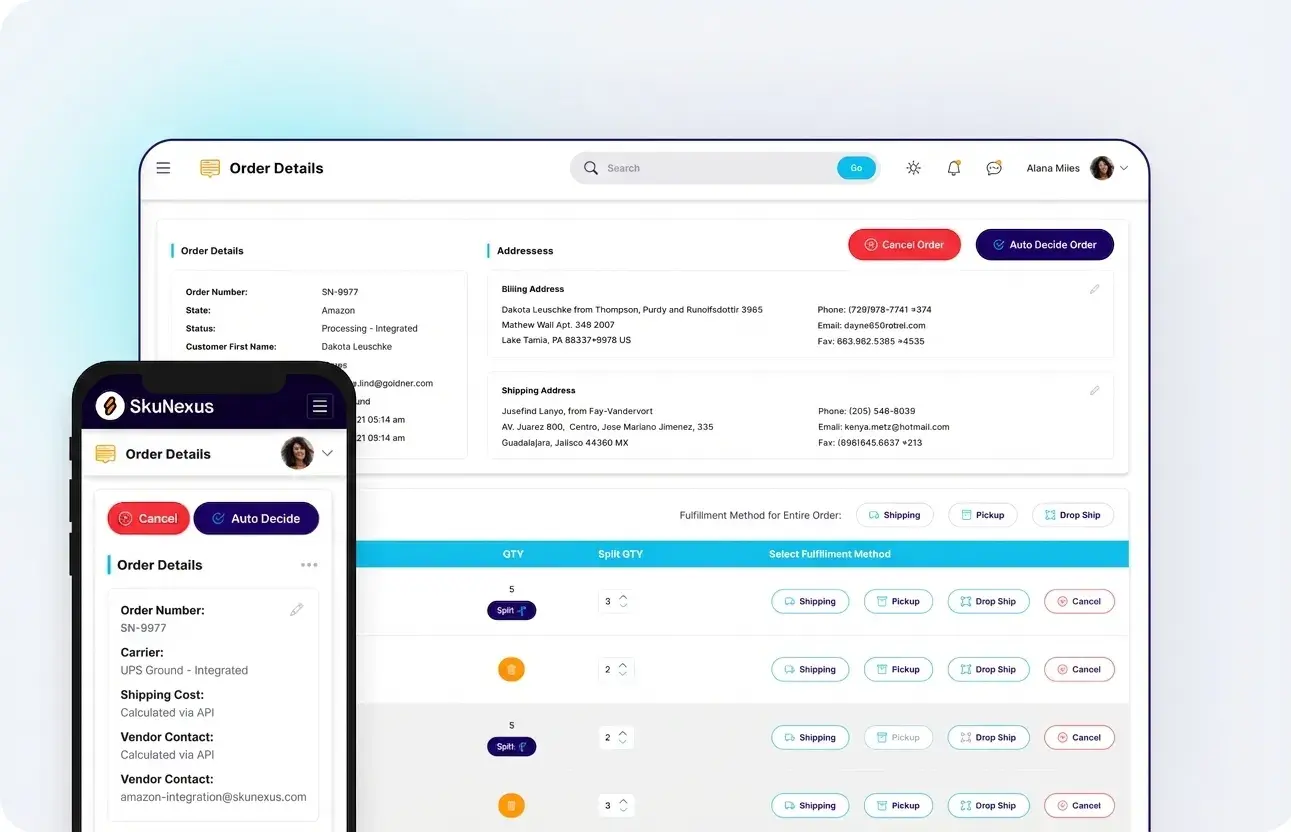
Why Teams Choose SkuNexus
Shopify, Magento, BigCommerce, Amazon, eBay, Walmart, QuickBooks, and more — configured during onboarding.
Event-driven via API webhooks. Orders, inventory, and tracking sync in seconds, not on a schedule.
RESTful API with Swagger docs. Build anything you need — custom integrations, dashboards, or automations.
Shopify & Shopify Plus (unlimited stores), Magento/Adobe Commerce, BigCommerce, Shopware, WooCommerce. Real-time bidirectional sync built by the same team that builds eCommerce stores.
SkuNexus was built by a Magento agency with 20+ years of enterprise eCommerce experience. The integrations aren't third-party connectors — they're built in-house.
Amazon (FBA + FBM), eBay, Walmart Marketplace, and additional marketplaces through API or connectors. SPS Commerce for EDI compliance with major retailers.
Marketplace-specific inventory staging, FBA stock as a separate warehouse location, and EDI document exchange for enterprise trading partners.
QuickBooks Online & Desktop, Sage 100, and enterprise ERPs. Sync orders, invoices, and inventory adjustments between SkuNexus and your financial system.
SkuNexus replaces your WMS, OMS, shipping tool, and inventory tool — but your ERP handles financials. The two systems sync so your data stays accurate without CSV exports.
Most integration stories are about connecting more tools. SkuNexus eliminates tools. Connect Shopify + SkuNexus and you no longer need a separate shipping tool, WMS, or inventory tool. The integration count goes down.
Our channel tool plus our inventory tool plus our shipping tool — we need one system for everything.
Event-driven via API webhooks. When an order comes in on Shopify, it's in SkuNexus within seconds. When inventory adjusts, every channel updates within seconds. No 15-minute lag.
SkuNexus's parent company has 20+ years of eCommerce integration experience. Magento, Shopify, BigCommerce, ERPs, custom platforms — when you ask 'can you connect to X?' the answer is usually 'we've done something similar.'
A lot of the other vendors do not expose really any data endpoints.
A 150-year-old premium ice cream brand selling DTC, wholesale, and through national retail partners.
"Our Smoothest Peak Season Ever"
Native integrations with leading eCommerce platforms, shipping carriers, and accounting tools.


Every integration point is a potential failure point. Fewer tools means fewer things that can break.
| Multi-Tool Stack | SkuNexus |
|---|---|
| ✕ 5+ tools to manage operations | ✓ One platform for orders, warehouse, shipping, inventory |
| ✕ Scheduled sync (15min-1hr lag) | ✓ Real-time event-driven sync |
| ✕ Per-channel and per-integration fees | ✓ Unlimited integrations included |
| ✕ CSV exports to connect ERP | ✓ Native ERP sync |
| ✕ Limited API, no webhook support | ✓ Full API with Swagger docs + webhooks |
| ✕ Integration maintenance is your problem | ✓ Built and maintained by SkuNexus team |
Your stack should work together — or better yet, be smaller. SkuNexus connects to your essentials while replacing the gap-fillers.
Free demo • No credit card required
SkuNexus integrates natively with major ecommerce platforms (Shopify, Magento, BigCommerce, Shopware, WooCommerce), marketplaces (Amazon FBA, Amazon FBM, eBay, Walmart), ERP and accounting systems (QuickBooks, Sage 100), and shipping carriers (UPS, FedEx, USPS, DHL). It also supports EDI for B2B wholesale channels and provides an open REST API for custom integrations with any system that has an API endpoint.
The goal is to replace the disconnected tools you're currently using to bridge gaps between platforms. Many merchants run a channel sync tool, a separate inventory tool, a WMS, a shipping platform, and accounting software - all partially integrated with each other through middleware. SkuNexus replaces the middle layers by natively connecting to your sales channels, carriers, and accounting system while handling inventory, orders, warehouse operations, and shipping internally. Fewer tools means fewer sync failures, fewer reconciliation headaches, and lower total software spend.
Ecommerce integrations use bidirectional API connections that sync three types of data. First, inventory levels: when stock changes in SkuNexus (from a sale, adjustment, receiving event, or return), updated available quantities push to every connected store and marketplace. Second, orders: when a customer places an order on any channel, it downloads into SkuNexus within seconds with full context (items, customer address, shipping method, channel source). Third, tracking: when an order ships, the tracking number and carrier push back to the sales channel so the customer sees their shipment status.
The quality of these integrations varies wildly across platforms. Some route through third-party middleware that adds sync lag and another potential point of failure. Others only sync inventory in one direction, or sync orders but not tracking. SkuNexus maintains native, direct API integrations that don't rely on middleware - so inventory, orders, and tracking flow directly between SkuNexus and each connected platform with minimal latency.
Yes, with no artificial limits. Unlike some platforms that restrict you to one Shopify store per account or one Amazon marketplace per connection, SkuNexus connects to unlimited stores, marketplaces, and accounts from a single instance. All channels draw from the same unified inventory pool, and all orders flow into the same queue for processing through the Auto-Decision Engine.
This is increasingly important as merchants grow. A brand might run separate Shopify stores for DTC, wholesale, and international markets, plus sell on Amazon US and Amazon Canada, plus list on eBay and Walmart. Each of these channels needs accurate, real-time inventory data from the same pool. One merchant described a previous platform that could only connect to one Shopify store per account - forcing separate inventory management for each store, which defeated the purpose of having a centralized system.
In most cases, yes. Channel-specific middleware exists because your OMS can't talk directly to your sales channels, or can't handle the inventory sync, order routing, and fulfillment orchestration needed across multiple platforms. When your OMS natively integrates with every channel and handles all of this internally, the middleware layer becomes redundant - and expensive.
One prospect was paying $3,400 per month for a channel management tool that provided no WMS, no shipping, and no order routing - just inventory sync across channels. That's over $40,000 per year for functionality that should be built into your operations platform. SkuNexus handles multi-channel inventory sync, order aggregation, fulfillment routing, warehouse management, and shipping from one platform. The channel management middleware, the separate WMS, and the standalone shipping tool get replaced by a single system that does all three.
SkuNexus syncs operational data to your accounting system so financial records stay accurate without manual journal entries or duplicate data entry. Purchase orders, receiving events, COGS calculations, inventory valuation, and sales data flow from SkuNexus to QuickBooks, Sage 100, or other accounting platforms automatically. When a PO is received in the warehouse, inventory asset values update in accounting. When an order ships, the sale records.
The alternative is manual reconciliation: the warehouse receives inventory in the WMS, then someone logs into the accounting system and enters the same data again. This creates lag between operational reality and financial records, introduces transcription errors, and means your books are always slightly behind what's actually happening. For QuickBooks and Sage 100, SkuNexus provides native integrations. For other ERPs, the open REST API enables custom data flows between systems.
EDI (Electronic Data Interchange) is a standardized format for exchanging business documents - purchase orders, invoices, advance ship notices, and inventory updates - between trading partners electronically. You need EDI when selling to major retailers (Walmart, Target, department stores) or working with large B2B customers who require it as a condition of doing business. These partners won't accept orders via email or CSV upload; they require EDI-formatted transactions.
Many ecommerce merchants start as DTC-only and add wholesale channels as they grow. The first time a major retailer requires EDI compliance as a condition of partnership, merchants realize their operations platform either supports it or they need yet another specialized tool. SkuNexus supports EDI integration for merchants who sell wholesale alongside their DTC channels, so B2B document exchange works within the same platform that manages your DTC orders and warehouse operations.
API-first means every function in the platform is accessible through a documented REST API - not just a few endpoints the vendor chose to expose. If you can do it in the web interface, you can do it programmatically through the API. This matters because your business will eventually need an integration, automation, or workflow that the vendor didn't plan for, and the API is how you build it.
With a closed or limited API, you're dependent on the vendor to build every integration and feature you need. When they say no or deprioritize it, you're stuck. With an API-first platform, your developers build what you need without waiting. Examples include custom reporting dashboards that pull operational data, automated workflows that trigger actions in other systems when events occur in SkuNexus, and integrations with niche tools specific to your industry. SkuNexus is fully API-accessible with documentation, so your team maintains control over your tech stack's capabilities.
Still have questions?
Talk to Our TeamEvery integration point is a potential failure point. SkuNexus connects to your essential platforms while replacing the tools that were just filling gaps.
SkuNexus is an order management system that allows users full access to the source code, allowing complete control.
7400 Skokie Blvd, Skokie, IL 60077.