AI Warehouse Operations: From Pilot to Production in 90 Days
What AI in Warehouse Operations Actually Means
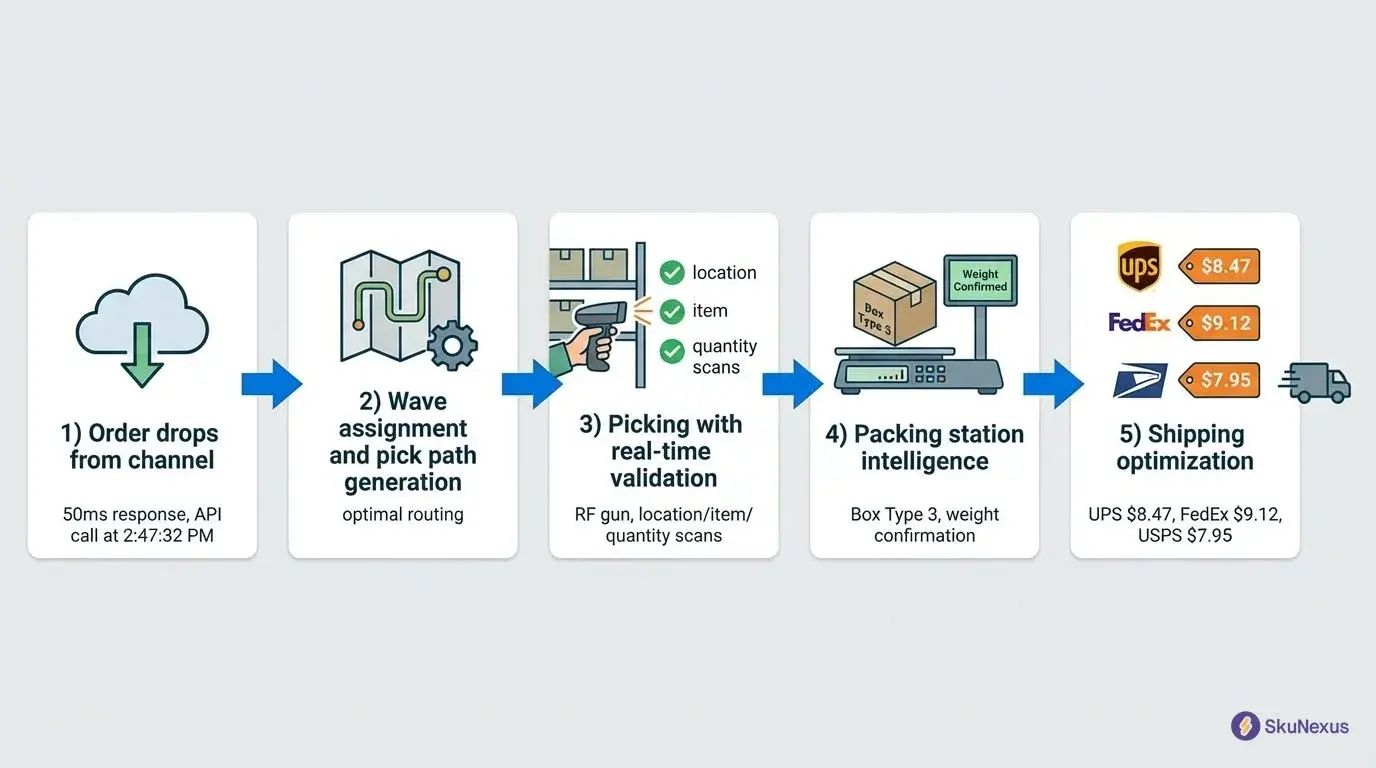
Wave picking, directed putaway, and barcode-driven workflows sized for teams shipping 50 to 20,000 orders a day, without an 18-month enterprise implementation.
That foundation decides whether AI in your warehouse produces anything real. In SkuNexus buying conversations, the recurring complaint about warehouse software is rigidity: buyers describe platforms where "it's very rigid," where the system insists on its exact part numbers and its exact process while the floor works differently, and where daily reality is still spreadsheets and manual picking. AI bolted onto a system like that learns a workflow nobody actually follows. This guide covers what AI genuinely does in warehouse operations today, what has to sit underneath it, and how to get from pilot to production without an enterprise-scale project.
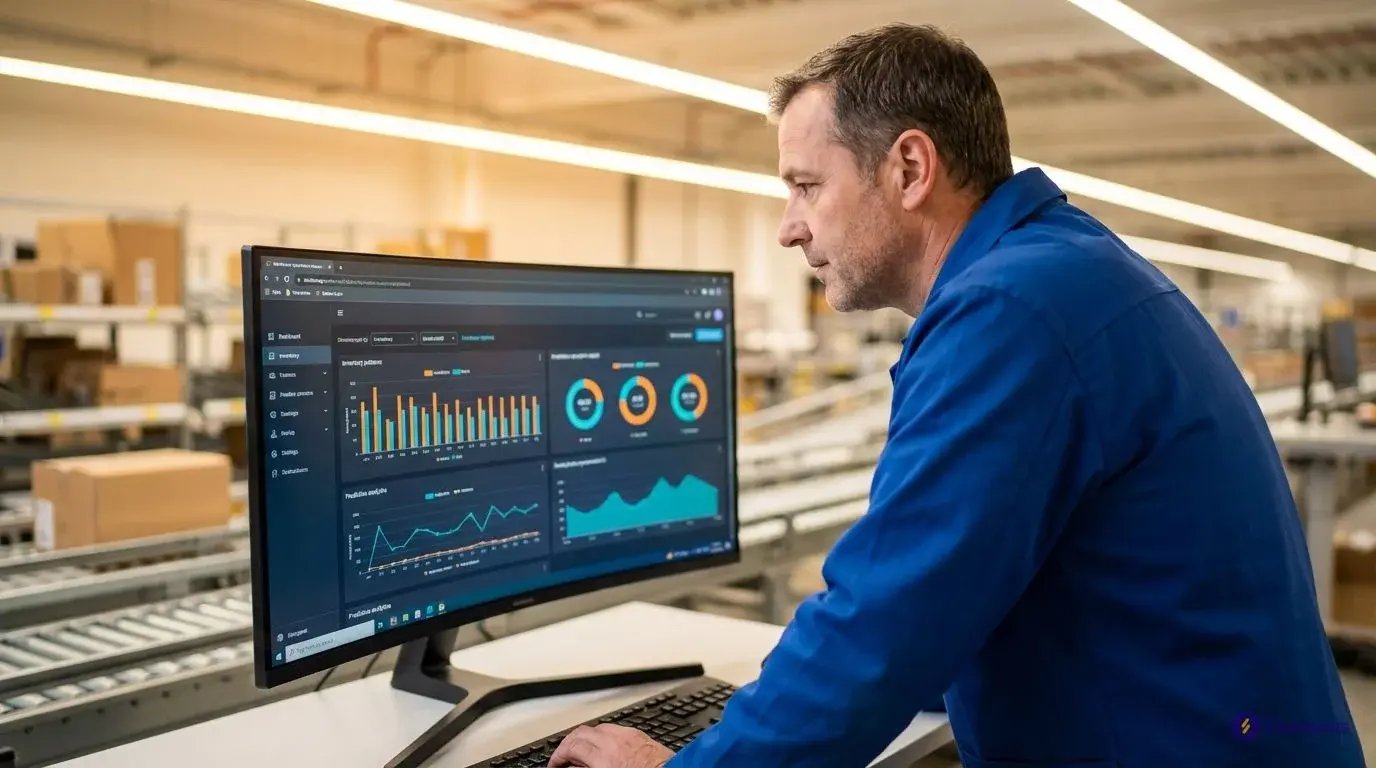
AI in warehouse operations means your systems learn from data instead of following pre-programmed rules. They adapt to changing conditions without human intervention and identify patterns across millions of transactions that would take analysts months to discover.
What AI Actually Does in Warehouse Operations Today
Strip away the hype and AI earns its place in a warehouse through a short, concrete list of jobs. These are the functions running in real facilities right now, not roadmap promises:
- Demand forecasting. Reads sales history alongside outside signals so reorder points and safety stock track real demand instead of a static average.
- Slotting optimization. Recommends where each SKU should live based on velocity and order pairing, so fast movers and frequently co-picked items sit closer to packing.
- Pick-path optimization. Builds picker routes from current order density instead of a fixed zone sequence, trimming travel between picks.
- Anomaly detection in counts. Flags inventory counts and movement patterns that do not fit history, surfacing a swapped bin or a putaway error before it cascades into mis-ships.
- Automated routing rules. Routes orders to the right location, carrier, or pick method automatically when the conditions you define are met, removing manual triage.
Every one of these depends on a system of record that already holds clean inventory, order, and location data. AI sits on top of that operational layer; it does not create it. That is why teams that run AI well usually already run a configurable warehouse management and inventory software platform underneath, where the rules and data structure can bend to the workflow the AI is learning from.
7 AI Applications That Pay for Themselves in 12 Months
The average warehouse AI project pays for itself in 11 months. That's 2023 MHI data from 127 actual implementations.
Here are seven applications already running in real warehouses. Each generates measurable returns within a year.
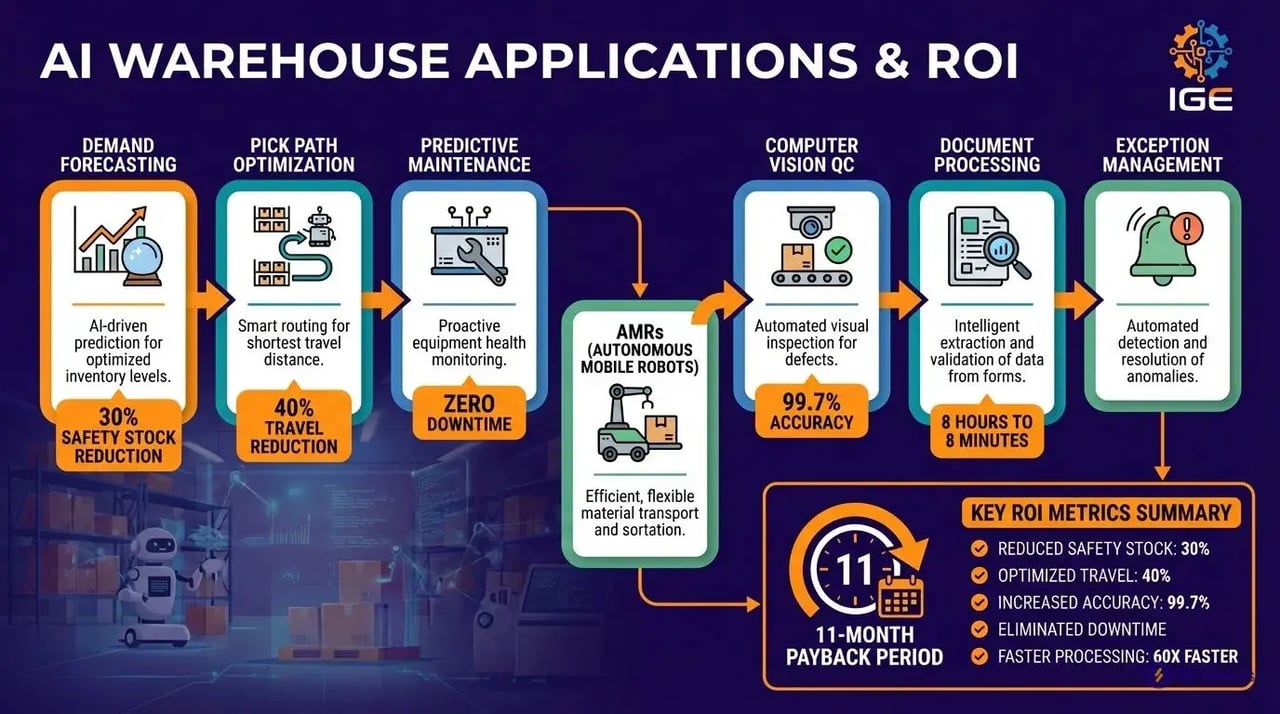
1. Demand Forecasting That Cuts Safety Stock by 30%
Traditional forecasting tracks historical sales and seasonality. AI analyzes 50+ signals simultaneously - weather patterns, social media buzz, regional events, supplier delays.
One fashion retailer cut safety stock by 30% while improving fill rates by 4%. Rain forecasts in Texas triggered 40% more boot orders within 72 hours. TikTok mentions drove 200% spikes in specific colors.
The benefit lands in three places: lower inventory carrying cost, less expedited shipping, and the revenue that a 4% higher fill rate brings with it. Run the math on your own numbers.
2. Pick Path Optimization: 40% Reduction in Travel Distance
Zone-based picking forces pickers through predetermined routes regardless of demand patterns. AI routing creates dynamic paths based on real-time conditions.
A 50,000 square foot warehouse cut travel distance by 40% per order. Instead of visiting zones A-B-C in sequence, AI routing clusters picks by density, then optimizes return paths based on current congestion.
The system recalculates paths every 30 seconds based on SKU velocity, current order patterns, and picker locations. Labor savings: 2.3 hours per picker per day, which is 46 hours a day back on a 20-person picking team.
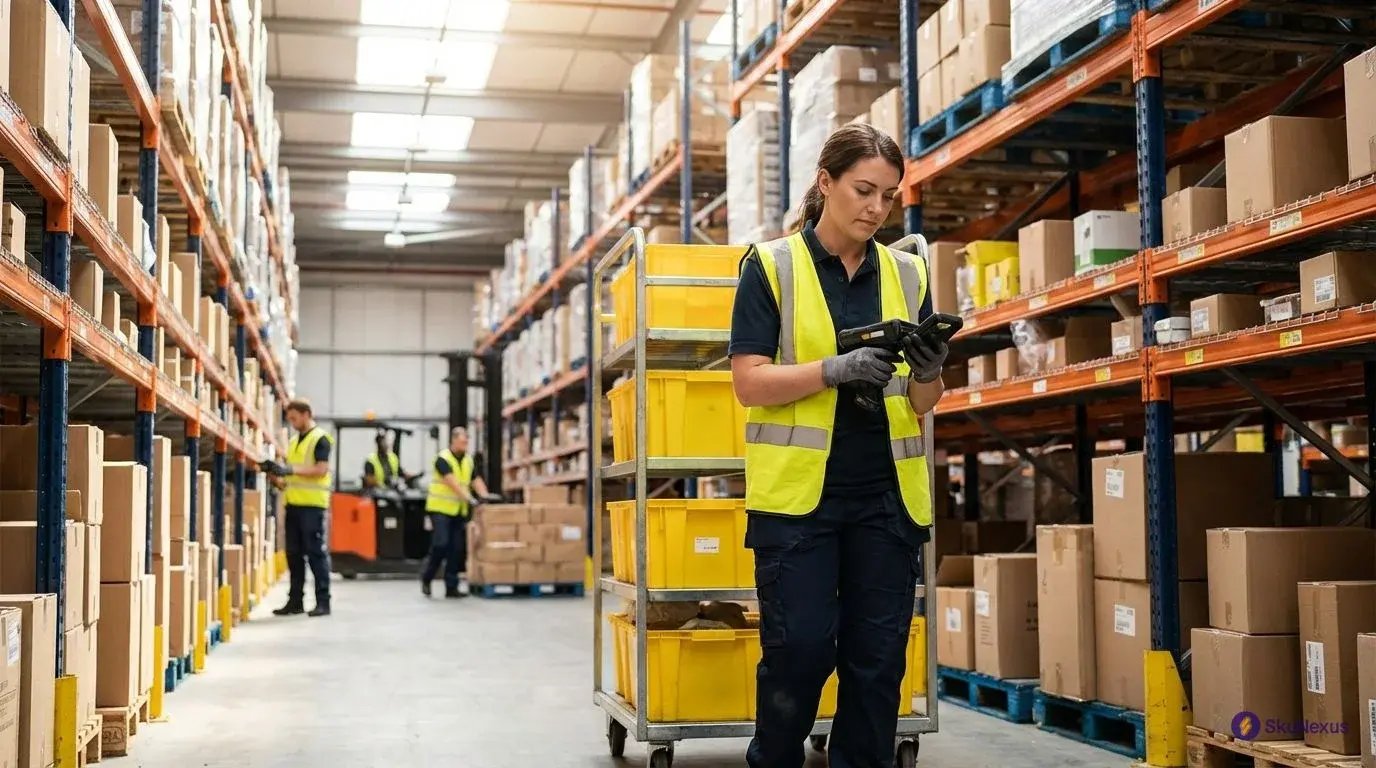
3. Predictive Maintenance: Zero Unplanned Downtime
Equipment failures follow patterns. Vibration increases 3 weeks before conveyor belt failure. Motor temperature spikes 10 days before breakdown.
Machine learning algorithms track these patterns across five critical equipment types. One distribution center avoided a season of rush shipping by scheduling conveyor maintenance during a planned slow period instead of emergency repairs during peak season.
Equipment failure prediction windows:
- Conveyor systems (21-day advance warning)
- Sorters (14-day warning)
- AS/RS cranes (28-day warning)
- Packaging equipment (10-day warning)
- Dock doors (7-day warning)
Benefits beyond avoided downtime: 60% reduction in maintenance costs, 40% longer equipment life, 25% lower insurance premiums.
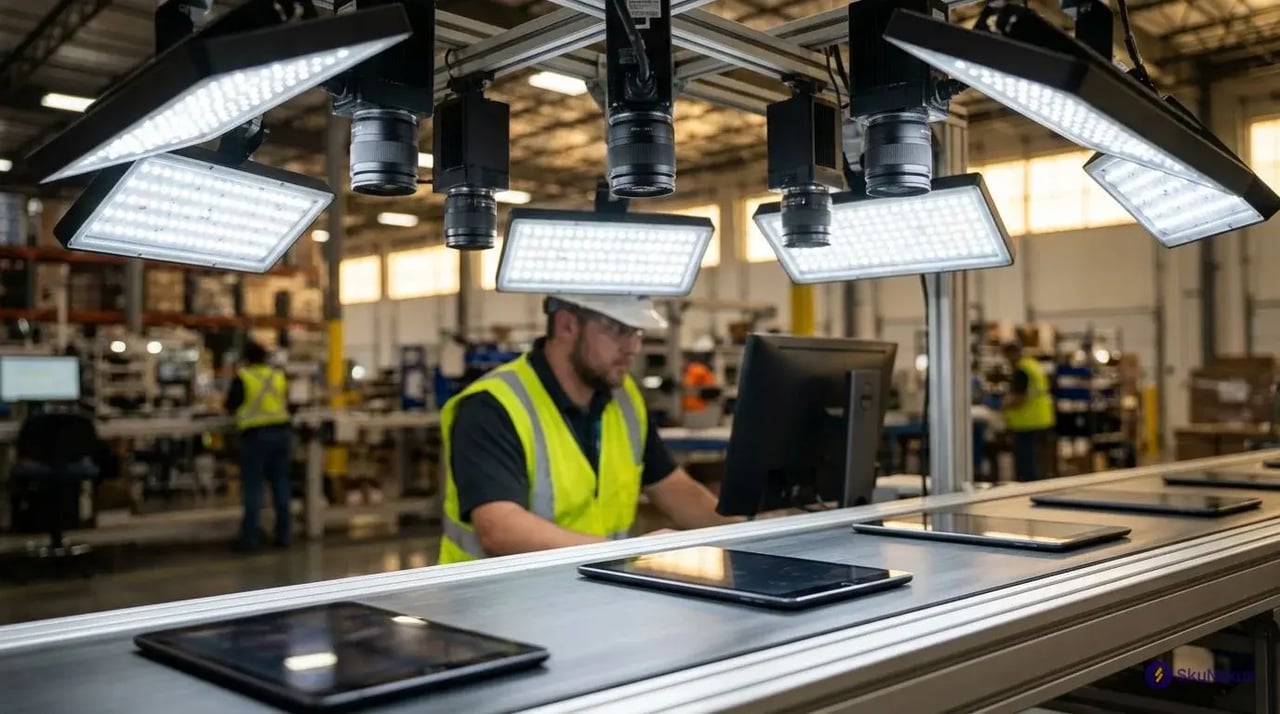
4. Computer Vision Quality Control at 99.7% Accuracy
Human inspectors miss 6% of defects due to fatigue and visual limitations. Computer vision systems process 1,200 items per hour versus 150 for manual inspection.
An electronics distributor reduced returns by 40% after implementing AI quality control. The system flagged 400 tablets with micro-scratches visible only under specific lighting angles before they shipped. That prevented 400 returns and the complaints that come with them.
Quality inspection pays back in returns processing, customer service load and prevented chargebacks. Plus 8x faster inspection speed freed up 3 full-time inspectors for value-added tasks.
5. AMRs That Learn Your Warehouse Layout
Automated Guided Vehicles follow fixed paths. Autonomous Mobile Robots adapt to changing conditions without reprogramming.
A 3PL deployed 12 AMRs and cut its transport labour bill sharply. The robots now handle 70% of transport tasks while human workers focus on complex picks and exception handling.
Construction blocked a main aisle last month - the AMRs rerouted automatically. Seasonal layout changes that used to require weeks of magnetic tape updates now happen in hours. Additional benefits: 30% reduction in workers comp claims, 15% energy savings from optimized routes.
6. Document Processing: 8 Hours to 8 Minutes
Manual data entry from bills of lading, invoices, and packing lists consumes massive labor hours. Natural Language Processing systems read documents in any format and extract data automatically.
A wholesale distributor processing 300 documents daily reduced processing time from 8 hours to 8 minutes. Accuracy improved from 94% to 99.2%, and 8 hours of daily document handling became 8 minutes.
Hidden ROI multiplier: Faster document processing enables same-day shipping for 40% more orders, and premium shipping fees follow.
7. Real-Time Exception Management
Small problems multiply fast in warehouse operations. An AI system at a major distributor noticed unusual picking patterns in Zone C. Three pickers had grabbed wrong items from the same location.
Investigation revealed someone had swapped two SKU locations during putaway. The system flagged it after detecting the pattern in just three picks. Without AI monitoring, that error would have caused 300+ mis-ships before anyone noticed.
Exception types AI catches fastest:
- Inventory discrepancies
- Shipping delays (4 hours early warning)
- Quality issues by supplier
- Equipment anomalies
- Staffing gaps based on patterns
Exception management delivers an 85% reduction in mis-ships, 60% faster problem resolution and 40% fewer customer complaints. One facility got all of it just from catching inventory errors before they cascaded.
The Real Numbers: ROI from AI Warehouse Investments
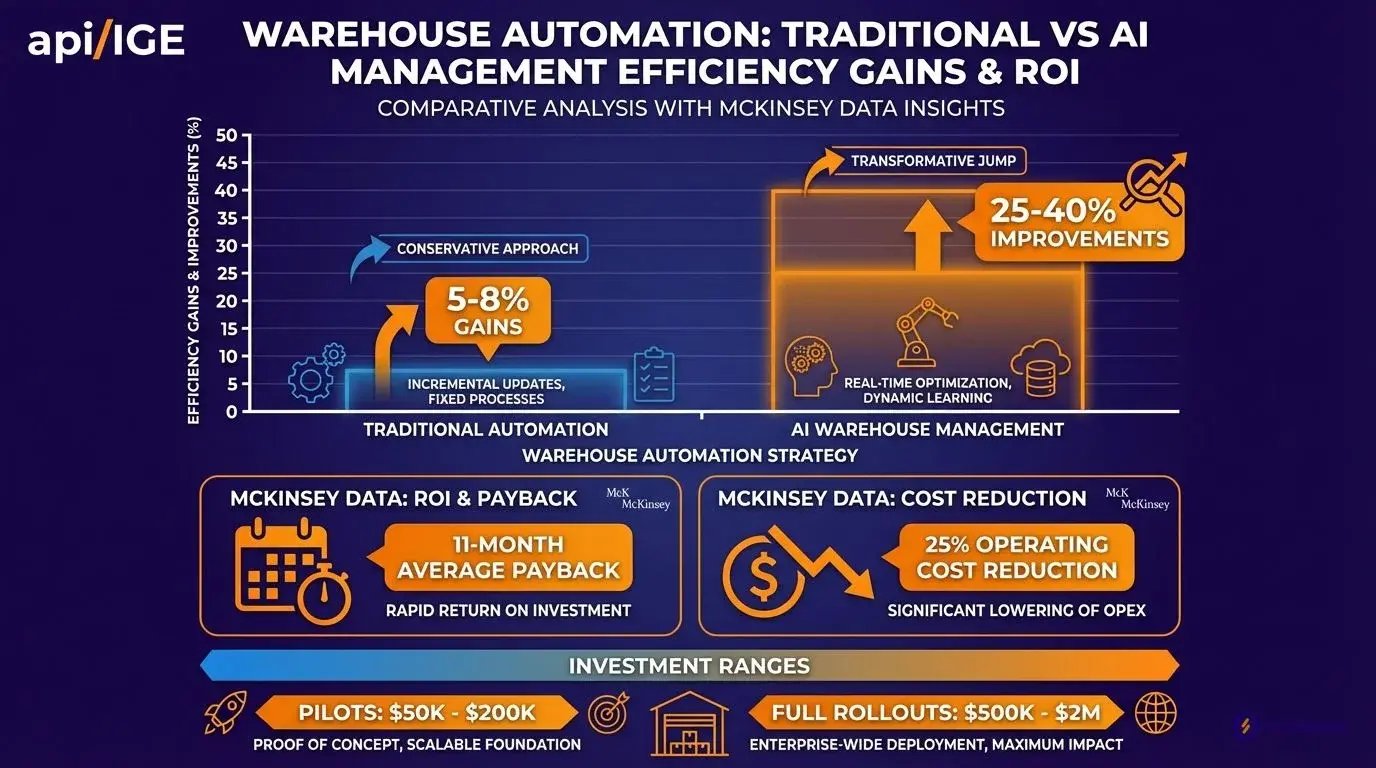
McKinsey tracked 127 AI warehouse implementations. Average payback: 11 months. Operating cost reduction: 25%. Pilots cost a fraction of a full rollout.
Traditional warehouse automation delivers predictable 5-8% efficiency gains. AI in warehouse management delivers 25-40% improvements because it optimizes continuously instead of following static rules.
Labor Savings: 40% Reduction Without Layoffs
Nobody gets fired. They get promoted. Pickers become quality inspectors. Forklift drivers manage AMR fleets. One retailer cut overtime to near zero and promoted 15 warehouse workers to tech roles. Same headcount, different work.
A beverage distributor reduced picking labor by 35% but increased quality control staff by 20%. Net result: lower labour cost plus 60% fewer customer complaints.
Space Utilization: 25% More SKUs, Same Footprint
AI enables dynamic slotting that adjusts daily based on order patterns. A food distributor added 2,500 SKUs without expansion and cancelled a planned building. The system moved fast-movers to premium locations and consolidated slow-movers into vertical storage.
Traditional slotting happens quarterly. AI adjusts locations daily based on velocity changes, seasonal patterns, and order clustering.
Hidden Savings Most Vendors Won't Tell You
Workers comp claims drop 30% with AMRs handling heavy lifting. Energy costs fall 20% through optimized lighting and HVAC. Insurance premiums decrease 15% after two years of improved safety records.
The biggest hidden benefit: customer retention. A sporting goods retailer tracked 12% higher repeat purchase rates after AI reduced shipping errors by 85%. That is revenue they never expected from a warehouse investment.
Real ROI includes reduced expedited shipping, fewer chargebacks, and eliminated emergency inventory purchases. One auto parts distributor found all three lines bigger than the software line in year one.
Your 90-Day Implementation Roadmap
I've guided 50+ warehouse AI implementations. Most consultants pitch 18-month transformations. That's nonsense.
You need results this quarter. Here's the battle-tested approach that delivers ROI in 90 days.
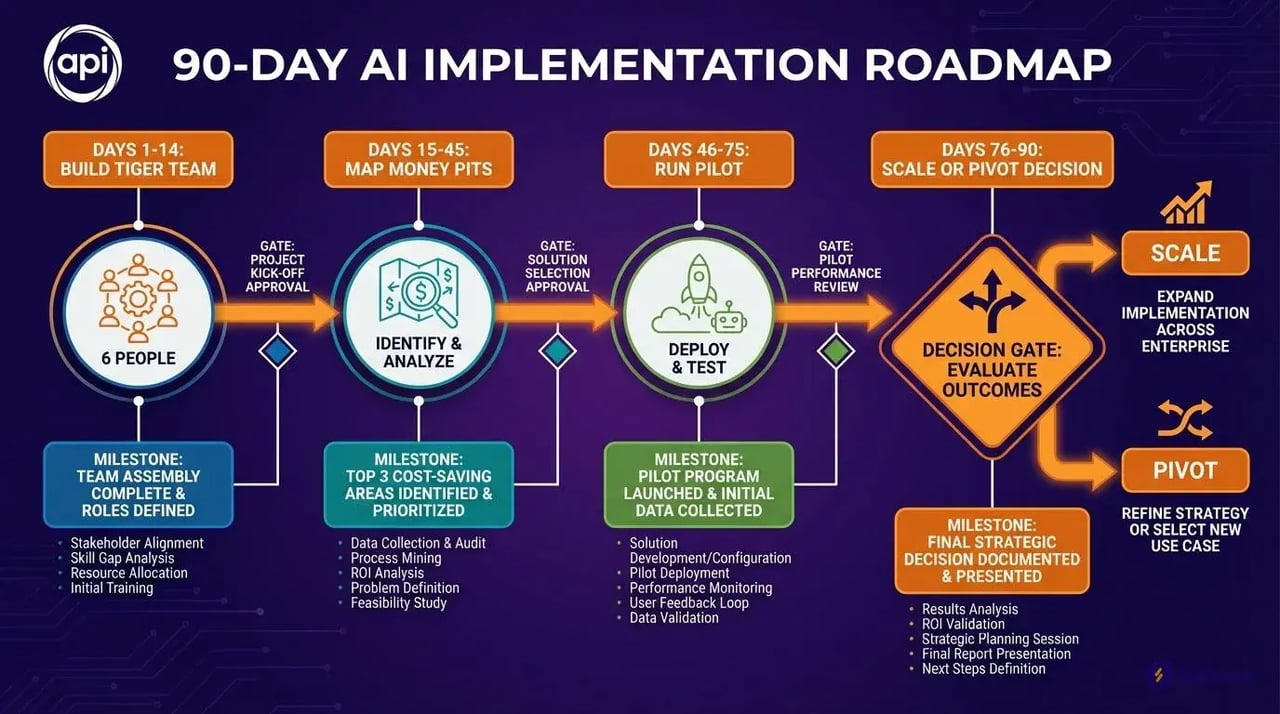
Days 1-14: Build Your Tiger Team
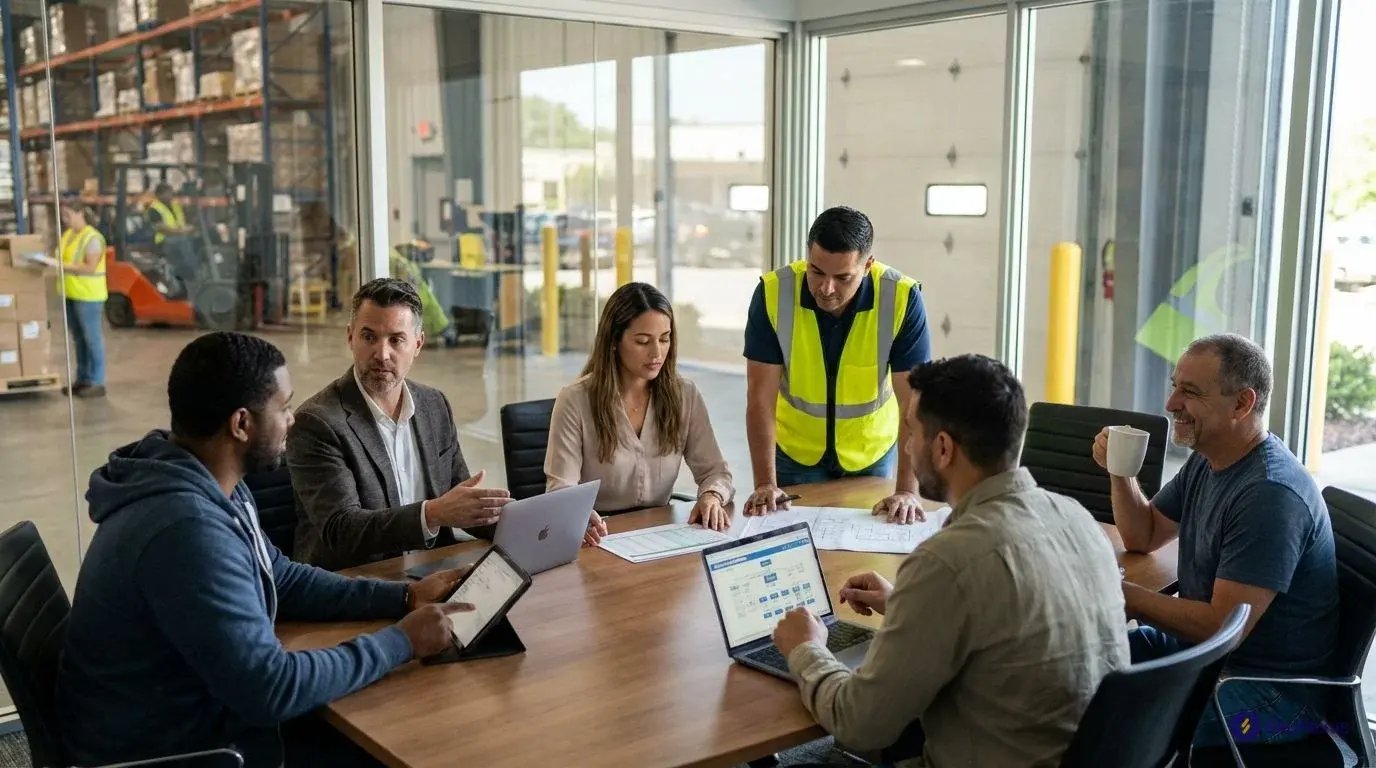
Six people. Not twenty. Not a steering committee. Six people who'll make this happen.
Your essential roster:
- Warehouse ops lead (owns the P&L impact)
- IT architect (handles system integration)
- Finance analyst (tracks every dollar saved)
- Floor supervisor (knows where bodies are buried)
- Top picker (tests everything first)
- Skeptical veteran (your built-in devil's advocate)
First meeting happens Day 3. Calculate current baseline: average pick time, daily error rate, monthly labor cost. Pick one process that hurts financially and affects 20+ people. Set your success metric at minimum 20% improvement.
Meet twice weekly. Keep meetings under 45 minutes.
Days 15-45: Map Your Money Pits and Pick Your AI Application
Use this formula: (Labor Hours × Hourly Rate) + (Error Cost × Frequency) + (Opportunity Cost) = Total Pain
Real example: Returns processing averaged 47 minutes of labour per return, plus shipping and restocking on top. At 500 returns weekly that is 392 hours a week.
Your top three money pits:
- Returns
- Mispicks, including reshipping
- Stockouts (lost sales plus expedited ordering)
Time studies with stopwatches. Error logs from your WMS. Actual labor costs including overtime.
Match your biggest pain to the right AI application:
For picking inefficiencies: Route optimization AI that learns from picker behavior patterns. Cuts travel time 30-40% within weeks.
For inventory errors: Computer vision systems that verify picks in real-time. Reduces mispicks by 85% and catches location errors before they cascade.
For demand planning disasters: Forecasting AI that processes weather, events, and social signals. Prevents stockouts while cutting safety stock 25%.
For equipment failures: Predictive maintenance that monitors vibration and temperature patterns. Eliminates unplanned downtime and cuts maintenance costs 60%.
For quality issues: Automated inspection using machine learning. Processes 8x faster than humans at 99.7% accuracy.
Build your hit list. Rank by annual cost. Pick the biggest target and match it to the AI application that directly attacks that problem.
Days 46-75: Run Your Pilot
One process. One shift. One week.
Pick something visible but contained. Returns processing works perfectly - clear start/stop, measurable time, immediate impact. Set your success bar at 20% improvement minimum.
Daily pilot scorecard:
- Baseline metric: _____
- Today's result: _____
- Variance: _____%
- Employee feedback: _____
Document everything. Screenshot error messages. Record complaints. Track weather, holidays, anything that might skew results.
Example that worked: pick path optimization for top 100 SKUs, first shift only. Baseline: 8.2 minutes average pick time. Week 1 result: 5.7 minutes. Employee feedback: "Walked 3 miles less today."
Track the ROI daily. Labor savings show up immediately.
Days 76-90: Scale or Pivot Decision
Three gates determine your next move. All must be "yes" to scale:
Gate 1: ROI Achieved?
- Pilot delivered 20%+ improvement
- Payback period under 12 months
- Benefits exceed costs by 3:1 minimum
Gate 2: Employees Engaged?
- Adoption rate above 80%
- Positive feedback outweighs negative 3:1
- No productivity sabotage
Gate 3: Systems Stable?
- Less than 5% error rate
- IT can support 5x current load
- Integration works with existing WMS
If yes to all three, scale to 25% of operation. Not 100%. Quarter-by-quarter expansion prevents failures and lets you capture ROI incrementally.
If any gate fails, pivot immediately. The pilot investment is sunk. The lessons aren't.
One DC failed their first pilot (inventory counting). Pivoted to dock scheduling and eliminated detention fees in year 1. Another failed at pick optimization but succeeded with quality control, cutting returns by 40%.
The ROI compounds as you scale.
Implementation Timeline and Resource Load: What Actually Drives It
People ask for a single number, often something like "how long to deploy AI inventory software in a 200,000 square foot facility, and how many people does it take." The honest answer is that the calendar is set by four factors, not by the size of the building alone. A large facility with clean data and a modern system of record can move faster than a small one running on spreadsheets and a decade-old WMS.
The four factors that set the timeline:
- Integration surface. How many systems the AI has to read from and write back to: WMS, ERP, sales channels, shipping. Each connection is scope. A clean API on the system of record is the single biggest accelerator.
- Data quality. Whether item masters, locations, and on-hand counts are accurate today. Models learn from history, so the cleaner the existing data, the shorter the validation stage.
- Facility size and complexity. Square footage matters less than SKU count, number of pick zones, and order profile. A 200,000 square foot single-zone bulk operation is simpler than a 60,000 square foot facility with thousands of small SKUs and mixed order types.
- Rollout approach. Whether you pilot one zone first or attempt the whole floor at once. Phased rollouts take longer on paper but fail far less often.
A phased deployment moves through three stages, and what sets the length of each is more useful than a fixed week count:
- Pilot zone. One application in one area against live data. Length depends on how quickly you can connect to the system of record and get a clean data feed. This stage proves the integration, not the ROI.
- Validation. The model runs in parallel with current operations and people compare its recommendations to what actually happens. Length depends on how much representative data you can gather, including a seasonal peak if the use case is demand related. You exit when the team trusts the output.
- Full rollout. Expansion to the rest of the floor and the remaining applications. Length depends on how many zones and processes remain and on change management with the people doing the work, not on the algorithm.
Resource load follows the same logic. A pilot rarely needs a large team: an operations owner, someone who knows the data and integration, and the floor supervisors and pickers whose process is being modeled. The heavier lift is usually integration and data cleanup, not the AI itself. Before committing to a timeline, it is worth scoping the integration against your actual system of record, which is exactly what a working online WMS demo is for: you see how your data and workflow map to the platform before anyone quotes you a go-live date.
The 4 Roadblocks That Kill AI Projects
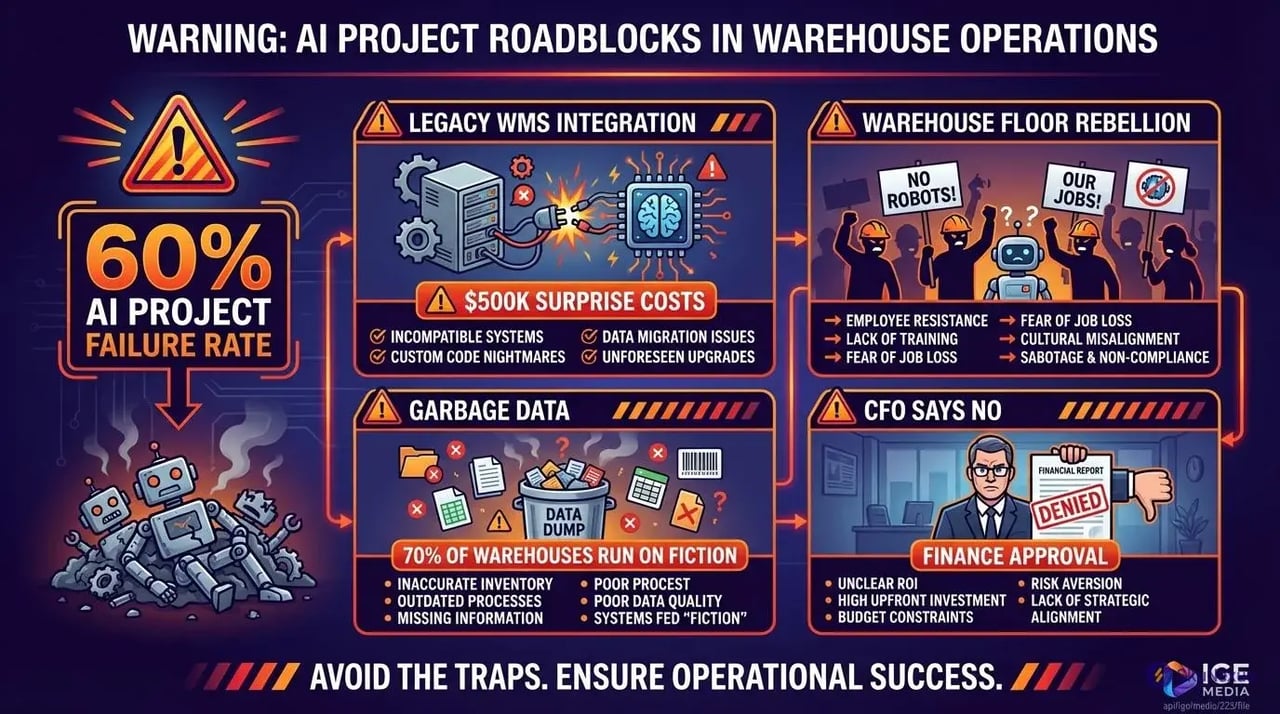
60% of warehouse AI projects fail in year one. Not because the tech doesn't work - because nobody warned you about these four killers.
Legacy WMS Integration: The Surprise Nobody Budgets For
Your 15-year-old WMS doesn't speak AI. Last month, a distributor's AI pilot discovered their AS/400 system needed a whole middleware layer just to connect inventory to the new demand forecasting engine.
Legacy systems batch process data every 4-6 hours. AI needs millisecond responses. That gap requires middleware, APIs, and complete data pipeline rebuilds.
Hidden costs multiply fast. One food distributor signed off on an AI budget and paid close to double it once database modernization, API development, and systems integration consulting were added.
Ask these 5 questions before signing:
- What specific APIs does your solution require from our WMS?
- Show me three implementations with our exact WMS version
- What middleware licenses will we need?
- How much consulting time for integration (in hours)?
- What happens when our WMS vendor releases updates?
Budget 30-50% of your total project cost for integration. The quoted AI solution is not the number you will pay once it is connected to existing systems.
The Warehouse Floor Rebellion
Your best picker thinks robots will steal his job. He's planning sabotage.
I watched a twenty-year veteran "accidentally" block AMR paths during peak season. Productivity tanked 30% in two weeks. Orders backed up. Overtime spiked. The AI project looked like a disaster.
That same picker now manages the AMR fleet. Makes 30% more than before and handles complex exception orders while robots move standard picks. He went from walking 12 miles daily to supervising 8 robots from a control station.
The rebellion happens because nobody explains the new roles. Workers see robots and assume layoffs. Show them career advancement and resistance disappears.
5-step change management:
- Day -30: Announce WITH new roles defined and pay grades
- Day -14: Run fear sessions. Address every concern publicly
- Day 1: Start with volunteers only - never force adoption
- Day 30: Share wins publicly with specific dollar savings
- Day 60: Promote your first convert to team lead
One electronics distributor promoted 12 pickers to quality control roles after AI took over routine picks. Same headcount, higher skills, 25% better pay. Zero layoffs, zero resistance.
Garbage Data = Garbage AI
70% of warehouses run on fiction. Their WMS shows 1,000 units. Reality has 800. Location A-4-7 contains brake pads, not air filters.
Machine learning amplifies whatever you feed it. One retailer's AI ordered a warehouse full of overstock because their data showed phantom demand. The items were being stolen, not sold. Another distributor's route optimization sent pickers to empty locations 200 times daily because nobody updated the system after a layout change.
Bad data creates cascading failures. Inventory AI orders wrong quantities. Picking AI routes to wrong locations. Quality AI flags good products as defective because training data included mislabeled items.
3-week cleanup process:
- Week 1: Full cycle count everything - no exceptions
- Week 2: Verify every location exists where system says it does
- Week 3: Merge duplicate SKUs, fix unit measures, clean supplier data
Track daily: Inventory accuracy 98%+, Location accuracy 99%+, Pick accuracy 99.5%+. Anything below these thresholds will sabotage your AI investment.
A beverage distributor cleaned its data before starting an AI implementation. The cleanup prevented a run of ordering errors during the first 6 months.
The CFO Who Says No
Your CFO wants ROI in PowerPoint before spending real money. Finance teams kill more AI projects than technical failures.
CFOs think in quarters. AI benefits compound over years. They want guaranteed returns on unproven technology. They compare AI investments to equipment purchases with predictable depreciation schedules.
Here's the 5-slide deck that gets signatures:
Slide 1: Current costs (annual labor, errors, and inefficiencies)
Slide 2: Investment (Year 1 including integration and training)
Slide 3: 12-month ROI (Month 13 onward: verified savings, annualised)
Slide 4: Risk mitigation (a pilot caps total risk, with a 90-day evaluation)
Slide 5: Competitive advantage (24-hour shipping capability drives premium pricing)
Include competitor analysis. Show what Amazon, Walmart, and Target already deployed. Frame AI as defensive spending - the cost of falling behind exceeds the cost of implementation.
One auto parts distributor's CFO approved after seeing competitor analysis. Their main rival had cut shipping times by 40% using AI routing. The CFO realized they'd lose customers without matching that performance.
Your competitors already started. The question isn't whether to invest in AI - it's whether you'll lead or follow.
What's Next: AI Trends Actually Worth Watching
Three trends have working pilots in major warehouses right now. Each hits production floors by 2026.
Generative AI for Warehouse Layout Design
GenAI creates optimal warehouse layouts in 4 hours. Humans take 3 weeks.
Walmart's testing this in micro-fulfillment centers. Feed the system your SKU data and building dimensions. It generates 50 layout options ranked by efficiency. Best designs are 40% more efficient than human-created layouts.
One grocery distributor redesigned their frozen section. GenAI suggested moving ice cream next to frozen pizzas based on order correlation data. Pick time dropped 31% because 78% of pizza orders include ice cream.
The system learns from millions of order patterns across different warehouse types. A hardware distributor discovered that drill bit orders correlate with safety glasses 89% of the time. Moving these items within 20 feet cut pick routes by 2.3 minutes per order.
Available to mid-market warehouses by Q1 2025, priced as a facility design project plus a monthly optimization fee.
Self-Healing Supply Chains
Your supply chain fixes itself before you notice it's broken.
During the 2021 Texas freeze, one retailer's AI spotted the crisis 12 hours early. Started moving inventory from Houston DCs to Oklahoma automatically. When roads closed, they maintained 95% fill rate while competitors hit 60%.
The system monitors 200+ data points: weather patterns, traffic congestion, port delays, supplier communications, even social media mentions of strikes or accidents. When risk scores exceed thresholds, inventory moves preemptively without human approval.
A sporting goods retailer's AI detected unusual chatter about dock worker negotiations in Long Beach. The system automatically expedited 40% of Asian imports through Seattle ports. When the strike hit, they avoided the stockouts while competitors scrambled for alternative shipping.
Mid-market availability: 2026. Enterprise implementations running now at Home Depot and Target. Expected cost: a setup project plus a monthly fee for data feeds and processing.
Voice-First Warehouse Operations
Throw away your RF guns. Talk to your warehouse instead.
Current RF gun workflow: "Navigate to A-4-7. Scan location. Scan item. Enter quantity. Confirm pick." Seven steps, 45 seconds average.
Voice-first workflow: "Get 12 red widgets from aisle 4." One command, 8 seconds.
The system understands natural language and warehouse context. Say "grab the brake pads for the Honda order" and it routes you to the exact location, confirms the right part number, and updates inventory automatically.
A beverage distributor's pilot showed 32% faster picking rates. Training time dropped from 2 weeks to 2 days because workers don't memorize codes or navigate complex menus. New seasonal workers reach full productivity in their first shift.
The technology works in noisy environments using bone conduction headsets and advanced noise cancellation. One facility tested it during peak season with forklifts running - 97% voice recognition accuracy.
Coming to your warehouse by late 2025. A pilot covers a 50-user system including headsets, server infrastructure, and 6 months of voice training data.
Start Monday: Your First AI Implementation Steps
Block 2 hours Monday morning. Measure your baseline before spending money on AI.
Monday: Calculate Your Baseline
Track these 5 metrics for one shift:
- Picks per hour (include travel time)
- Inventory accuracy % (spot-count 100 SKUs)
- Order cycle time (order drop to ship confirm)
- Labor cost per order (total payroll ÷ orders shipped)
- Return processing time (dock to restocked)
Screenshot your WMS dashboards. This becomes your "before" picture.
One distributor discovered how much their operation was bleeding just by measuring these basics. Pick rates varied 40% between shifts. Inventory accuracy sat at 87% - well below the 98% needed for AI success.
Tuesday: Call 3 Vendors
Contact SkuNexus (we run AI-powered order routing) plus 2 others. Skip demo forms - call sales directly.
Your script: "We process [X] orders daily. Current pick rate is [Y]. What case studies do you have for similar operations?"
Get pilot pricing in writing and 3 client references with actual metrics.
Ask each vendor: "Show me the ROI calculation from your last 3 implementations. What was the payback period?" Generic answers mean they don't track real results.
Wednesday-Friday: Get Your Team on Board
Schedule 30-minute meetings with IT, finance, and ops leaders.
IT meeting: Integration requirements and timeline. Ask about API capabilities and data export formats.
Finance meeting: Show baseline numbers and pilot ROI math. Frame AI as competitive defense - your rivals already started.
Ops meeting: Address picker concerns about job security. Nobody gets fired - they get better jobs managing robots instead of walking miles daily.
Week 2: Build Your Business Case
Calculate your annual pain points using Monday's baseline:
- Labor inefficiency: (Target pick rate - Actual rate) × Hours × Wage
- Inventory errors: Error count × your average cost per mistake
- Returns processing: Processing time × Hourly rate × Volume
Your ROI story writes itself once you measure the real numbers. Most warehouses find serious annual waste within their first week of tracking.
For more on auto parts inventory workflows, see our guide to auto parts inventory management.
What AI Does Not Solve in a Warehouse
This is the part most vendors skip. AI does not fix a broken operation; it amplifies whatever you already have. Point it at bad master data and it forecasts confidently off the wrong numbers. Point it at a receiving process where people backflush or skip scans, and it learns a fiction. Point it at mislabeled or doubled-up bins and its slotting and pick-path recommendations inherit those errors at speed. The same goes for cycle counts that are not trusted and putaway rules nobody follows. Across the warehouses I have walked through, the projects that stalled almost never failed on the model. They failed because the process underneath was not solid enough to be automated. Clean up the data, fix the receiving and bin discipline first, and AI compounds the gain. Skip that work and AI just helps you make the same mistakes faster. The platform's job is to make that foundation configurable and accurate; the AI's job is to find the patterns once it is.
AI Warehouse Operations: Frequently Asked Questions
How long does it take to deploy AI inventory software in a large facility?
There is no universal number. The timeline is driven by integration surface, the quality of your existing inventory and location data, SKU and zone complexity, and whether you roll out one pilot zone first or attempt the whole floor at once. A large facility with clean data and a modern system of record often moves faster than a smaller one running on spreadsheets. Scope the integration before anyone commits to a go-live date.
What does AI actually do in a warehouse today?
The grounded, in-production use cases are demand forecasting, slotting optimization, pick-path optimization, anomaly detection in inventory counts, and automated routing rules. Each of these sits on top of an accurate system of record. AI finds and acts on patterns in that data; it does not create the data layer itself.
Can AI fix a warehouse that has messy data or a broken process?
No, and this is the most important thing to understand before investing. AI amplifies whatever process quality you already have. Bad master data, an unreliable receiving process, or mislabeled bins will all carry through into AI recommendations, just faster. Fix the foundation first, then layer AI on top of it.
How big a team do I need to run an AI warehouse pilot?
A pilot is usually small: an operations owner, someone who knows your data and integrations, and the floor supervisors and pickers whose process is being modeled. The heavier resource load is integration and data cleanup, not the AI model itself. The team grows during full rollout, mostly for change management as you expand across zones and processes.
Ready to Transform Your Operations?
See how SkuNexus gives you full control over inventory, orders, warehouse, and shipping.
Schedule a Free Demo →
Keep Reading