One Product = Multiple Boxes

Kitting & Bundle Management for When One Product = Multiple Boxes

Your customer ordered one sofa. Your warehouse ships twelve boxes. Your gift set has eight components from four vendors. Most inventory systems can't handle this. SkuNexus was built for it.
No credit card required Free personalized demo Kit decomposition included
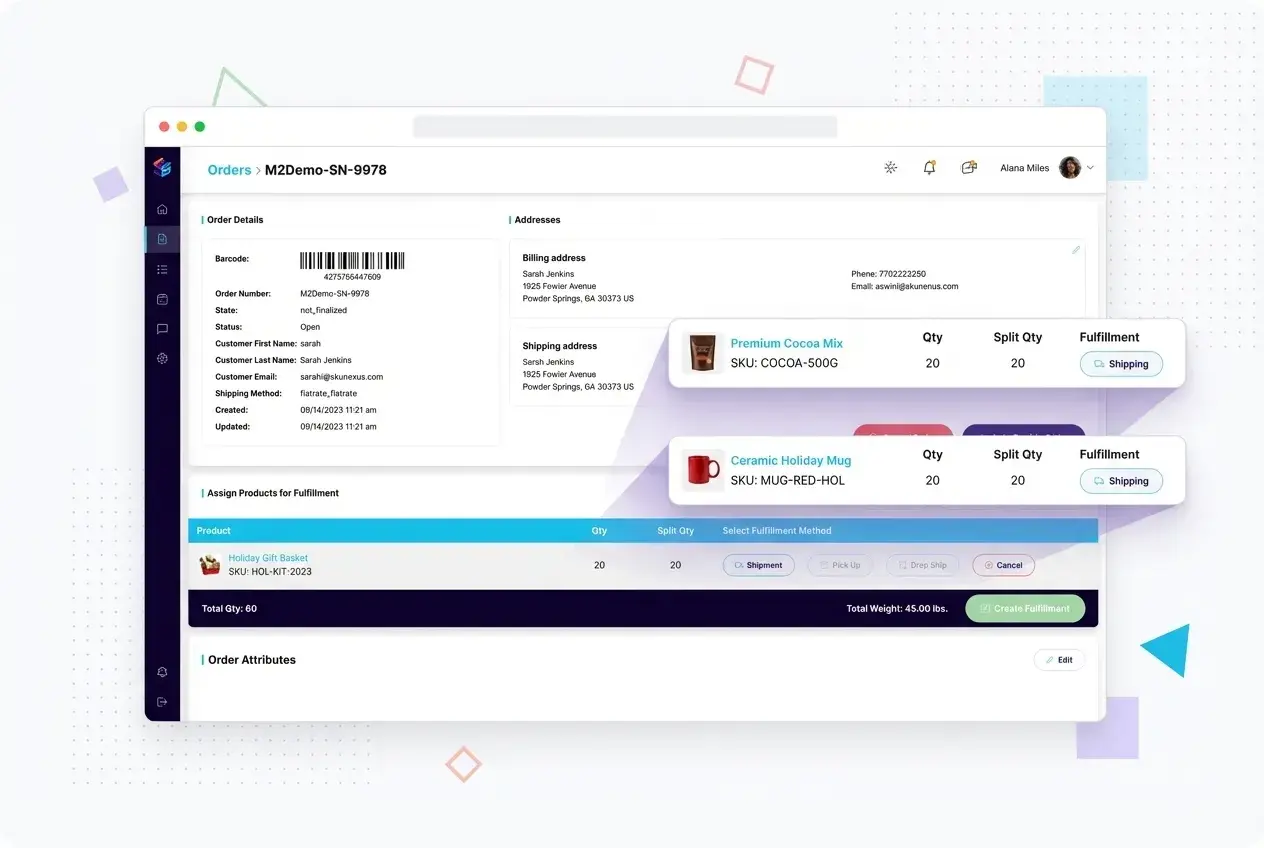
Kitting & Bundles — SkuNexus product screenshot
What Is It

What is Kitting & Bundle Management Software?

Kitting and bundle management software handles the complexity of products that are sold as one item but fulfilled as multiple components — gift sets, furniture kits, custom assemblies, and subscription boxes. It decomposes parent SKUs into component picks at fulfillment time.

In SkuNexus, a kit is a parent SKU with defined component relationships. The parent is what your customer orders. The components are what your warehouse picks. Decomposition happens at fulfillment time — no pre-assembly required.

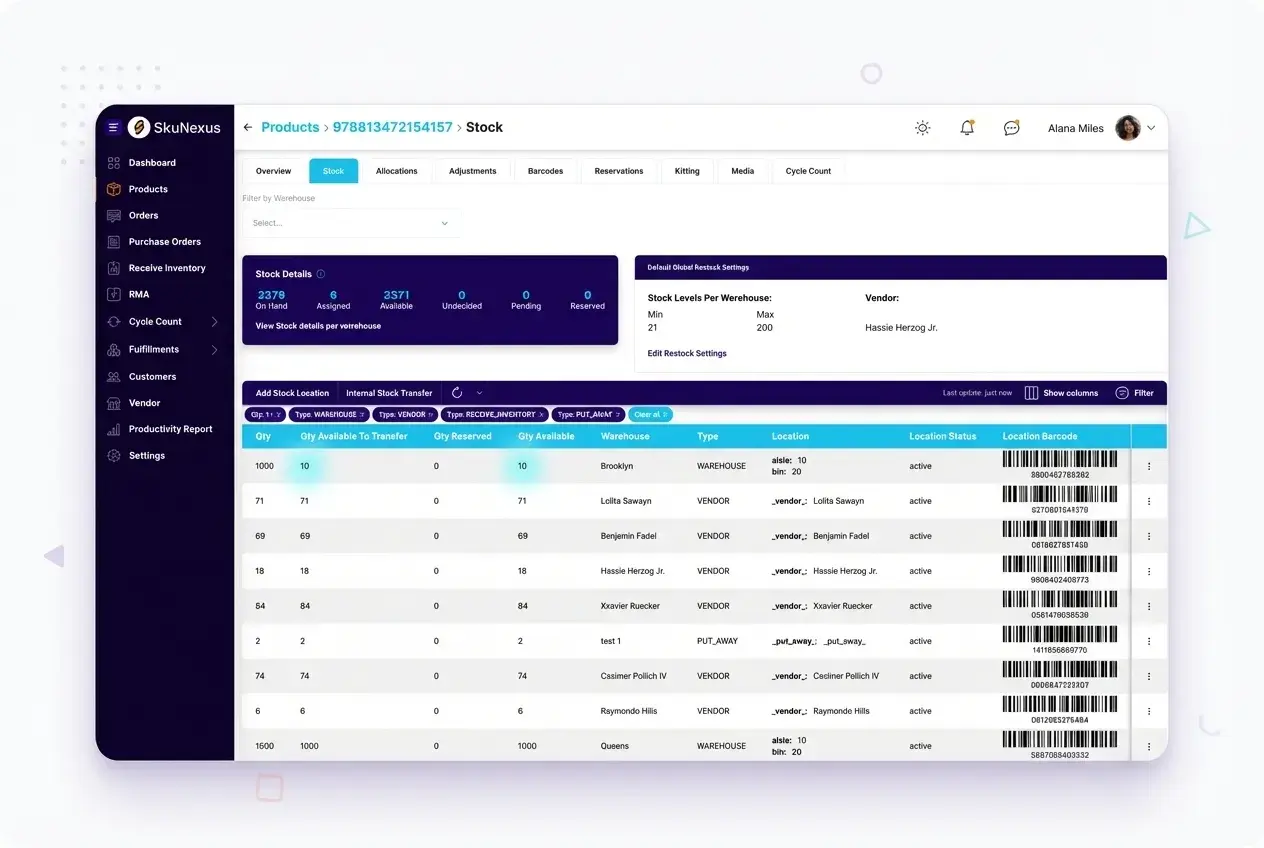
Component inventory is tracked independently, so you always know how many complete kits you can build. When any component runs low, parent availability drops accordingly across all sales channels.

See Kit Decomposition
800K+
possible combinations handled without phantom SKUs

Key Capabilities

  • Kit decomposition at fulfillment time
  • Component-level inventory tracking
  • Dynamic availability calculation
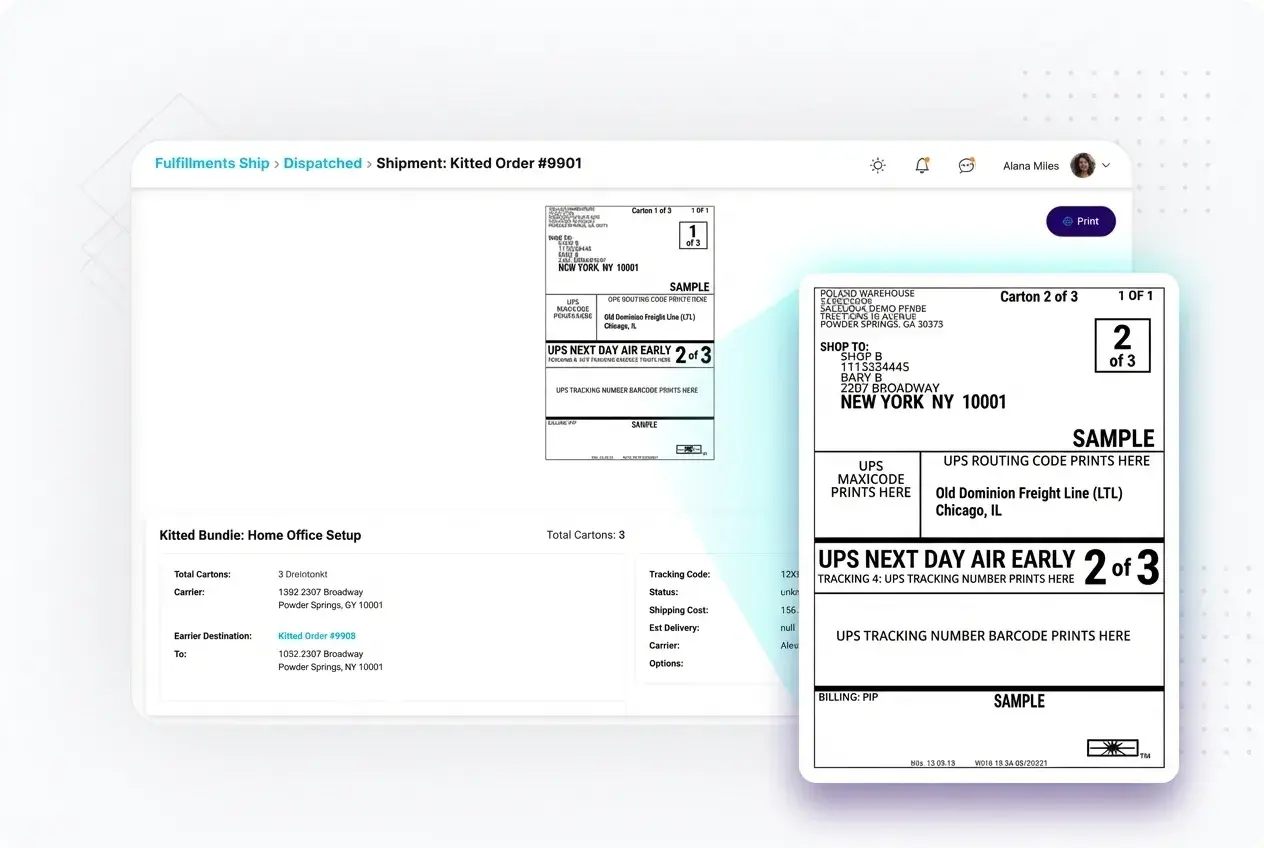
  • Multi-carton and LTL shipping support

Trusted by leading brands processing millions of orders
SN_TCM SN_Graeters SN_newlook SN_Carewell SN_DPP
★★★★★ 4.8/5 on G2 ISO 9001 Certified GDPR Compliant
The Challenge

Sound Familiar?

"Our system tracks kits as single items. When we're out of one component, the system still shows the kit in stock."

Without component-level tracking, you sell kits you can't fulfill. One missing component blocks the entire order.

No Component Tracking

"We pre-build kits in the warehouse. Half of them don't sell and we've tied up inventory in unsold bundles."

Pre-assembly ties up component inventory in bundles that may never sell. Those components could be selling individually.

Pre-Assembly Waste

"Our bundles have 800 possible combinations. We can't create a SKU for each one."

Custom configuration products create combinatorial explosions. Pre-creating every combination as a separate SKU is a data management nightmare.

Combinatorial Explosion

There's a better way

SkuNexus decomposes kits at fulfillment time. No pre-assembly, no phantom SKUs, no combinatorial explosion.

See How It Works
How It Works

How Kitting & Bundle Management Works in SkuNexus

1

Step 1: Define Your Kit Components

A kit is a parent SKU with defined component relationships. You define the relationship once: Parent SKU → Components with quantities. The system uses this definition every time the parent is ordered. Component inventory is tracked independently.
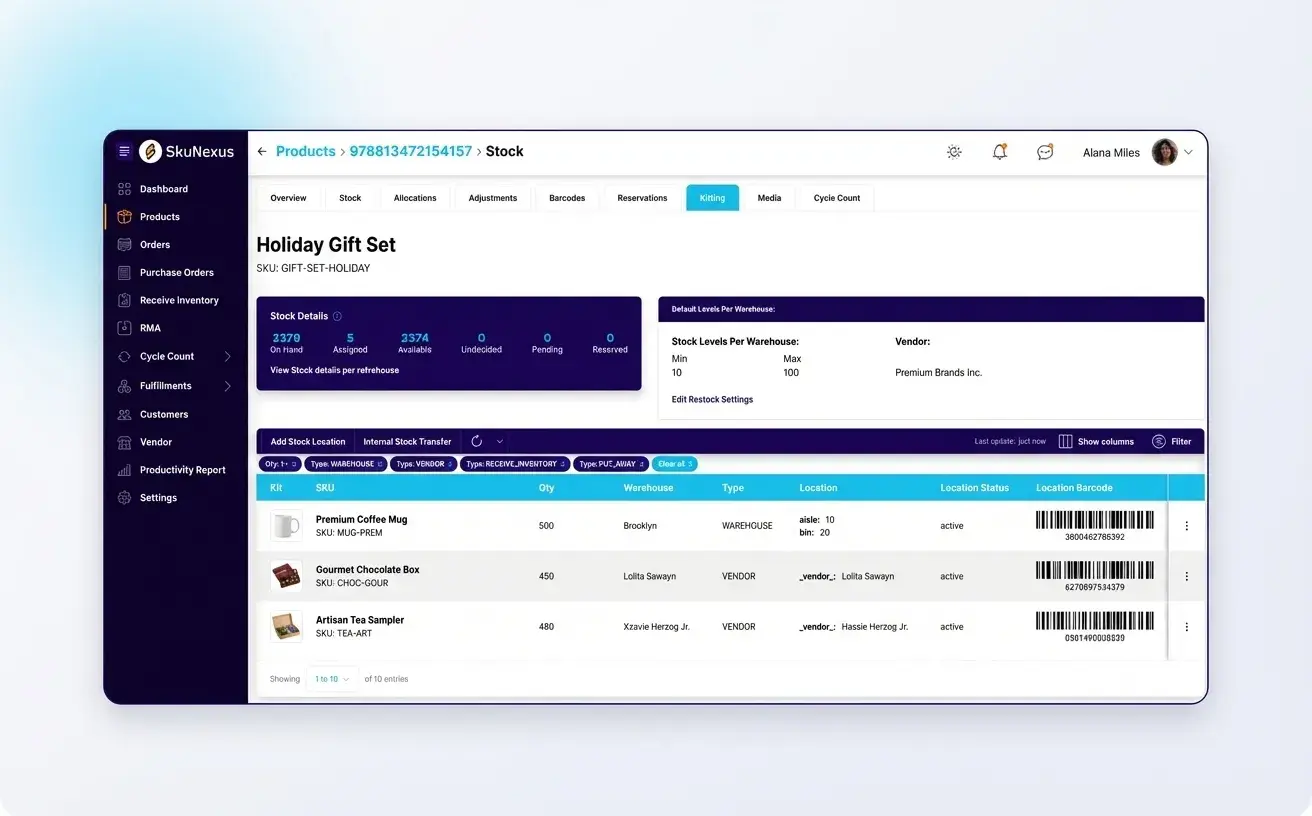
Kit definition screen
2

Step 2: Kit Decomposition at Order Time

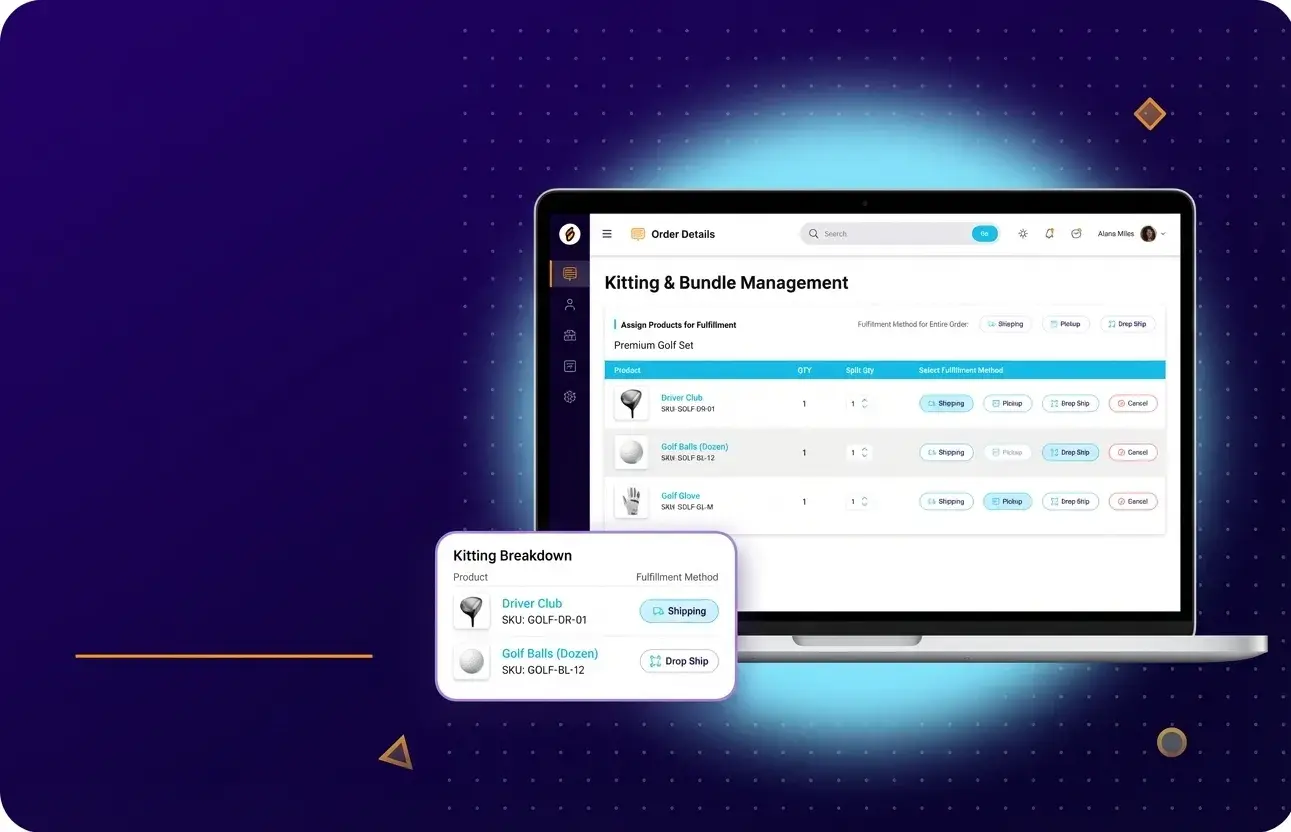
When a customer orders the parent SKU, SkuNexus automatically decomposes it into individual component picks. The picker sees each component as a separate line item with its own bin location. For furniture, each component may ship as a separate carton with its own label.
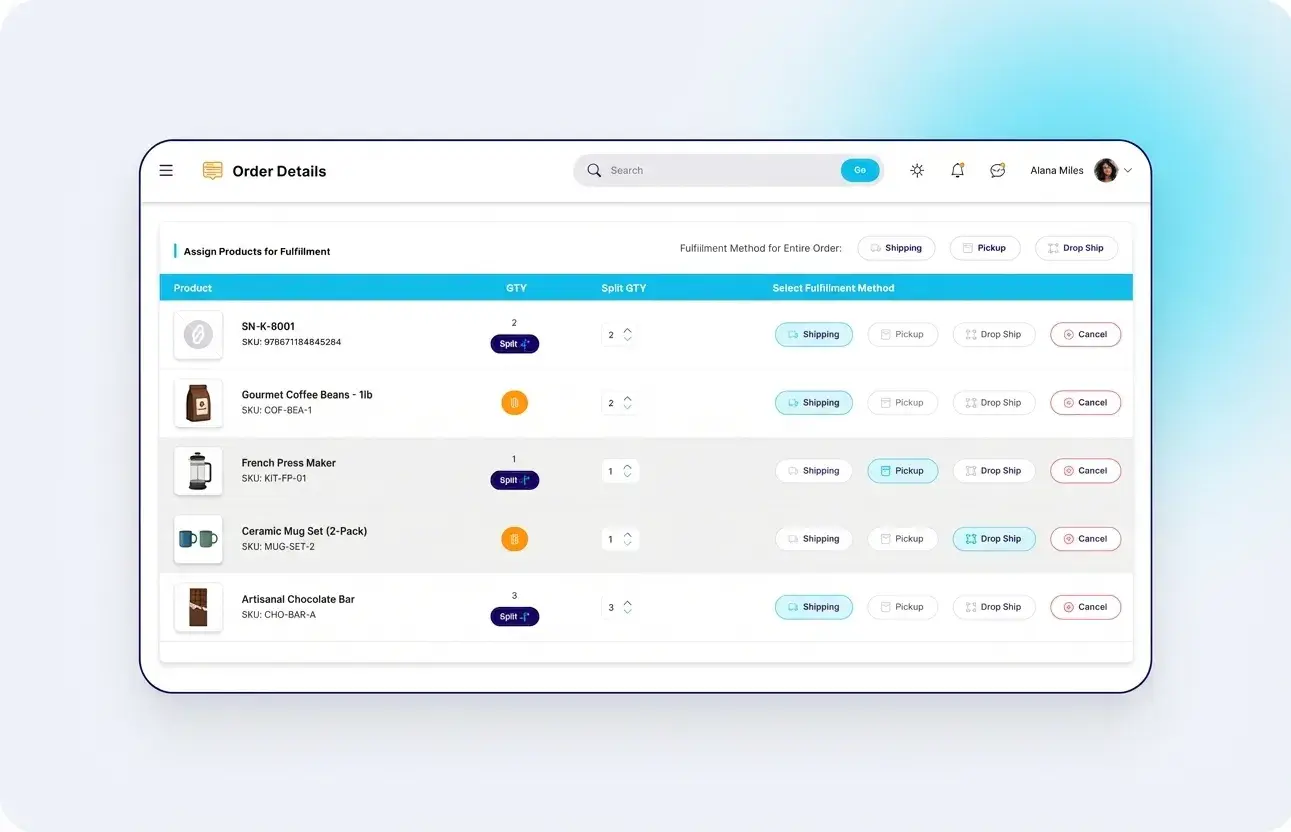
Decomposed pick list
3

Step 3: Component Inventory Drives Availability

The parent's availability equals the lowest-stock component. 50 frames but only 30 cushions? You can build 30 kits. This 'buildable' quantity syncs to your sales channels automatically, preventing oversells on incomplete kits.
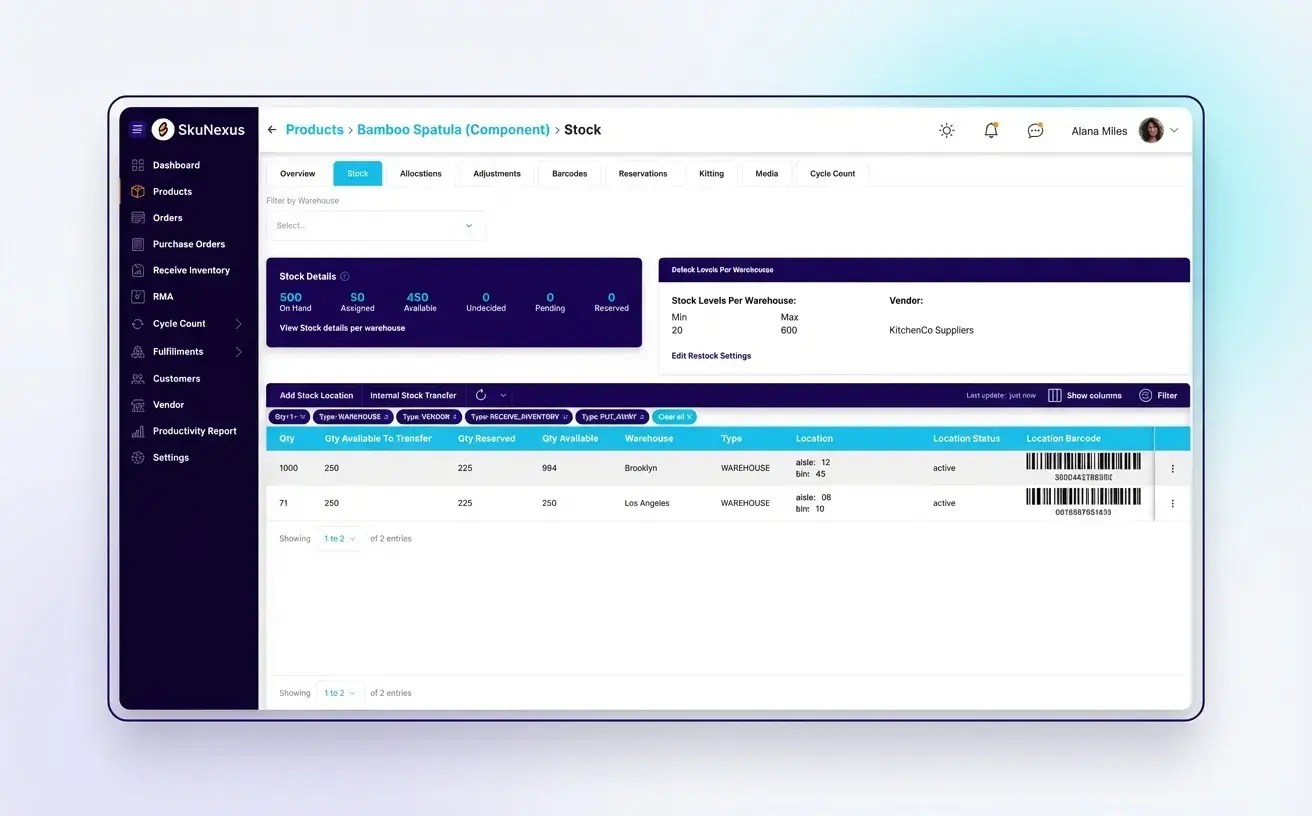
Kit availability calculator
4

Step 4: Returns at Component Level

When a kit is returned, process it at the component level. Five of six items in good condition? Restock five, quarantine one. The system adjusts component inventory and recalculates buildable kit availability.
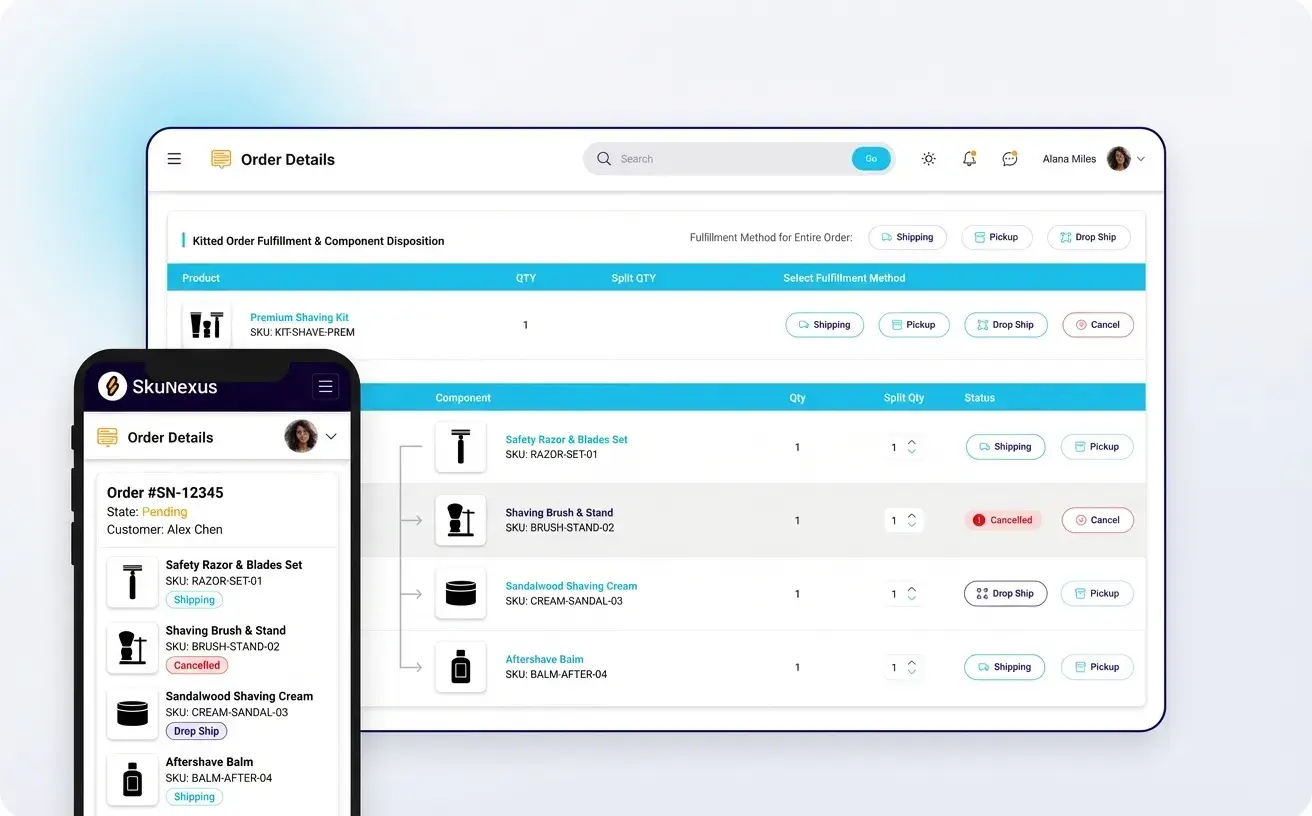
Kit return processing
Key Benefits

Everything You Need for Kit & Bundle Operations

Why Teams Choose SkuNexus

🔧

Kit Decomposition

Parent SKUs automatically break into component picks at fulfillment. No pre-assembly required.

📦

Component-Level Tracking

Track each component independently. Know exactly how many complete kits you can build at any time.

🚛

Multi-Carton Shipping

Furniture and oversized kits ship as multiple cartons, each tracked with its own weight, dimensions, and label.

Kitting & Bundles feature 1 — SkuNexus
Feature

Dynamic Availability Sync

Buildable kit quantity syncs to your sales channels as the parent's available inventory. When components run low, channel availability adjusts automatically.

This prevents the scenario where you sell a gift set and then discover you're missing one of the eight components. The math happens continuously in the background.

  • Buildable quantity calculation
  • Automatic channel sync
  • Component reorder triggers
  • Safety stock per component
Kitting & Bundles feature 2 — SkuNexus
Feature

Custom Assembly at Fulfillment

For products where customers choose their own components (frame + lens + accessory), SkuNexus supports assembly instructions at the pick station without pre-creating every combination.

The order specifies the components, the system decomposes at pick time, and the picker assembles at the station. No phantom SKUs, no data explosion.

  • Customer-configured bundles
  • Assembly instructions at pick station
  • No pre-created combinations needed
  • Supports 800K+ combinations
Kitting & Bundles feature 3 — SkuNexus
Feature

Gift Set & Seasonal Bundle Management

Seasonal bundles, promotional sets, and gift boxes — define the components, manage the inventory, and fulfill the picks. Change bundle composition without creating new SKUs.

Kit definitions can be updated at any time. Swap components mid-season and the new definition applies to all future orders. Existing picked orders use the original definition.

  • Flexible bundle composition
  • Mid-season component swaps
  • Seasonal set management
  • Promotional bundle support
The SkuNexus Difference

Why Merchants Choose SkuNexus for Kitting

🔧

Kit Decomposition, Not Kit Pre-Assembly

Most systems require you to 'build' kits in advance. SkuNexus decomposes at fulfillment time. You never tie up inventory in pre-built kits that might not sell, and component inventory stays flexible for individual sales.

A lot of systems believe it or not struggle with that.

Scott
🧩

800 Components? No Problem.

Custom products with hundreds of component combinations don't need hundreds of thousands of phantom SKUs. SkuNexus handles dynamic composition at fulfillment — the order specifies components, the system decomposes, the picker assembles.

🏭

Three Verticals, One Kitting Engine

Furniture merchants ship modular products in multiple cartons. Gift retailers build seasonal sets. Health companies assemble test kits. The same engine handles all three because parent-to-component decomposition is universal.

Case Study

A 150-year-old premium ice cream brand selling DTC, wholesale, and through national retail partners.

⚠️ The Challenge

Scott's modular sofa systems required shipping one product as twelve separate cartons. Their previous system couldn't handle multi-carton decomposition or component-level tracking.

The Solution

SkuNexus kit decomposition breaks parent SKUs into component picks with individual carton tracking, weights, and shipping labels.

📈 The Results

47%
Faster fulfillment
99.2%
Inventory accuracy
0
Oversells in Q4
12+
Cartons per order tracked

"Our Smoothest Peak Season Ever"

A furniture retailer shipping modular products with average order values of $3,500+ and 6-12 cartons per order.

Director of Operations, Graeter's Ice Cream
Kit definitions configured in 1 week
Integrations

Connects to Everything You Already Use

Native integrations with leading eCommerce platforms, shipping carriers, and accounting tools.

100+ Native
Integrations
+ many more
Comparison

Still Pre-Building Kits in the Warehouse?

Pre-assembly ties up inventory, wastes labor, and limits flexibility. Decomposition at fulfillment is the modern approach.

Pre-Built Kits SkuNexus Kit Decomposition
Pre-assemble kits in advance Decompose at fulfillment time
Inventory tied up in unsold bundles Components available for any order
Can't change bundle composition easily Update definitions anytime
One missing component = manual search Buildable quantity calculated automatically
Phantom SKUs for every combination Dynamic composition, no phantom SKUs
Returns processed as single unit Component-level return processing

Kit decomposition eliminates pre-assembly waste and gives you flexibility that pre-built bundles can't match.

See It Live

Free demo • No credit card required

FAQ

Frequently Asked Questions About Kitting & Bundles

Kitting is when one product the customer orders requires multiple separate components to fulfill. Your customer orders a modular sofa - your warehouse ships twelve boxes. A gift set contains eight items from four vendors. A parent SKU needs to decompose into individual picks at fulfillment time. The customer sees one product on the website; the warehouse sees multiple SKUs that need to be individually picked, tracked, and sometimes shipped separately.

This creates an inventory tracking challenge: you need to track availability at the component level, not the kit level. If a kit has five components and you have plenty of four but are running low on the fifth, the kit is only as available as its scarcest component. SkuNexus tracks each component as its own SKU with independent inventory, calculates kit availability dynamically from component stock, and decomposes kits into individual fulfillment tasks automatically when the order arrives.

When an order containing a kit product arrives, the system breaks it into its component SKUs and routes each component through the fulfillment workflow independently. Component A might be in stock at your warehouse and enter the pick queue immediately. Component B might be a vendor-only item that triggers an automated dropship PO. Component C might need to ship from a different warehouse because it's out of stock locally.

Each component's inventory decrements separately when it's allocated to the order, and the kit's availability across all channels updates in real time based on the new lowest component stock. This happens automatically - no one manually breaks down the order, no one checks each component's stock, no one creates separate fulfillment tasks. SkuNexus decomposes kits at order time through the Auto-Decision Engine, routes each component to its optimal fulfillment path, and runs all paths in parallel.

The system tracks inventory at the component level, not the kit level. If a kit has five components and you have 100 of each, you can fulfill 100 kits. But if Component C drops to 20 units, your kit availability drops to 20 - regardless of how much stock you have of the other four components. The kit is only as available as its scarcest ingredient.

This component-level tracking prevents a common overselling problem: selling a kit when one of its pieces is actually out of stock, then discovering at fulfillment time that you can't complete the order. It also enables smarter reorder decisions - you can see which specific components are running low and reorder just those, rather than over-ordering components you already have plenty of. SkuNexus calculates kit availability dynamically from component stock across all warehouse locations, updating channel-facing availability in real time as any component's stock changes.

Yes. When a kit decomposes into multiple physical cartons - like furniture that ships as a frame, cushions, legs, and hardware in separate boxes - the system generates a shipping label and tracking number per carton. Each carton is tracked independently through the fulfillment workflow, and all cartons are associated back to the original order.

This matters for large-item merchants where "one product" routinely ships as 6, 10, or even 20 cartons. The customer ordered a sectional sofa, but the warehouse is shipping twelve boxes across two pallets. Each box needs its own label, weight, and dimensions for carrier rating. The customer needs to see all tracking numbers in one place. SkuNexus associates all cartons back to the original order so the customer has a unified tracking experience, and the system calculates shipping costs per carton for accurate rate shopping.

Returns for kit orders are processed at the component level, not the kit level. If a customer returns one piece of a three-component kit, that specific component is received, inspected, and dispositioned (restocked, quarantined, or returned to vendor) independently. The other two components are unaffected. Component-level return processing ensures that good inventory gets back on the shelf quickly while defective pieces are handled separately.

This is important because kit returns are rarely all-or-nothing. A customer might return the damaged cushion from a furniture set while keeping the frame. Or they might return the wrong-size shirt from a clothing bundle. Processing the return at the kit level would mean pulling the entire kit from inventory, which wastes good stock. SkuNexus processes kit returns per component with the same scan-verified inspection and disposition workflow used for standard single-item returns.

A kit is a product that decomposes into separately picked and shipped components at fulfillment time - the customer orders one thing, the warehouse picks and ships multiple things. A bundle is a marketing package of products sold together at a combined price, which may or may not decompose during fulfillment. The distinction matters operationally because kits require component-level inventory tracking and independent fulfillment routing per component.

In practice, many merchants use both. A "Holiday Gift Set" might be a bundle that ships in a single pre-packed box (no decomposition needed). A "Complete Home Office Setup" might be a kit where the desk, chair, and monitor arm each ship from different locations. The system needs to handle both scenarios with configurable decomposition rules that you set per product. SkuNexus supports both kits and bundles with flexible decomposition settings, so you control whether a composite product breaks down at fulfillment or ships as a single unit.

Yes, and this is where kitting gets complex. When a kit decomposes, individual components can route to different warehouses or vendors based on stock availability and proximity rules. Component A ships from your East Coast warehouse because it's in stock there and the customer is in New York. Component B dropships from the manufacturer in California. Component C ships from your West Coast warehouse because it's the only location with stock. All three paths run independently and in parallel.

Without a system that combines kit decomposition with intelligent fulfillment routing, this scenario requires manual coordination - someone checking stock per component per warehouse, creating separate fulfillment tasks, and tracking each piece. SkuNexus combines kit decomposition with the Auto-Decision Engine, so each component's fulfillment path is determined automatically based on your routing rules, stock availability, and customer location.

Still have questions?

Talk to Our Team

Your Bundles Shouldn't Be Harder to Manage Than to Sell

Whether you're shipping furniture in twelve cartons, building holiday gift sets, or assembling custom products at the packing station — SkuNexus handles the decomposition automatically.

Free demo No commitment See your data live