Returns That Work For You

Returns Management That Puts Inventory Back to Work — Fast

A return isn't done when the package arrives. It's done when the item is inspected, dispositioned, and either back on the shelf earning revenue or quarantined with a clear record. SkuNexus turns the returns black hole into a structured, scan-verified workflow.
No credit card required Free personalized demo Photo capture included
Returns Management — SkuNexus product screenshot
What Is It

What is Returns Management Software?

Returns management software handles the complete reverse logistics workflow — from return authorization through receiving, inspection, disposition (restock, quarantine, return to vendor, or dispose), and inventory adjustment. It replaces the pile of unprocessed returns sitting at your dock.

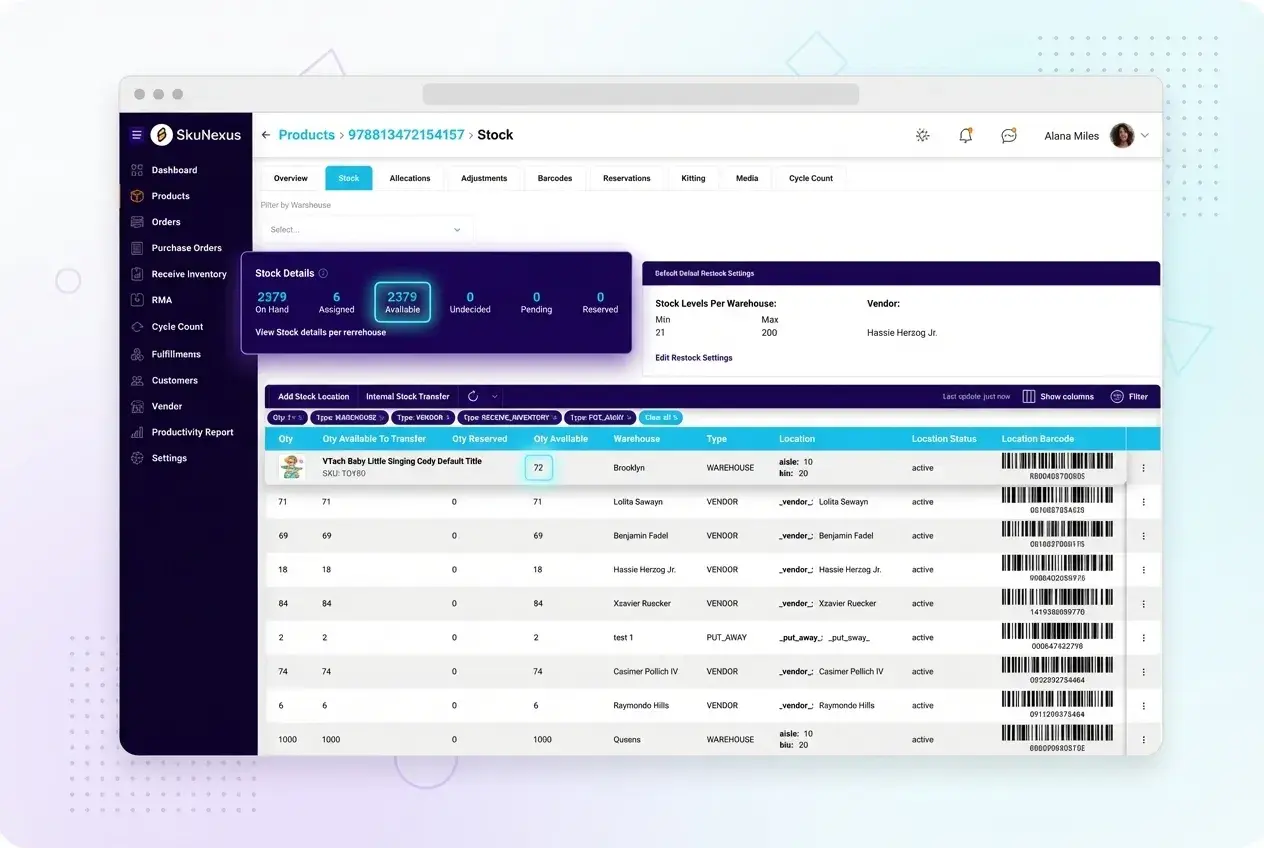
In SkuNexus, returns processing is integrated with the same inventory and warehouse system that handles forward fulfillment. When a return is restocked, the putaway is directed, inventory updates instantly, and available quantity syncs to all channels.

For merchants dealing with vendor-sourced items, marketplace-specific return policies, or high return rates, structured returns processing is the difference between inventory that earns revenue and inventory that disappears into a black hole.

See Returns Processing
4x
faster return processing with structured workflow vs. ad-hoc

Key Capabilities

  • Structured disposition workflow
  • Scan-verified return receiving
  • Photo capture for condition documentation
  • Vendor return management

Trusted by leading brands processing millions of orders
SN_TCM SN_Graeters SN_newlook SN_Carewell SN_DPP
★★★★★ 4.8/5 on G2 ISO 9001 Certified GDPR Compliant
The Challenge

Sound Familiar?

"Returns arrive and disappear into a pile. Nobody processes them for days."

Without a clear workflow, perfectly resalable inventory sits collecting dust instead of going back on the shelf and earning revenue.

Returns Backlog

"There's no record of what happened. Was it opened? Damaged? Missing parts?"

No photo evidence, no audit trail, no accountability. Three months later, 200 units of returned inventory are unaccounted for.

No Audit Trail

"Vendor-sourced items sit in our returns pile because our system can't generate a vendor return request."

Dropshipped items need to go back to the vendor, but your system treats all returns the same.

No Vendor Returns

There's a better way

SkuNexus gives every return a structured path: receive, inspect, document, disposition, and adjust inventory — with full audit trail.

See How It Works
How It Works

How Returns Processing Works in SkuNexus

1

Step 1: Return Initiated and Tracked

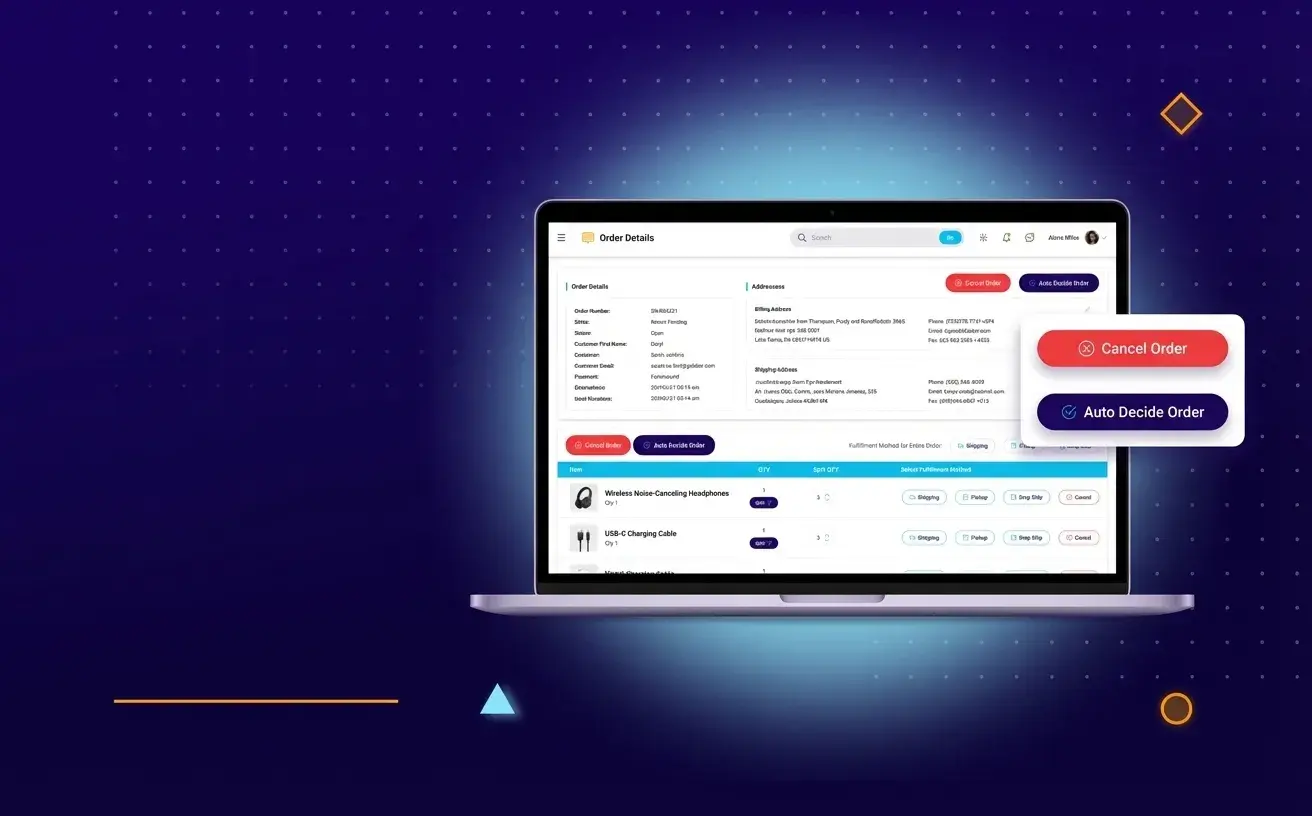
When a return is authorized, SkuNexus creates a return record linked to the original order. The system knows exactly what's coming back — which items, which order, which fulfillment source shipped them, and the customer's stated reason. Before the package arrives, the return is in your system.
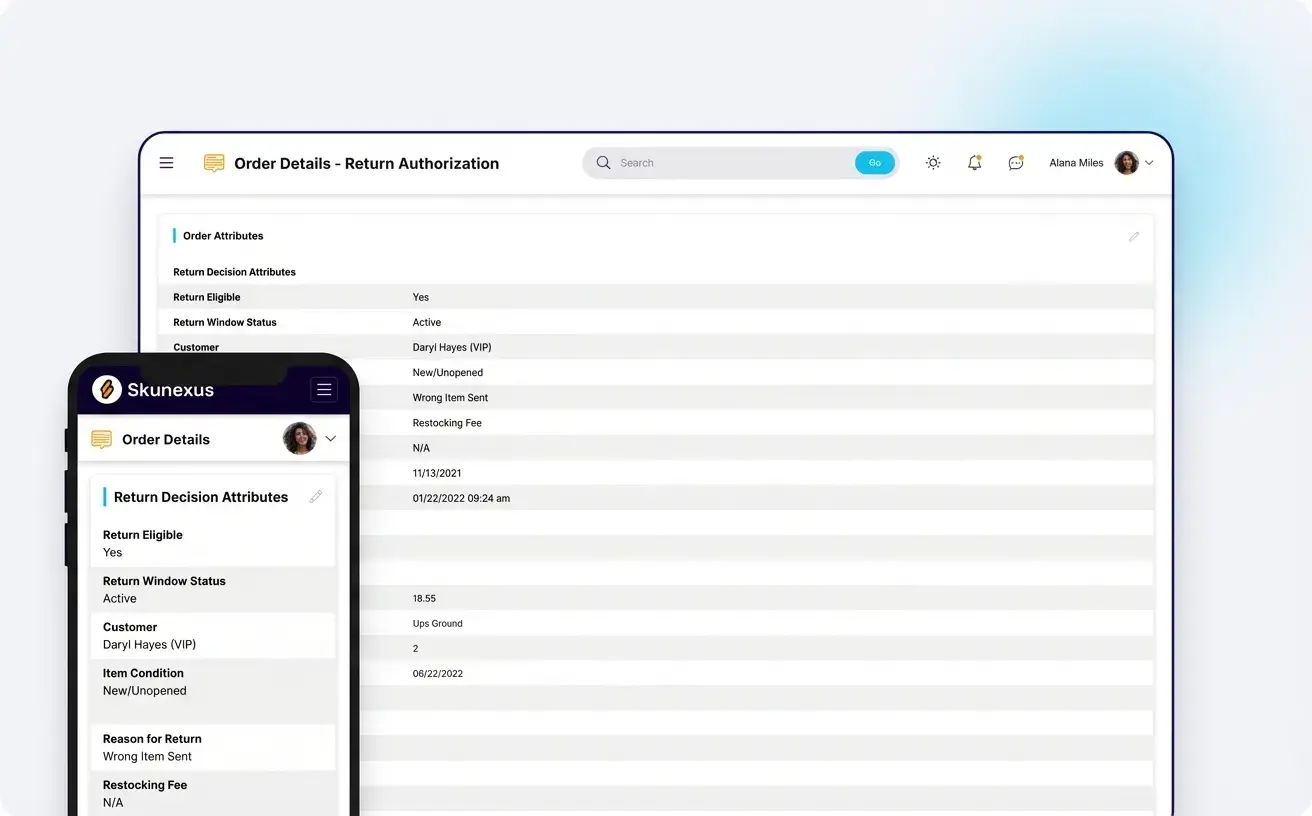
Return authorization screen
2

Step 2: Receive and Inspect

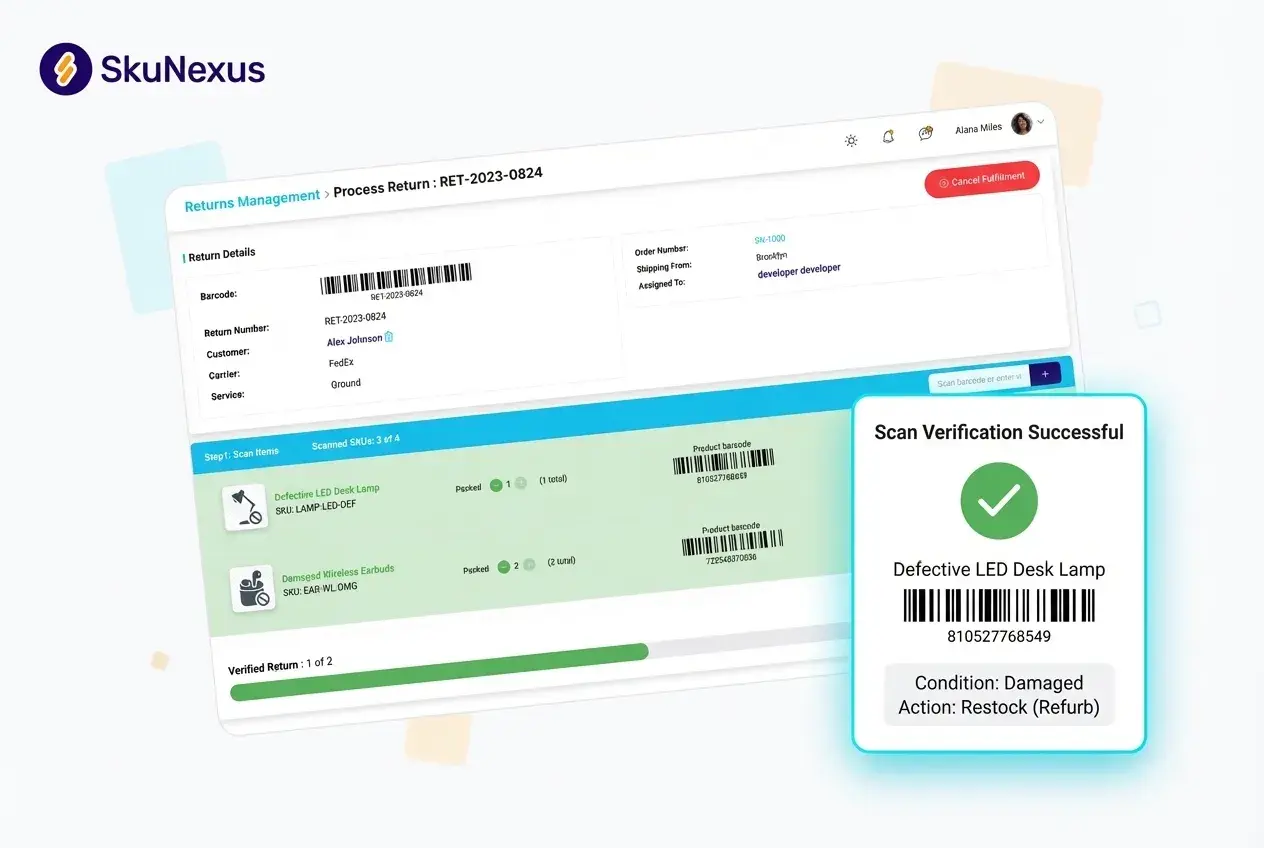
Your team scans the return against the authorization. The inspection workflow walks through condition assessment — unopened, opened but undamaged, damaged, or missing components. Photo capture documents the condition permanently for vendor disputes and customer service.
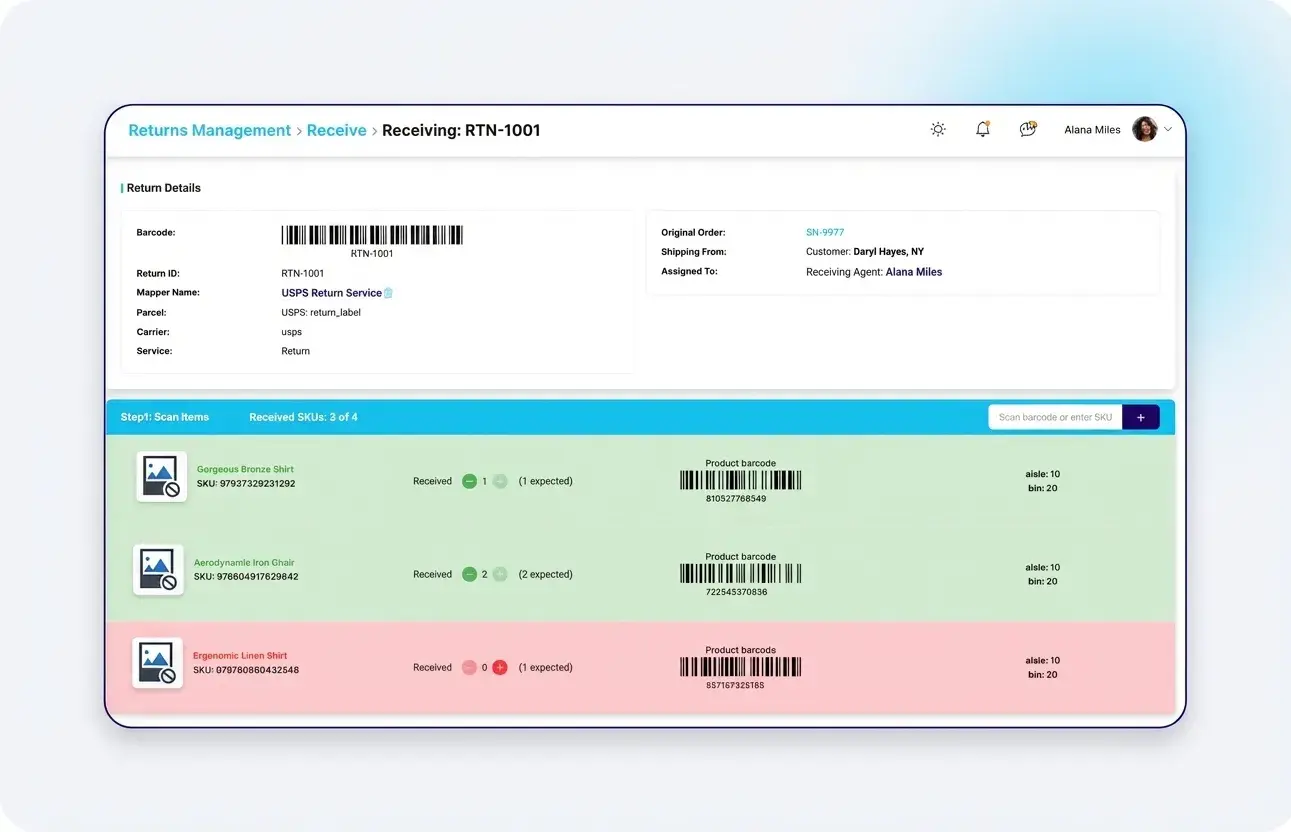
Return inspection with photo capture
3

Step 3: Disposition — Where Does This Item Go?

Based on inspection: Restock (directed to appropriate bin, inventory updates across all channels), Quarantine (moved to quarantine zone with reason code), Return to Vendor (return request generated automatically), or Dispose (written off with audit trail). Each path triggers the appropriate inventory adjustment.
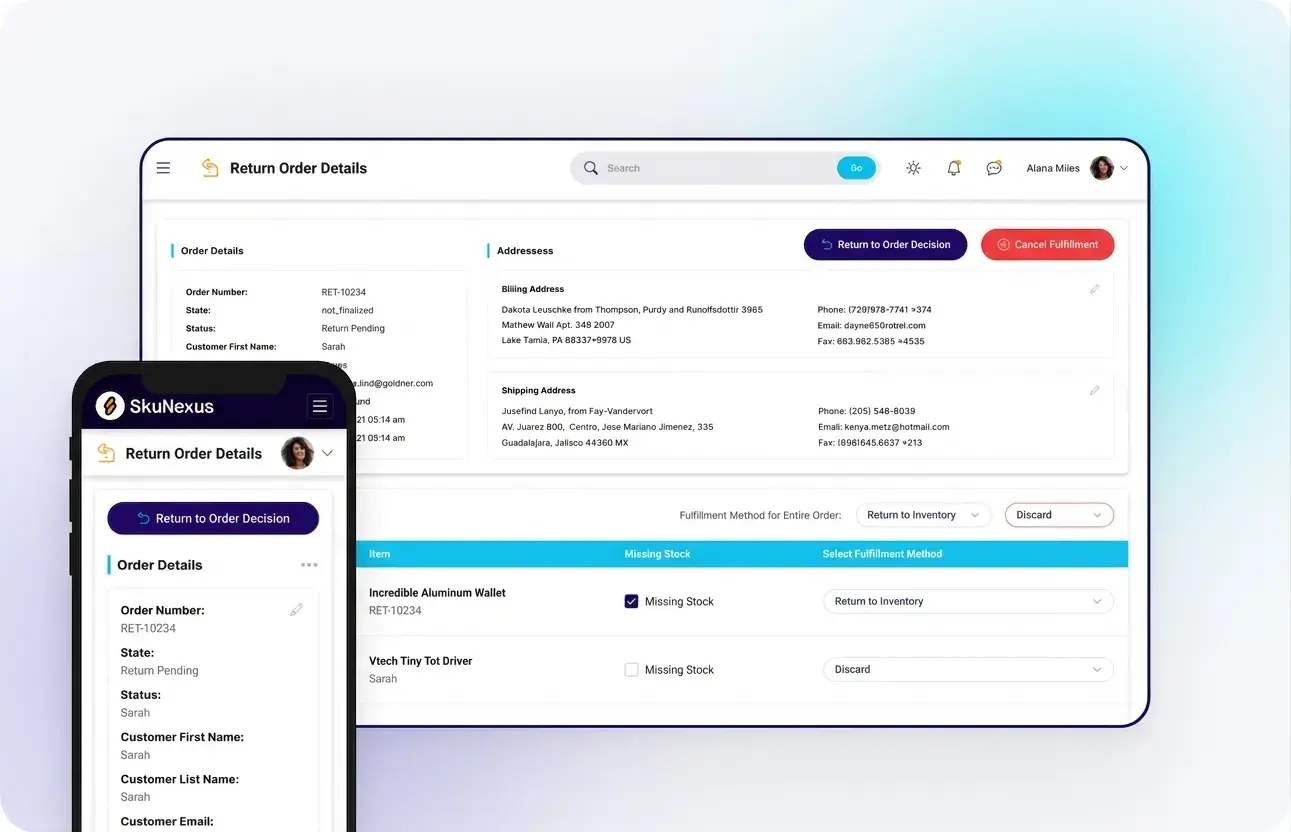
Disposition selection screen
4

Step 4: Analytics Close the Loop

Return rate by product, by channel, by reason code, and by customer. This data feeds purchasing decisions (stop ordering high-defect products), vendor management (hold vendors accountable), and listing improvements (fix 'not as described' returns).
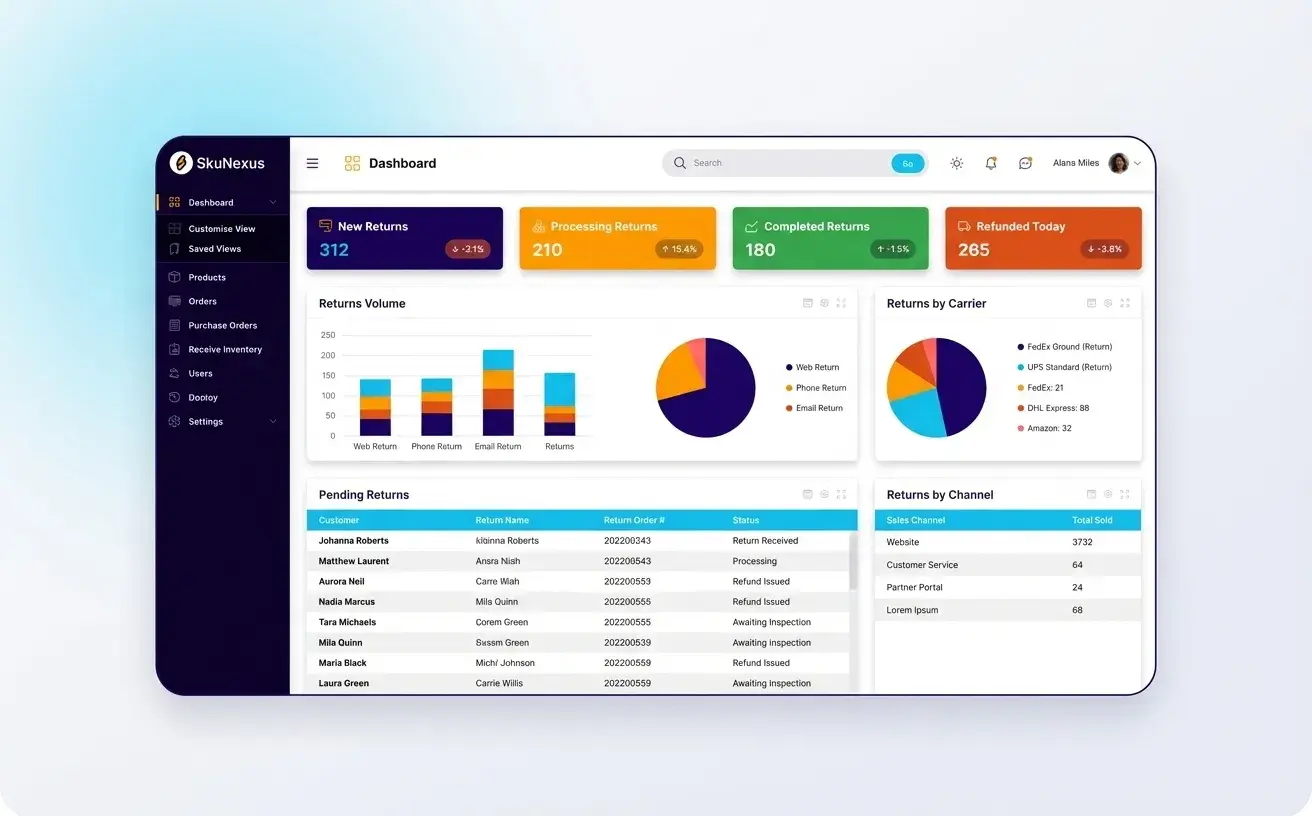
Returns analytics dashboard
Key Benefits

Everything You Need for Returns Operations

Why Teams Choose SkuNexus

📸

Photo Capture

Document item condition during inspection. Evidence for vendor disputes, customer service, and accounting.

🔀

Structured Disposition

Restock, quarantine, return to vendor, or dispose. Each path triggers the right inventory adjustment.

📊

Return Analytics

Track return rates, reason codes, and vendor quality. Data-driven decisions on purchasing and vendor management.

Returns Management feature 1 — SkuNexus
Feature

Vendor Return Management

Dropshipped or vendor-sourced items can be routed back to the vendor with automated return requests and tracking. The same vendor system that handles your POs handles returns.

Vendor return requests are generated as part of the disposition workflow. The vendor is notified, the return is tracked, and your inventory reflects the actual status.

  • Automated vendor return requests
  • Return tracking per vendor
  • Linked to vendor performance scoring
  • Configurable per-vendor return policies
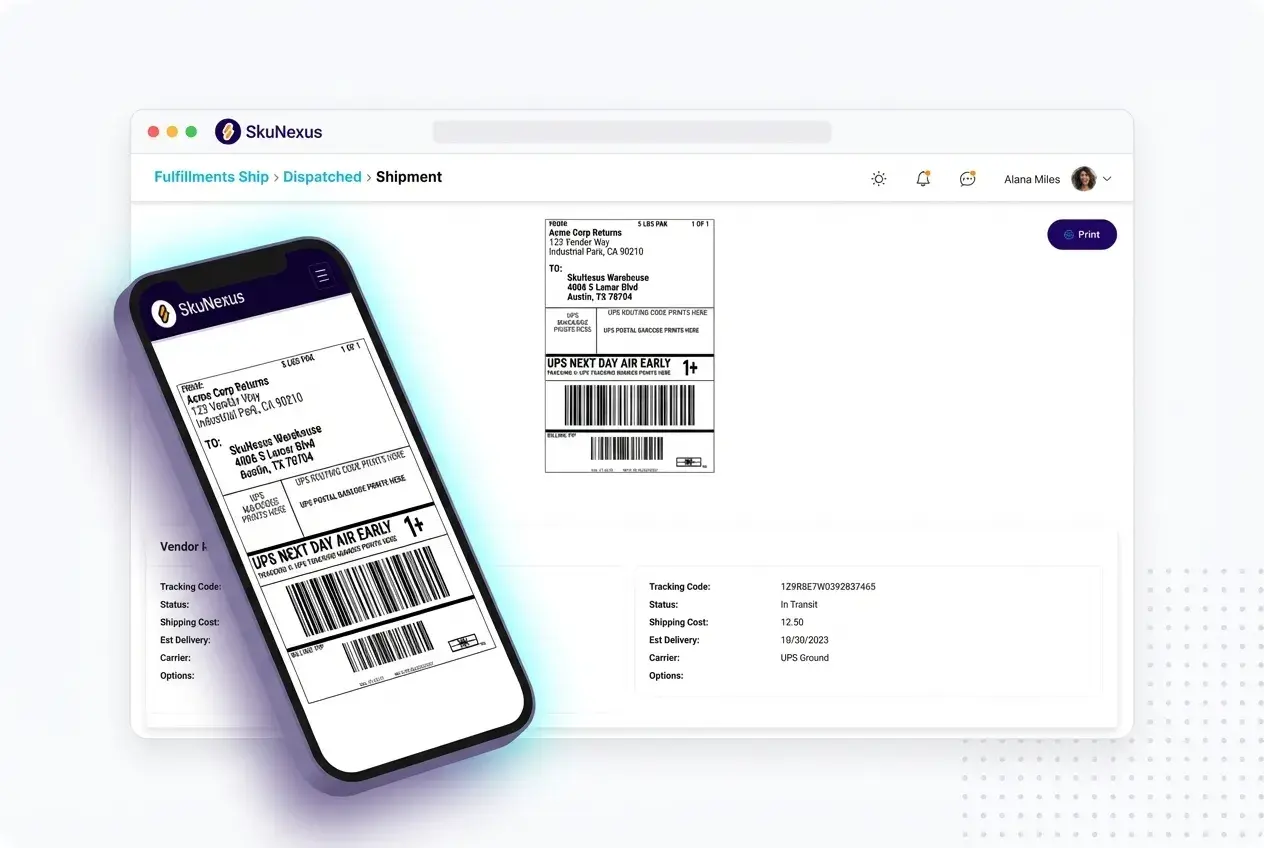
Returns Management feature 2 — SkuNexus
Feature

Quarantine Zone Management

Items needing further evaluation are held in a tracked quarantine zone. Nothing sits in limbo without a record. Quarantine reasons are coded and reportable.

Quarantined items can be reviewed, re-dispositioned, or escalated. The system tracks how long items have been in quarantine and alerts when items need attention.

  • Tracked quarantine zone
  • Reason codes and reporting
  • Age-based alerting
  • Re-disposition workflow
Returns Management feature 3 — SkuNexus
Feature

Refund & Exchange Integration

Return disposition triggers refund or exchange processing, synced back to the sales channel. Exchanges create a return + new order, both linked for tracking.

Marketplace-specific return policies are supported. Amazon, eBay, and Walmart return windows and requirements are tracked per channel.

  • Disposition-triggered refunds
  • Exchange as return + new order
  • Channel-specific return policies
  • Self-service portal API integration
The SkuNexus Difference

Why Merchants Choose SkuNexus for Returns

🔗

Returns and Fulfillment in One System

Most merchants process returns outside their fulfillment system. SkuNexus processes returns in the same system managing inventory, warehousing, and fulfillment. Restocked items get instant inventory adjustment, directed putaway, and channel sync.

🚚

Vendor Returns Aren't an Afterthought

If a dropshipped item comes back, it shouldn't sit in your warehouse forever. SkuNexus generates vendor return requests as part of disposition — the same system that handles POs handles return-to-vendor.

Photo capture for returns — that's something we've needed. We deal with vendor disputes on damaged items regularly.

Brandon R.
🔍

Audit Trail for Every Return

Who authorized it, when the package arrived, who inspected it, condition assessed, disposition chosen, photos taken, inventory adjustment. Complete history — your protection against fraud, disputes, and accounting discrepancies.

Case Study

A 150-year-old premium ice cream brand selling DTC, wholesale, and through national retail partners.

⚠️ The Challenge

Brandon's team processed returns in spreadsheets with no photo evidence. Vendor disputes on damaged items had no documentation to support claims.

The Solution

SkuNexus photo capture during inspection provides permanent evidence. Structured disposition workflow gets good inventory back to shelves faster.

📈 The Results

47%
Faster fulfillment
99.2%
Inventory accuracy
0
Oversells in Q4
4x faster
Return processing time

"Our Smoothest Peak Season Ever"

An auto parts distributor dealing with frequent vendor disputes on damaged items.

Director of Operations, Graeter's Ice Cream
Returns workflow live in 1 week
Integrations

Connects to Everything You Already Use

Native integrations with leading eCommerce platforms, shipping carriers, and accounting tools.

100+ Native
Integrations
+ many more
Comparison

Still Processing Returns Ad-Hoc?

Every day a returned item sits unprocessed is a day it's not earning revenue.

Ad-Hoc Returns Processing SkuNexus Returns Management
Returns pile up at the dock Structured workflow processes immediately
No condition documentation Photo capture and audit trail
Manual restocking, no direction Directed putaway for restocked items
Vendor items sit in your warehouse Automated vendor return requests
No return analytics Return rates by product, channel, reason
Inventory accuracy degrades Real-time inventory adjustments

Returns are inevitable. How fast and accurately you process them determines whether inventory goes back to work or becomes a write-off.

See It Live

Free demo • No credit card required

FAQ

Frequently Asked Questions About Returns Management

Returns management software structures the reverse logistics workflow from the moment a return is authorized through receiving, inspection, disposition, and restocking. Without it, returns become a black hole where inventory sits on a shelf or in a pile, never inspected, never dispositioned, and never making it back to available stock where it can generate revenue again.

The cost of unstructured returns is significant: every item sitting in a returns area uninspected is inventory you can't sell. Every item restocked without proper scan verification creates a count discrepancy. Every defective item put back on the shelf ships to another customer and generates another return. SkuNexus turns returns into a structured, scan-verified workflow: authorize the return, receive and scan each item against the authorization, prompt an inspection and disposition decision (restock, quarantine, return to vendor, or dispose), and update inventory in real time based on the disposition.

The same three-step scan verification workflow used for outbound fulfillment applies to returns receiving. When a return package arrives, the team scans each item against the return authorization. The system confirms the right product was returned (matching SKU and quantity), prompts the handler for an inspection decision (is it in sellable condition?), and routes the item to the appropriate next step based on disposition.

Using the same scan workflow for returns that you use for picking and packing means your team doesn't need to learn a separate process. The muscle memory is identical: scan the container, scan the product, confirm the action. This consistency reduces training time and error rates for returns processing just as it does for outbound fulfillment. SkuNexus uses the same green-means-go verification pattern for returns - green confirmation when the scanned item matches the return authorization, red alert when something doesn't match.

Disposition is the decision of what to do with each returned item: restock it (put it back on the shelf in sellable condition), quarantine it (hold for further inspection or repair), return it to the vendor (defective product that should go back to the supplier), or dispose of it (damaged beyond resale or repair). Without a structured disposition workflow, returned items accumulate in a limbo area - not available to sell, not sent back to the vendor, just sitting there tying up working capital.

Every day an item sits in returns limbo is a day it's not generating revenue. A $50 product that could be restocked and sold within 24 hours of return instead sits for two weeks because nobody prompted the inspection decision. Multiply that by hundreds of returns per month and the revenue impact is material. SkuNexus prompts a disposition decision for every returned item during the receiving scan workflow, so nothing enters limbo.

As fast as your inspection and disposition workflow runs. When a returned item is scanned, inspected, and marked "restock," SkuNexus immediately moves it back into available inventory and syncs the updated quantity to all connected sales channels. There's no waiting for a batch update, no manual adjustment needed, no separate step to "release" the item back to the pool. The moment the disposition decision is "restock," the item is sellable again.

For merchants with high return volumes (ecommerce averages 15-30% return rates depending on category), the speed of inventory recovery directly impacts revenue. If 100 items are returned this week and they sit uninspected for two weeks, that's potentially thousands of dollars in inventory that could have been resold. SkuNexus makes restocked returns available in seconds, recovering revenue that unstructured returns processes leave on the table.

Yes. When a returned item is inspected and determined to be defective or otherwise unsuitable for resale, one disposition option is "return to vendor." The system creates a vendor return authorization (RMA), tracks the item as it moves from your returns area back to the vendor, and adjusts your inventory accordingly. This is a distinct fulfillment path from restocking or disposing.

Vendor returns matter for margin protection. If a vendor shipped you defective product, you shouldn't absorb the loss - the item should go back to the vendor for credit or replacement. Without a structured vendor return path in your system, defective items either get restocked (creating another customer return) or disposed of (absorbing the cost). SkuNexus tracks vendor returns as a distinct disposition path with its own workflow, so defective items route back to the responsible vendor with documentation and audit trail.

Every return that isn't properly scanned and processed creates a discrepancy between your system count and your physical count. A returned item placed back on a shelf without scanning doesn't update the system - you now have more physical inventory than your system shows, which means you're underselling. A returned item logged into the system but not actually placed in the correct bin creates a phantom: the system says it's there, but the picker can't find it.

These discrepancies compound over time. After a few months of unstructured returns, your system counts diverge significantly from reality, leading to overselling (system says it's in stock, but it's not), underselling (physical stock exists but system doesn't show it), and failed picks (picker goes to the bin and the item isn't there). SkuNexus requires scan verification on every return receiving event, ensuring the system always reflects what's physically in the warehouse.

Yes. During the disposition workflow, the handler logs the return reason using configurable reason codes: wrong item shipped, damaged in transit, defective product, customer changed mind, product not as described, arrived too late, and any custom reasons you define. Photo documentation can also be captured during inspection to record the item's condition.

This data feeds analytics that reveal actionable patterns. If SKU #4521 has a 12% return rate while your average is 4%, there's a product quality issue to address with the vendor. If "wrong item shipped" spikes during peak season, your picking verification process needs tightening. If "damaged in transit" clusters with a specific carrier, your packaging or carrier selection needs adjustment. SkuNexus logs every return with reason codes, timestamps, handler identity, and optional photo documentation, making return pattern analysis part of your ongoing operational improvement process.

Still have questions?

Talk to Our Team

Every Day a Returned Item Sits Unprocessed Is a Day It's Not Earning Revenue

Returns are inevitable. How fast you process them determines whether inventory goes back to work or becomes a write-off.

Free demo No commitment See your data live