
Shopify Multi-Location Inventory
When a Shopify merchant operates with multiple inventory locations, deciding exactly where an order ships from becomes an invisible, but critical, piece of operational strategy. Shopify's location prioritization rules quietly determine which warehouse, store, or location fulfills each customer order. While this mechanism seems straightforward on the surface, the underlying logic, limitations, and consequences can have profound effects on efficiency, shipping cost, inventory turns, and overall order accuracy. This guide unpacks how Shopify location prioritization works, where it helps (and hinders) fulfillment, and what merchants need to know to avoid costly mistakes or mismatches, especially as location counts and channel complexity grow.
Key Takeaways
-
Shopify location prioritization determines which physical location fulfills each order based on a ranked list and real-time inventory.
-
Misaligned or outdated priority lists can cause fulfillment from unintended locations, raising shipping costs and depleting store stock.
-
Proper management of Shopify location prioritization is crucial as inventory complexity and sales channels increase.
-
Delayed or inaccurate inventory updates can result in orders being shipped from incorrect locations, disrupting operational efficiency.
-
Shopify's prioritization model lacks nuanced controls for advanced scenarios, requiring merchants to use manual workflows or external integrations.
-
Regularly reviewing and updating location priorities is essential for optimal fulfillment, cost savings, and a consistent customer experience.
What Location Prioritization Means in Shopify
Shopify's location prioritization is the system by which the platform decides which physical inventory location fulfills an online order when multiple locations have available stock. Instead of picking randomly, Shopify processes a set of rules, mainly based on a priority list, but always filtered by real-time inventory levels.
Why Shopify Must Choose a Location for Fulfillment
A merchant might hold the same product in several places: one in Manhattan, another in LA, a pop-up store, and maybe a third-party warehouse. Orders need to ship quickly and cost-effectively, but for each, only one location can be the source. Shopify must decide: which location ships this order? That choice impacts shipping time, cost, available delivery methods, and, indirectly, future stockouts in each location. Crucially, if two or more locations technically could fulfill, Shopify's system applies its logic to resolve the tie.
How Prioritization Affects Channel and Shipping Behavior
Location prioritization doesn't exist in a vacuum. Sales channels, whether Shopify's online store, social commerce, or B2B, may have access to (or restrictions against) specific locations. The system matches each order's requirements (including shipping method, delivery promises, and even local fulfillment limits) to the prioritized list. Merchants sometimes expect a certain warehouse will always ship online orders, yet discover retail stock is consumed instead due to how priorities and inventory match up at the order moment.
Core Concepts Behind Location Prioritization
Within Shopify, the framework for fulfillment location selection starts with a set of ranked locations, what most merchants know as the 'priority list.' This list, set in the Shopify admin, determines which locations are considered first for order fulfillment.
Default Location Ranking Logic (Conceptual Only)
At its most basic, Shopify assigns an internal rank to each location. The merchant sets this by dragging and dropping locations in the admin. Location at the top has the highest fulfillment priority. When an order is placed, Shopify assesses available locations in this order, never skipping a location with inventory unless a sales channel or shipping rule excludes it. This ranking acts as the blueprint for every fulfillment decision unless inventory, channel restrictions, or unavailable shipping methods intervene.
How Priority Lists Influence Fulfillment Decisions
Shopify's fulfillment engine consults the priority list every time a new order needs allocation. The system always starts checking at the top of the list: Does this location have enough inventory? Is it enabled for this channel? Can it serve the shipping method selected by the customer? If all answers are yes, that's the chosen location, no matter where the customer is or what's cheapest.
Misalignment between a merchant's desired fulfillment flow and their current list setup leads to orders routed from the wrong place. Merchandise planned specifically for stores can get depleted by online orders. Or, a low-priority overflow warehouse never gets selected, even though it's growing backlog. The priority list, not just stock, has decisive influence.
Impact of Inventory Availability on the Priority Flow
Inventory sits at the crossroads of intent and actual outcome. The priority list's order is only influential if the relevant location has sufficient available stock (that is, shippable, not reserved or inbound). If a top-ranked location is out, even temporarily, Shopify simply moves to the next location in the list. One subtlety: Shopify determines fulfillment at the instant of order placement, using whatever inventory snapshot is active. Rapid sales, delayed inventory syncs, or manual adjustments all affect which location is eventually chosen.
Operational Realities of Prioritization Rules
For merchants scaling beyond a handful of locations, location prioritization isn't just a set-and-forget admin task. The operational reality is far more nuanced, riddled with challenges as complexity and location count grow.
Challenges for Merchants With Many Locations
Managing prioritization becomes exponentially harder as the number of locations expands. Beyond a point, the static list can't easily reflect the nuanced trade-offs between storage costs, last-mile delivery zones, and channel exclusivity. Merchants often find that a single, global priority order doesn't fit disparate operational goals. For instance, keeping a small flagship boutique topped up should not result in that store shipping national online orders.
Unexpected Results From Misconfigured Priorities
Misconfiguration, or simply not revisiting priorities as business models evolve, often leads to recurring operational headaches. A mid-priority location can become the accidental default if higher priorities run out of stock. Merchants sometimes notice that high-velocity locations are continually drained while backup stock goes untouched. Even worse, priorities designed for peak season might cause misrouting in quieter months if not actively adjusted.
How Delayed Inventory Updates Skew Prioritization
Real-time inventory accuracy is critical. When systems batch-update, sync lags, or staff make late manual adjustments, the priority logic can send orders to surprising places. For example, if a retail location's numbers aren't updated until end-of-day, but an online order comes in at noon, Shopify might mistakenly select the wrong fulfillment source. Over time, the disconnect between operational reality and Shopify's snapshot at order creation compounds inventory imbalances.
Common Prioritization Issues in Shopify
While Shopify's prioritization logic covers most basic cases, real-world complexity often exposes edge cases and sources of friction for merchants.
Wrong Location Selected for Fulfillment
Unexpected shipping location choices are among the most reported merchant pain points. Frequently, orders pull inventory from retail stores when warehouse stock is available, or vice versa. This isn't always due to a bug, often, it's a perfectly logical application of the existing priority list, perhaps no longer aligned with the company's latest strategy. Seasonal pop-up locations can also deviate from standard behavior, especially if not regularly reprioritized or excluded when dormant.
Priority Conflicts Between Channels
Channel-level priority nuances are a recurring challenge. Some merchants want online orders to always ship from warehouses, but allow local pickup at the store. When these priorities are not clearly configured or when channels unexpectedly share the same top location, conflicts arise, sometimes resulting in split inventory and the occasional unintentional stockout at a key retail outlet because ecommerce consumed the available stock.
Inconsistent Outcomes With External Systems
Many merchants sync inventory or manage orders with external systems, ERPs, WMSs, or third-party platforms. Delays or system mapping mismatches can mean Shopify's priority list isn't fully compatible with the logic applied in these tools. Orders routed in Shopify may contradict what the external system expects, and vice versa, leading to fulfillment confusion or even duplicate shipments. Shopify's approach works only as well as the tightest integration and the smoothest sync.
Limitations of Shopify’s Prioritization Model
While Shopify's prioritization system works admirably for straightforward use cases, several structural limitations become apparent as operations expand or grow more complex.
Lack of Granular Rule Controls
Out of the box, Shopify's controls are fairly binary: a merchant sets an ordered list, and fulfillment follows that order for all qualifying orders. There's no built-in rule engine to determine priority based on customer location, shipping method, or order value. That means nuanced requirements, like sending all international orders from a specific warehouse, or prioritizing stores for in-store pickup only, usually demand manual location management or workaround workflows.
Constraints in Complex Multi-Node Environments
For sophisticated retailers with advanced network distribution, regional warehouses, micro-fulfillment centers, and brick-and-mortar stores, Shopify's one-size-fits-all list can't reflect operational realities without compromise. It's not possible to configure variable priorities by region, product, or channel within the core model. Complexities like temporary blackouts, "overflow" emergency fulfillment, or real-time dynamic routing simply aren't natively supported. As a result, merchants with truly multi-node, omni-channel environments often find themselves bypassing or working around Shopify's built-in logic.
Next Steps and Related Guides
Mastering Shopify's location prioritization is just one aspect of optimizing multi-location operations. Merchants encountering ongoing fulfillment mismatches or growing location complexity should regularly review both their priority list and associated workflows, especially after new location launches, seasonal swings, or changes to sales channels.
For those seeking broader context on how Shopify manages multi-location inventory, including stock availability logic, merchant-facing workflows, and more, refer to the Shopify Multi-Location Inventory overview. This guide provides a foundation for operational structure, from which prioritization and exception management can be fine-tuned.
Eventually, staying proactive about location configuration and understanding Shopify's prioritization logic is vital for avoiding fulfillment misrouting, minimizing shipping costs, and ensuring a consistently positive customer experience.
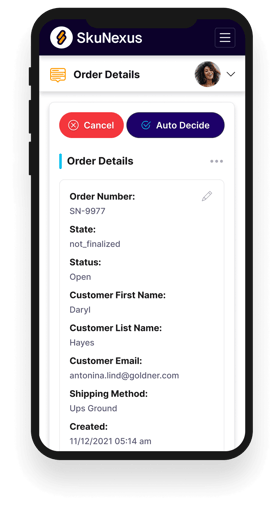
See How SkuNexus Transforms Inventory, Orders, and Fulfillment
- Say goodbye to stock issues with real time inventory tracking
- Make shipping and handling a breeze with our automated system
- Easily manage orders from all your channels in one place