
Shopify Inventory Management
Inventory accuracy is the silent backbone of any well-run Shopify store, but it rarely gets the attention it deserves, until there's a costly mistake. When the numbers in Shopify don't match physical or third-party system counts, the consequences ripple outward: overselling, unhappy customers, and operational chaos. This supporting guide cuts past surface explanations to examine exactly how inventory inaccuracies occur in Shopify and across connected systems, how to diagnose them conceptually, and what operational risks they trigger. If you're responsible for operational reliability, understanding these nuances can mean the difference between smooth growth and relentless firefighting.
For a broader look at Shopify's inventory management landscape, see the Shopify Inventory Management overview.
Key Takeaways
-
Shopify inventory accuracy is critical to preventing overselling, stockouts, and customer dissatisfaction.
-
Inventory inaccuracies often stem from timing conflicts, human error, or misconfigured product variants across connected systems.
-
Partial updates, sync delays, and unclear inventory state changes can cause discrepancies between Shopify and third-party platforms.
-
Shopify lacks robust native reconciliation tools, making proactive cross-system auditing essential for reliable inventory accuracy.
-
Maintaining a clear 'source of truth' and regularly reviewing system integrations helps prevent costly operational disruptions.
What Inventory Accuracy Means in Shopify
Why Accuracy Matters for Operations
In Shopify, inventory accuracy refers to the trusted alignment between recorded stock levels within Shopify and the actual physical quantity available for sale. This number must be right, not just for the store's front-end customers, but for warehouse staff, connected order management systems (OMS), third-party logistics (3PLs), and anyone else who acts on real-time inventory data. Small errors can compound, leading to operational gridlock or customer service disasters. The tighter your store's margins and the faster your fulfillment cycles, the more even tiny discrepancies matter: they impact purchase promises, reorder timing, and fulfillment reliability.
How Inaccuracies Appear Across Systems
Inventory accuracy seldom lives in a vacuum inside Shopify. Most modern merchants push and pull inventory info between Shopify, external OMS or WMS platforms, and third-party apps. Inaccuracies often surface not as glaring stock discrepancies but as subtle mismatches, such as Shopify showing five items while a WMS claims only three. These gaps can stem from timing issues, partial data syncs, slow API callbacks, or incomplete propagation after returns and cancellations. The end result is a fractured understanding of available-to-promise stock, complicating decision-making and undermining trust in any one system.
Common Causes of Inventory Inaccuracy
Timing Conflicts Between Systems
Inventory quantities are in constant flux: orders come in, cancellations happen, returns are processed, internal adjustments are made. If connected systems update stock at slightly different times, conflicts quickly arise. For example, Shopify might decrement stock right as an OMS is syncing, resulting in double-subtractions or missed updates. Out-of-order updates may lead to historical data overwriting newer, more accurate changes. These subtle conflicts are common when integration timing isn't precisely aligned or if third-party systems have polling delays.
Human Error and Miscounts
Even though best intentions, human intervention remains a major source of inaccuracy. Staff may miscount inventory during cycle counts, transpose SKU numbers when entering adjustments, or miskey product variants, especially when workflows are rushed. Incomplete training, ambiguous naming conventions, or skipping double-checks during busy periods all multiply risk. Even a single incorrect manual edit can send a ripple through all integrated systems if not quickly caught and corrected.
Incorrect Variant or Product Configuration
Discrepancies often begin at setup. If product variants aren't configured accurately, wrong SKUs, incorrect initial stock levels, or faulty tracking settings, Shopify becomes out of sync with physical stock right from the start. This error can be especially hard to spot: staff might assume the platform's inventory count is accurate when it's anchored to a misconfigured master record. Over time, as returns, swaps, or bundles are processed, the gap between system numbers and physical reality widens until discovered (often after a painful oversell incident).
How Inventory Accuracy Breaks Down
Partial Updates and Sync Delays
Inventory data often fails at the edges: when updates are partially applied or delayed across systems. For example, if Shopify records an inventory decrease from an order but the WMS update lags, some systems show the new value while others remain outdated. Sync errors aren't always visible, they can be masked until an edge case triggers reconciliation. Partial updates due to network issues, failed API calls, or temporary integration misfires can leave inventory in an inconsistent state across platforms for hours, or longer if not systematically monitored.
Incorrect State Changes
Inventory state changes, such as marking items as reserved, available, or returned, can also introduce silos of inaccuracy. If an order is partially canceled but only part of the stock is released back to available, Shopify and other systems start to drift. Overlapping or conflicting state changes (for example, canceling an order after fulfillment has begun) can cause negative inventory counts or artificial surpluses that don't reflect on-shelf reality. The lack of stringent guardrails for state transitions exacerbates the risk.
Order, Return, and Cancellation Timing Issues
Proper recording of order events (purchase, return initiation, completion, cancellation) is not always instantaneous or orderly. Slow returns processing, delayed restocks, or canceled orders not reflected in time can all produce misaligned inventory counts between Shopify and connected systems. These issues are particularly acute when inventory is shared between channels, or when multiple systems (OMS, WMS, 3PLs) must coordinate on short timeframes. Without clear logic on which system is the source of truth for each kind of event, stock levels are easily corrupted.
Diagnosing Inventory Accuracy Problems
Identifying Patterns of Drift
Inventory inaccuracies don't appear out of nowhere, they gradually materialize as patterns or trends, often visible if you know what to look for. Recurring discrepancies at specific times of day, after certain workflows (like large returns, or multi-channel flash sales), or within particular SKUs can indicate systemic flaws in update logic or data flow. Auditing cross-system logs for point-in-time deviations can uncover the root timing or process breakdowns, allowing operational teams to zero in on when and how stock values "drift" apart.
Spotting Source-of-Truth Confusion
When multiple systems assume they're the inventory ‘authority,' data chaos follows. Source-of-truth confusion normally emerges when integrations are bi-directional, or when Shopify is sometimes expected to lead updates, but other times is overridden by external OMS or WMS snapshots. This flip-flopping leads to phantom adjustments, overwrites, or skipped updates. Best practice is to identify a clear source of truth for each data flow (per event type, if necessary), then carry out integration logic that never lets external systems blindly overwrite trusted stock counts.
Behavior Across Connected Systems
The most effective diagnosis often comes from mapping data movement between systems over time, not just in the abstract, but in real operational scenarios. Watching how a simple sale, return, or cancellation propagates through Shopify, OMS, and WMS reveals breakdowns in update order, latency, or transformation logic. Cross-referencing logs or audit trails across platforms clarifies which system injected an error, where sync broke down, and whether patch fixes (manual or automated) led to further drift. This depth of analysis empowers teams to not only spot issues, but design resilient, audit-friendly data flows going forward.
Risks Created by Inaccurate Inventory
Overselling and Stockouts
The most immediate risk of inaccurate inventory is selling stock you no longer have, or, just as damaging, missing sales when there is stock on hand but systems don't show it. Overselling leads to unfillable orders and refund headaches: underselling means unrealized revenue and frustrated customers who see items as sold out. The larger your catalog, or the faster your channel sales, the more destructive these risks become.
Fulfillment Delays and Errors
If pickers are directed to unavailable stock due to an inaccurate count, order fulfillment slows to a crawl or results in partial shipments. Staff waste time investigating discrepancies, managers must pause workflows to manually reconcile numbers, and overall fulfillment reliability suffers. In severe cases, entire batches may have to be re-picked or re-packed, often under the pressure of tight shipping deadlines.
Operational Slowdowns and Customer Impact
Inventory inaccuracy isn't just a warehouse or systems problem: it's a customer experience problem. Repeated shipment delays, order corrections, or product unavailability erode trust and damage brand reputation. On the operational side, misalignment leads to fire-fighting mode: staff become reactive, investigation-prone, and far less productive. Accuracy problems compound over time, increasing operational complexity and labor costs.
Limitations of Shopify’s Accuracy Controls
Lack of Native Reconciliation Tools
While Shopify tracks inventory changes in real-time, it offers few built-in tools for reconciling stock across systems or diagnosing historical discrepancies. There is no native audit trail to cross-reference physical or external-system counts, and bulk reconciliation requires external reporting or labor-intensive manual checks. This limitation means even attentive operators are forced to develop outside-of-platform workflows to spot and correct accuracy breaks before they cascade.
Challenges With Multi-System Consistency
Shopify was designed primarily as a single-source commerce system: as soon as inventory is shared with external OMS, WMS, or fulfillment systems, the platform's controls become limited. Shopify provides event triggers and basic webhooks, but deep consistency and error-correction must be managed upstream or via custom integrations. Latency, API rate limits, and conflict resolution all require careful planning, especially for stores operating on tight fulfillment or multi-channel sales timelines.
Next Steps and Related Guides
Understanding the quirks and edges of inventory accuracy in Shopify is just the start. Operational teams should establish a cadence for reviewing cross-system logs, maintaining a documented inventory ‘source of truth,' and stress-testing integrations during periods of high change (sales events, system migrations, new channel launches). Consider formalizing incident review processes for major discrepancies.
For a strategic lens on building scalable, accurate inventory management workflows, and to explore foundational concepts not covered here, visit the Shopify Inventory Management overview.
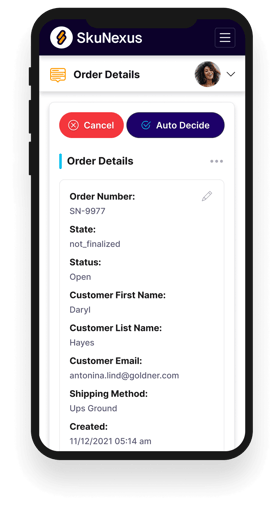
See How SkuNexus Transforms Inventory, Orders, and Fulfillment
- Say goodbye to stock issues with real time inventory tracking
- Make shipping and handling a breeze with our automated system
- Easily manage orders from all your channels in one place