
Shopify Fulfillment Operations
Behind the scenes of every Shopify order, there's a critical decision: which warehouse (or location) will be assigned to pick and ship those items? For merchants managing multiple warehouses, third-party logistics (3PLs), and distributed inventories, warehouse assignment is the silent engine powering efficient delivery, or, sometimes, introducing costly delays. Understanding how Shopify conceptually routes orders to warehouses, why those choices matter, and exactly where things can go wrong is essential for any retailer running a professional multi-location fulfillment operation.
This guide explores the underlying logic, operational factors, and best practices of warehouse assignment within Shopify. It zooms in on the core decision models, day-to-day realities, and strategic pitfalls that stores must master to make warehouse selection a competitive advantage.
If you're new to Shopify's fulfillment landscape, consider starting with the Shopify Fulfillment Operations overview. Otherwise, read on for a deep jump into warehouse assignment logic and execution.
Key Takeaways
-
Shopify warehouse assignment determines which location fulfills each order based on inventory availability, location eligibility, and business requirements.
-
Accurate inventory data and clearly defined warehouse roles are essential for smooth Shopify warehouse assignment and minimizing errors.
-
Regularly auditing fulfillment priority and location configurations helps prevent suboptimal assignments and unexpected order splits.
-
Operational alignment and clear communication between warehouses, 3PLs, and internal teams are critical for effective warehouse assignment in Shopify.
-
Limitations in Shopify’s native assignment visibility and integration with external systems can complicate troubleshooting and require robust management processes.
What Warehouse Assignment Means in Shopify Fulfillment
How Shopify Chooses a Warehouse to Fulfill an Order
At its core, warehouse assignment in Shopify is the platform's logic for determining which eligible location fulfills a given order or line item. In practice, it's not as simple as picking the closest warehouse, there's a layered decision tree that considers which locations have inventory, are active and eligible, and meet any business or shipping requirements associated with the order. When a customer clicks "Buy," Shopify's backend evaluates all suitable locations, then uses its assignment algorithm to allocate each item to a specific warehouse: sometimes this means a single order is split across multiple locations if no single warehouse has everything in stock.
The Role of Locations and Inventory in Assignment Decisions
Shopify's idea of a "location" spans warehouses, 3PL hubs, retail stores (when inventory is set to available for online fulfillment), and even drop ship centers, anywhere product is stored and potentially shippable. Assignment relies heavily on near-real-time inventory data: only locations with sellable stock as of order creation are considered. If all inventory options are exhausted, the order may fall into exception workflows or require manual intervention. For efficient, low-friction fulfillment, keeping location and inventory records up-to-date is fundamental: inaccuracies here can push orders to unintended or unprepared warehouses.
Core Concepts Behind Warehouse Assignment
Location Eligibility and Inventory Availability (Conceptual)
Not every warehouse or location can fulfill every order. Eligibility is determined by a location's current status (active, fulfills online orders, not on hold), regional or shipping constraints, and inventory that matches the required product and sellable quantity. If a location is disabled, on pause, or lacks proper configuration, it drops out of assignment consideration. Inventory must also be physically available, reserved, committed, or "phantom" units won't count towards eligibility at assignment time.
Balancing Proximity, Capacity, and Service Levels
Assuming multiple locations are eligible, Shopify's assignment tries to balance a mix of proximity (to the delivery address), warehouse capacity, and service-level requirements. Typically, proximity is favored to minimize delivery time and cost, but in cases where, for example, one warehouse is overloaded or offers faster shipping service levels (such as next-day), the assignment logic may prioritize these operational factors. Shopify's native system is conceptual, truly granular control over factors like capacity or cost routing typically requires custom workflows, but at a high level, the assignment tries to minimize fulfillment friction.
Interactions Between Warehouse Assignment and Fulfillment Priority
Fulfillment priority is a configurable sequence that determines the order in which Shopify considers eligible warehouses for assignment. This is distinct from day-to-day picking and packing operations, but it's crucial: if not aligned with real-world inventory flows and operational targets, fulfillment priority can skew assignment to suboptimal warehouses or create avoidable splits. In multi-location setups, carefully setting and regularly auditing fulfillment priority is a non-negotiable part of assignment strategy.
Operational Realities of Warehouse Assignment
Coordinating Multiple Warehouses and Fulfillment Methods
On paper, Shopify's assignment logic seems deterministic. In reality, coordination between multiple warehouses, sometimes run by different teams, regions, or 3PLs, adds complexity. Inventory updates may lag. Warehouses might prioritize large B2B orders over DTC e-commerce. And locations set to fulfill online orders might be ill-prepared to handle bulk fulfillment. Strong operational discipline, with shared protocols for confirming inventory, communication, and handoffs between locations, is vital to smooth assignment execution.
Impact of Inaccurate Inventory on Assignment Outcomes
The overriding risk in warehouse assignment is bad inventory data. Even minor discrepancies (mislabeled items, delayed adjustments, or a surprise bulk reservation) can cause Shopify to assign orders to locations with no viable stock, where fulfillment grinds to a halt, or orders must be urgently rerouted. The issue multiplies with scale, as inventory signals travel across time zones or multiple platforms. Manual intervention, while a safety net, slows down fulfillment and increases error rates. The cost is not just operational, but also reputational when customers experience delays.
Working With 3PLs and External Fulfillment Partners
Many Shopify merchants rely on external logistics providers. This partnership brings its own assignment realities: 3PLs may only sync inventory periodically, operate with minimum processing thresholds, or have blackout periods for certain SKUs. Mismatches between the assignment logic in Shopify's backend and a 3PL's operational practices can create dropped or duplicated orders, unauthorized splits, or delayed handoffs. Advanced merchants often set internal SLAs and communication protocols, ensuring both their own teams and their partners are reaction-ready when assignment issues arise.
Common Warehouse Assignment Problems in Shopify
Orders Assigned to Suboptimal Warehouses
Perhaps the most frequent pain point is orders assigned to warehouses that don't make logistical sense, due to outdated fulfillment priority, stale inventory counts, or mis-configured location settings. This might mean a customer in New York is served by a West Coast warehouse when a closer, better-stocked location was available. These incidents not only drive up shipping costs, but also frustrate customers and fulfillment teams alike.
Unexpected Splits or Transfers Due to Assignment Logic
Orders may be split across multiple warehouses if no single location holds the entire required inventory. While splitting can be unavoidable in multinational setups, unexpected splits often stem from misplaced configuration, like overlapping location eligibility or phantom stock. Splits introduce operational headaches: higher shipping costs, complex packing workflows, and the challenge of reconciling order statuses across teams.
Confusion Around Which Warehouse Owns Which Orders
When assignment logic or manual overrides are unclear, confusion about "who owns" a given shipment can stall fulfillment. Overlapping responsibilities, disconnected data, or unclear communication channels between warehouses worsen this. Especially with multiple external partners or cross-border operations, a lack of clear assignment visibility can lead to accidental double-picking or, worse, missed shipments.
Best Practices for Managing Warehouse Assignment
Clarifying Warehouse Roles and Responsibilities
Each warehouse or fulfillment location should have a clearly defined role, whether it fulfills all everyday orders, acts as a regional buffer, or serves a specialized channel. Document and communicate these roles to prevent overlap and ensure assignment rules in Shopify map to the physical world. Regular cross-team reviews of responsibility boundaries help prevent ambiguity as business needs evolve.
Keeping Inventory and Location Data Clean
Assignment outcomes are only as accurate as the data supporting them. Regular audits of stock levels, deactivation of outdated or inactive locations, and standardized processes for handling returns and stock movements are foundational. Use exception reports and reconciliation drills to catch errors before they create fulfillment failures. For multi-system merchants, syncing schedules should be rigorous and monitored for drift.
Aligning Assignment Behavior With Operational Strategy
Assignment isn't just a technical logic, it's a lever for business strategy. Whether aiming to minimize costs, prioritize speed, or optimize for specific markets, ensure your Shopify location settings, fulfillment priority, and inventory planning all point in the same direction. It's critical to revisit assignment settings as your fulfillment model or business goals shift (e.g., adding new shipping partners, launching same-day delivery, or expanding to new regions). Alignment prevents assignment logic from drifting away from real-world strategy.
Limitations of Shopify’s Warehouse Assignment Capabilities
Limited Native Visibility Into Assignment Decisions
One challenge with Shopify's assignment system is the "black box" nature of its decision-making. While reports will show where an order is assigned, the logic, and especially the rationale for picking one location over another, isn't always transparent to operators. This can make troubleshooting suboptimal assignments or unexpected splits frustrating, as there's limited built-in insight as to why a choice was made over alternatives.
Challenges When Multiple Systems Influence Assignment
If inventory, order data, or fulfillment cues flow between Shopify and external OMS, ERP, or custom solutions, assignment outcomes can become hard to predict. Data "races," timing mismatches, or conflicting logic between systems muddy the question of exactly when and why a warehouse gets an order. Establishing clear ownership of the assignment step, defining whether Shopify's logic, another OMS, or a custom integration is authoritative, is necessary to regain control and clarity.
Next Steps and Related Guides
Understanding the nuts and bolts of Shopify warehouse assignment is only one part of building a high-performance fulfillment operation. For broader context on order processing, picking, shipping, and integrating operational workflows, head to the Shopify Fulfillment Operations overview. Use these concepts to drive continuous improvement, regular audits, cross-team alignment, and clear visibility can turn assignment from an afterthought to an operational advantage.
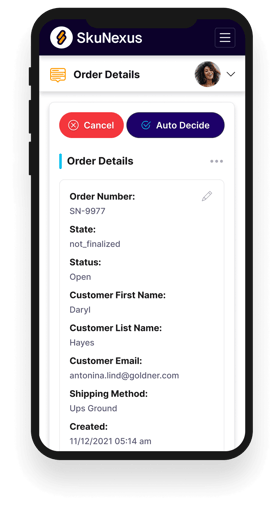
See How SkuNexus Transforms Inventory, Orders, and Fulfillment
- Say goodbye to stock issues with real time inventory tracking
- Make shipping and handling a breeze with our automated system
- Easily manage orders from all your channels in one place