
Shopify Fulfillment Operations
Partial fulfillment is both a powerful tool and a unique operational challenge for Shopify merchants. As modern commerce shifts toward faster, more flexible delivery models, split shipments, the core of partial fulfillment, have become increasingly common. Whether a merchant is balancing inventory across multiple locations or handling staggered product releases, understanding how partial fulfillment operates within Shopify is critical for maintaining customer satisfaction and ensuring clean operational flow. This guide offers a deep jump into the conceptual mechanics of partial fulfillment in Shopify, complete with detailed scenarios, workflow impacts, challenges, and pragmatic best practices to get it right.
Key Takeaways
-
Shopify partial fulfillment allows merchants to ship available items from an order immediately, improving customer satisfaction and inventory flexibility.
-
Partial fulfillment often results from split inventory across multiple warehouses, the use of preorders or backorders, or special handling requirements for specific SKUs.
-
Each partial fulfillment in Shopify generates distinct tracking numbers and notifications, making clear communication with customers essential to reduce confusion.
-
Split shipments can increase overall shipping and packaging costs, so merchants should use partial fulfillment strategically and set clear policies.
-
Shopify’s native partial fulfillment tools may require significant manual effort and can present integration challenges as operations scale or become more complex.
-
Regularly reviewing and optimizing fulfillment workflows ensures that split shipments enhance, rather than disrupt, operational efficiency and customer experience.
What Partial Fulfillment Means in Shopify
Why Orders Are Sometimes Fulfilled in Multiple Shipments
Partial fulfillment, at its core, occurs when a single customer order is shipped in more than one package or at separate times. This is most often due to variations in stock availability, shipment origin, or customer-driven requests. Instead of delaying the entire order until all products are ready, merchants can ship available items immediately, improving delivery times for the customer and easing inventory pressure.
For example, a customer orders three items, two in stock at separate locations, one on preorder. Rather than holding back, the merchant ships stocked items immediately, sending the backordered item later. This creates a smoother customer experience and helps prevent avoidable delays that could erode buyer satisfaction.
How Partial Fulfillment Differs From Full Fulfillment
Full fulfillment means that every line item on an order is picked, packed, and shipped in a single operation, closing out the order in one go. In contrast, partial fulfillment treats the order as several operationally distinct subsets, each line item, or group of line items, can be marked fulfilled independently.
This process adjusts not only the operational rhythm of a fulfillment team but also the shape of inventory management, communications, and support. Partial fulfillment turns a single order into multiple shipping events, each with its own tracking numbers, notifications, and aftersales possibilities. This nuance is one reason operational teams must build policies that consider the downstream impact of split shipments in Shopify.
Common Scenarios That Lead to Partial Fulfillment
Mixed Availability Across SKUs or Locations
One of the most frequent triggers for partial fulfillment resides in inventory split across warehouses or stock locations. If a Shopify merchant operates multiple fulfillment points, or relies on third-party logistics, it's common that certain SKUs are available at one site but not another. Orders containing products from different locations inevitably generate separate shipments. Alternatively, an item may be out of stock at one fulfillment center while another has plenty, resulting in immediate shipment of available products and delayed fulfillment for the rest.
Preorders, Backorders, and Staggered Product Readiness
Shopify supports advanced sales models, such as accepting preorders or backorders alongside in-stock items. When a customer orders a mix of available and future-dated SKUs, fulfilling only what's ready prevents customer dissatisfaction stemming from unnecessary delays. In effect, partial fulfillment is a tactical response to the realities of product lifecycle management, especially for seasonal launches, exclusive collaborations, or limited-run items.
Special Handling, Split Shipments, and Customer Requests
Certain products demand bespoke handling, think hazardous goods, large items needing freight, or temperature-sensitive merchandise. In these cases, Shopify merchants may split fulfillment for regulatory, operational, or customer-centric reasons. Also, some customers explicitly request split shipments to get key items sooner, or to different delivery addresses as gifts or for multi-location teams. All of these contribute to the everyday relevance of partial fulfillment in Shopify.
How Partial Fulfillment Flows Through Shopify Operationally
What Happens to the Original Order and Its Line Items
In Shopify, the original order maintains a consistent identifier, but each time a partial fulfillment is created, the platform tracks fulfilled versus unfulfilled line items. Each fulfillment event logs the SKUs, quantities, location, and date, updating the order's history. While the order itself remains open until all line items are fulfilled, shoppers (and operators) can see which products have shipped and which are still pending, including their fulfillment status and, if applicable, intended fulfillment source.
How Partial Fulfillment Affects Tracking and Notifications
Every discrete fulfillment in Shopify generates its own tracking numbers and triggers a dedicated email or SMS notification to the end customer (as configured in store settings). So, a shopper may receive one shipment notification for a set of products, and a separate notification days later for the balance of their order. This compartmentalization helps reduce customer confusion, provided that notifications are clearly worded to reflect which products have shipped (and which have not). But, syncing tracking numbers in third-party systems requires vigilance, since multiple tracking codes can easily lead to reconciliation errors or missed updates.
Implications for Returns, Exchanges, and Customer Support
Split shipments add complexity to returns and exchanges because each fulfillment instance can generate its own return window and logistics. If an item from the first shipment needs to be returned before the second has even shipped, support agents must track each item's fulfillment and return status accurately. Also, customers might initiate support requests for partially fulfilled orders, querying the status of their remaining products. Hence, clear recordkeeping and transparent, proactive communication are essential for minimizing support noise and friction.
Operational Challenges With Partial Fulfillment
Higher Shipping and Packaging Costs
Every split shipment inherently increases the overall cost of fulfillment, another shipping label, more packing material, and extra labor. For merchants operating at scale, these incremental costs can erode already slim margins. Deciding how often to allow partial shipping versus waiting for a complete fulfillment becomes a critical balancing act, often driven by customer expectations and product type.
Coordinating Multiple Shipments and Carriers
Managing partial fulfillment can result in several carriers, varying delivery estimates, and more complex route planning. Operators must coordinate pickups, ensure compliance with carrier cutoffs, consolidate tracking, and manage potential delays across separate shipments. Small missteps, such as assigning incompatible SKUs to the wrong carrier, can lead to misdeliveries or service failures. Keeping detailed records on each split and ensuring all data syncs with customer-facing updates is foundational for maintaining service quality.
Maintaining Clear Communication With Customers
Frequent notifications present double-edged risks: too many emails and buyers may get overwhelmed or ignore shipping updates: too few and vital information goes missing. Effective partial fulfillment workflows in Shopify require a communication strategy that tells the customer precisely what's been shipped, what remains, and what to expect next. Templates should reference individual line items, anticipated ship dates, and provide clarity on returns for each shipment.
Best Practices for Managing Partial Fulfillment in Shopify
Deciding When to Allow Partial Fulfillment
Most merchants should only permit partial fulfillment when business needs justify the added cost and operational demand. Use it strategically: to accelerate delivery for urgent products, preserve customer loyalty, or move aging inventory quickly. Establish clear policies for which order types or product categories qualify for split shipments, and review them regularly to avoid unnecessary expense.
Setting Clear Expectations Around Split Shipments
Preempt questions (and complaints) by setting expectations right inside the storefront and order communications. Consider flagging split shipments before checkout, especially for preorder or mixed-warehouse orders, and highlight this in order confirmation emails. Being upfront fosters trust.
Aligning Fulfillment Workflows With Inventory and OMS Behavior
Partial fulfillment will test the seams of every merchant's backend. Make sure order management workflows are designed to handle fulfillment splits, and that inventory systems ‘speak the same language' as Shopify's order and fulfillment objects. This is doubly true for merchants syncing Shopify with ERPs or third-party inventory tools, where partial fulfillments can surface discrepancies or edge cases. Regular auditing and tight integration between systems reduce surprises and keep customer experience consistent.
Limitations of Shopify’s Native Partial Fulfillment Model
Manual Effort Required in Complex Scenarios
Out of the box, Shopify's native partial fulfillment tools get the job done for single-location or relatively simple split flows. But as merchants grow, expanding the number of SKUs, warehouses, or adding advanced workflows, the manual workload required for each fulfillment event can quickly become unsustainable. There's limited native automation for routing, batching, or reconciling multiple partial fulfillments, meaning operational teams may spend outsized time managing exceptions.
Challenges in Multi-App and Multi-System Environments
For merchants using multiple apps or integrating with legacy backoffice systems, Shopify's partial fulfillment data structures may not always line up neatly. Integration points can misinterpret split fulfillments as duplicates or partials as incomplete, leading to errors when syncing orders, managing returns, or consolidating customer communication. Also, the absence of child order objects or hierarchical shipment records means third-party OMS or ERP systems sometimes require workarounds to interpret Shopify's order history accurately. Operational teams should test split fulfillment edge cases regularly and revisit integrations after each platform update.
Next Steps and Related Guides
For those seeking more detailed operational instruction on Shopify fulfillment beyond the mechanics of partial fulfillment, the Shopify Fulfillment Operations overview offers deeper context on how these split-shipment concepts fit into the broader fulfillment landscape. Merchants handling high volume, multiple locations, or complex support requirements should revisit this overview as workflows mature, ensuring ongoing alignment between best practices and evolving operational demands.
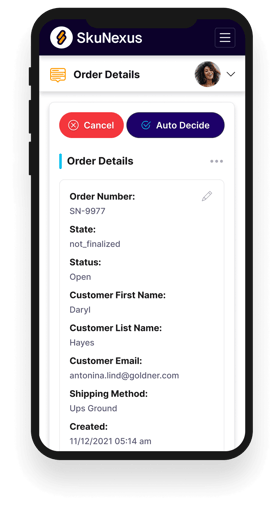
See How SkuNexus Transforms Inventory, Orders, and Fulfillment
- Say goodbye to stock issues with real time inventory tracking
- Make shipping and handling a breeze with our automated system
- Easily manage orders from all your channels in one place