
Shopify Fulfillment Operations
Fulfillment priority in Shopify isn't just a set-it-and-forget-it system, it's a living business rule that plays a decisive role in speed, cost, and customer satisfaction. For merchants with more than a single warehouse or channel, understanding how Shopify determines "who ships what, from where, and when" is central to avoiding cost overruns, missed delivery promises, and operational headaches. This guide cuts beneath the user interface to explain, at a conceptual and operational level, how fulfillment priority should be managed, how it interacts with inventory and networks, and what best practices set advanced Shopify operations apart.
Key Takeaways
-
Shopify fulfillment priority is a dynamic business rule that determines which locations or methods fulfill each order, directly impacting speed, cost, and customer satisfaction.
-
Establishing the right fulfillment priority can help merchants balance shipping speed and cost, reducing operational inefficiencies and split shipments.
-
Regularly reviewing and updating Shopify fulfillment priority settings is essential, especially after changes in warehouse networks or sales channels, to maintain efficiency and customer promises.
-
Misconfigured or outdated fulfillment priority can lead to orders shipping from non-ideal locations, increased costs, unintended split shipments, and team confusion.
-
Coordinating fulfillment priority strategies with inventory management and order management systems ensures that operational objectives and customer expectations stay aligned.
-
Shopify's native fulfillment priority tools have limitations for complex, multi-node or multi-channel operations, prompting advanced businesses to seek more robust solutions.
What Fulfillment Priority Means in Shopify
Fulfillment priority, in the Shopify ecosystem, is the strategic logic that determines the order in which locations, warehouses, or fulfillment methods are considered for each order. It's not just a matter of picking the nearest warehouse or the one with the most inventory. Instead, it's a sequence of business rules guiding which fulfillment node is used first, second, and so on, an operational backbone for merchants managing stock in multiple locations or working with various distribution methods.
Why Fulfillment Priority Matters for Speed and Cost
The way fulfillment priority is established can make or break customer experience and profitability. Prioritizing nearby warehouses might favor fast delivery, but sometimes the fastest option isn't the cheapest, especially if last-mile delivery surges in cost. Conversely, pushing high-volume, lower-cost nodes first could delay delivery to customers at the edge of your network. The trade-offs between shipping speed and cost ripple directly into your net margins, customer reviews, and retention rates. When priorities are thoughtfully set, both speed and cost can be balanced: when neglected, orders may zigzag across regions, incurring higher expenses and longer lead times.
How Priority Interacts With Locations and Methods
Shopify's fulfillment priority doesn't just apply across different addresses, it orchestrates between physical warehouses, 3PLs, retail stores, and any other fulfillment-capable location in your network. It's also used to rank fulfillment methods that may vary by channel or geography. For instance, you could favor in-store pickup over shipped fulfillment in certain regions, or deprioritize certain 3PLs if they don't support same-day cutoffs. The system attempts to fulfill each order from the top-ranked option, cascading down to backups if inventory or other criteria aren't met. This dynamic ranking is essential for scaling operations without losing sight of customer expectations or operational efficiency.
Core Concepts Behind Fulfillment Priority
Understanding what drives Shopify's fulfillment priority logic is key for effective operations, especially as networks expand or customer promises get more ambitious.
Ranking Locations and Methods at a High Level
At its core, fulfillment priority is a ranking table: Shopify moves top-down, checking if the highest-priority location or method can fulfill the order, then proceeding to the next if not. The priority order can incorporate physical proximity, inventory depth, carrier relationships, cost efficiencies, and even customer promise (such as next-day or scheduled delivery windows). Deciding which variable matters most for the current business strategy is critical.
Balancing Proximity, Cost, and Split Shipments
It's rare that a single node will always be the ideal choice for every customer and every SKU. Sometimes the closest option carries inventory, but at a higher shipping cost. Other times, inventory is spread thin, forcing Shopify to split a single order across multiple locations. These split shipments nearly always increase costs, both due to multiple shipments and increased internal handling. For example, fulfilling a two-line order from two nodes could double the shipping expense, turn a single tracking number into several, and increase chances for mistakes. Merchants must weigh proximity against cost, and both against the customer's experience of receiving everything in one box.
How Priority Settings Influence Fulfillment Decisions
The actual fulfillment decisions are always a result of how priorities have been architected in Shopify's settings. If a business sets a high-volume, central warehouse as the top priority, most orders will flow through there, even if that means packages make inefficient cross-country journeys. Conversely, prioritizing by proximity can drain satellite or retail locations, causing out-of-stocks where you'd prefer to maintain display inventory. These settings ripple outward, impacting not only order routing, but reorder triggers, inventory planning, and eventually, the bottom line. It's essential that operational leaders understand the hierarchy, because even slight misalignments can cascade into significant workflow friction.
Operational Realities of Managing Fulfillment Priority
The day-to-day management of fulfillment priority is less about theory and more about living with the consequences of business rules during real operations.
Adjusting Priorities as Networks and Channels Grow
Growth brings complexity. As a Shopify store adds fulfillment nodes, new warehouses, retail locations, or external 3PLs, existing priorities quickly become inadequate. What worked for a single-country setup might cause chaos in an international model. It's not uncommon for settings to lag behind physical changes: A new location is opened, but it sits at the bottom of the priority tree, invisibly increasing costs or lead times, and no one notices until there's a spike in exceptions. Merchants must regularly review their configuration, especially after territory or channel expansions, to ensure that newly added locations slot into the sequence in a way that aligns with both business outcomes and network realities.
Conflicts Between Operational Needs and Default Priorities
Sometimes the operational team's reality diverges from what the fulfillment priority logic dictates. Maybe default priorities favor a 3PL, but a warehouse team is better prepared for seasonal spikes. Or, internal teams might want to buffer inventory at display-heavy retail nodes, while business rules are set to drain them for e-commerce orders. These conflicts manifest as lost sales, increased transfers, or team frustration. Awareness of these tensions is vital, otherwise, hard-wired rules make it difficult to spot and fix unnecessary trade-offs in the fulfillment network.
Impact of Out-of-Date or Misaligned Priority Rules
Out-of-date fulfillment priority settings are an operational slow leak. Teams may continue to operate based on old logic, leading to chronic issues like repeated split shipments, backorders, or higher overall costs. This misalignment doesn't just affect warehouse teams: it can ripple to customer support (fielding questions about split packages), finance (reconciling excessive shipping spend), and even to executive leadership if delivery promises start slipping. Keeping fulfillment priority rules up to date, and reviewed in the context of real performance metrics, is a non-negotiable for operationally mature Shopify brands.
Common Fulfillment Priority Problems in Shopify
Misconfigurations in fulfillment priority settings can introduce some of the most persistent and aggravating operational challenges in Shopify-based businesses.
Orders Shipping From Non-Ideal Locations
One of the most prevalent issues arises when orders are consistently shipped from warehouses far from the destination, even though closer nodes being available. This often stems from an outdated or overly simplistic fulfillment priority sequence, where a legacy warehouse sits at the top of the pile. The result: higher shipping costs, longer delivery times, and customer disappointment. Spotting and rectifying these non-ideal routings requires close monitoring of both operational data and the evolving business context.
Unintended Split Shipments Due to Priority Settings
Unintended split shipments are not merely a nuisance, they represent a real drain on profitability and a risk to customer loyalty. This problem typically surfaces when two or more fulfillment nodes are equally prioritized or when inventory thresholds aren't aligned with order profiles. Shopify may allocate portions of a single order to multiple locations simply based on the sequence, rather than finding the lowest total cost or fewest packages. Not only does this increase cost, but it complicates tracking, returns, and customer support workflows.
Confusion Across Teams About How Priority Works
Poor documentation or a lack of training can leave operations, warehouse, and customer service teams out of sync about how and why orders are routed a certain way. When teams can't predict or explain fulfillment behavior, frustration ensues. It's not uncommon for support teams to have to manually chase down split packages, or for warehouse staff to question why priority decisions don't match on-the-ground realities. Clear, cross-team alignment on how fulfillment priority works is essential for smooth operations and effective troubleshooting.
Best Practices for Fulfillment Priority Strategy
Effective fulfillment priority management isn't just about initial setup, it's about a living, continually reviewed strategy that evolves alongside the business.
Defining Clear Objectives for Priority Rules
Start by crystallizing the objectives behind the business's fulfillment priority rules. Should the operation minimize cost, accelerate delivery, or keep retail stores flush with inventory? Should certain SKUs always ship from dedicated nodes (like perishable goods or regionally exclusive products)? Leadership must articulate these priorities so operational decisions are tethered directly to strategic goals rather than historical habits.
Reviewing and Updating Priorities Regularly
The most successful Shopify operations schedule regular audits of their fulfillment priority logic, especially after network changes or promotional calendar shifts. KPIs like rate of split shipments, on-time delivery, and shipping cost-per-order should be monitored as feedback signals. When metrics start drifting, priority settings should be re-examined and adjusted to realign with evolving objectives and realities.
Coordinating Priority Settings With Inventory and OMS Behavior
No fulfillment strategy exists in isolation. Fulfillment priority must be coordinated with inventory positioning strategies and the order management system (OMS). If inventory is relocated to optimize for proximity, but the priority tree doesn't reflect the move, the intended benefits are lost. Similarly, if the OMS is configured for certain SLAs but fulfillment priorities don't support them, customer promises will be missed. Ongoing, cross-functional dialogue between operations, IT, and merchandising is critical to maintain alignment across all systems.
Limitations of Shopify’s Native Fulfillment Priority Controls
Shopify's out-of-the-box tools for setting fulfillment priorities are useful, but they present some practical limitations for scaling or highly complex operations.
Lack of Highly Granular Rule Logic
Native Shopify fulfillment priority doesn't support the kind of multi-factor, condition-based routing logic that more advanced OMS or ERP systems offer. For example, it can't easily express conditional priorities like, "If order contains SKU X, always ship from location Y unless inventory drops below threshold Z." This means businesses with nuanced needs may find themselves resorting to manual workarounds or facing sub-optimal outcomes until they invest in a more sophisticated solution.
Challenges in Complex Multi-Node or Multi-Channel Setups
Merchants operating many nodes, or selling through various channels (e.g., DTC, B2B, marketplace), can quickly hit the functional ceiling of Shopify's priority system. While the ranking system works well for straightforward networks, it struggles when merchants want to create channel-specific priorities, handle regional compliance, or optimize for unique fulfillment SLAs per channel. Growing businesses should be aware of these boundaries up front to plan for future upgrades or system integrations.
Next Steps and Related Guides
Understanding and actively managing fulfillment priority is foundational to scalable, profitable Shopify operations. For those looking to deepen their expertise in Shopify fulfillment, from partial fulfillment logic to warehouse assignment and more, refer to the Shopify Fulfillment Operations overview for additional strategies, edge cases, and tactical advice tailored to complex fulfillment networks.
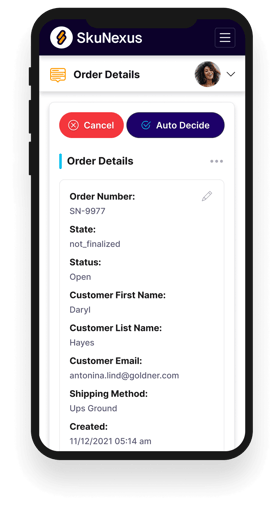
See How SkuNexus Transforms Inventory, Orders, and Fulfillment
- Say goodbye to stock issues with real time inventory tracking
- Make shipping and handling a breeze with our automated system
- Easily manage orders from all your channels in one place