Shopify Dropshipping Operations
Shopify has redefined how merchants approach inventory and fulfillment, but dropshipping remains a unique operational beast within its ecosystem. Rather than handling stock on-premise or through traditional 3PLs, Shopify dropshipping operations rely almost entirely on external suppliers. This model promises flexibility, reduced overhead, and rapid SKU expansion, but introduces an entirely new set of operational realities and risks. Understanding how Shopify's backend supports, and at times constrains, effective dropshipping is essential for anyone considering or managing this fulfillment approach. This sub-pillar dives deep into the conceptual flow, controls, challenges, and limitations shaping Shopify dropshipping operations today.
Key Takeaways
-
Shopify dropshipping operations depend on external suppliers for fulfillment, offering flexibility but introducing unique operational challenges.
-
Effective Shopify dropshipping requires strong inventory sync processes, regular supplier performance monitoring, and clear order communication.
-
Supplier reliability is critical in dropshipping, as delays or stock discrepancies can negatively impact customer experience and brand reputation.
-
Merchants must proactively manage returns, customer support, and quality control since these areas are often more complex in a dropshipping model.
-
Shopify's native systems offer limited automation for multi-supplier coordination and real-time inventory sync, making third-party apps and manual monitoring important for smooth operations.
What Are Shopify Dropshipping Operations?
How Dropshipping Fits Into Shopify's Operations Model
Shopify dropshipping allows merchants to sell goods without holding inventory, leveraging suppliers as the backbone for fulfillment. Instead of routing orders to internal warehouses or established 3PLs, orders are forwarded directly to suppliers, who ship products straight to the end customer. Within Shopify's ecosystem, this model sits alongside traditional in-house fulfillment and external warehousing, but with its own operational logic focused on coordination rather than physical handling.
This layer of abstraction between store and stockroom changes how Shopify merchants must think about inventory control, order management, and fulfillment timelines. Every sale triggers a relay between systems: Shopify records the order, but fulfillment is dictated by the supplier's processes, not the merchant's own. The result is a system optimized for scale and variety, but also one dependent on the capabilities and reliability of a network of external partners.
Why Dropshipping Requires Distinct Operational Controls
Dropshipping isn't just another shipping choice in Shopify: it's an operational paradigm with its own management demands. Merchants face unique challenges over visibility into inventory, delays in communication, and a loss of direct control over quality. Even basic processes like confirming stock availability or handling returns involve supplier co-ordination and, often, additional manual steps.
This means Shopify dropshipping operations need their own system of checks, balances, and escalation paths. Store owners and operations teams must monitor not just order status, but supplier responsiveness, fulfillment SLAs, and inventory accuracy. Without such controls, dropship operations quickly encounter systemic issues, mis-shipped goods, stock-outs, or subpar customer experiences, that aren't as prevalent with owned inventory or in-house fulfillment.
How Shopify Handles Dropship Order Flow (Conceptual)
Understanding Supplier Fulfillment Flow
In a typical Shopify dropshipping setup, the merchant never holds or touches the product. When an order is placed, Shopify's system tags it for dropship fulfillment. Conceptually, the order details are then forwarded, via email, CSV, or integrations, to the supplier responsible for sourcing and shipping the item.
Once the supplier receives the order, they handle picking, packing, and shipping, eventually returning tracking data to the merchant for customer communication. The merchant, meanwhile, is responsible for overseeing this relay, checking status, and resolving exceptions, all while never directly seeing the product.
How Shopify Processes Dropship Orders Internally
From Shopify's perspective, dropship orders pass through the same initial order management system as all others. The backend recognizes which line items are set for supplier-driven fulfillment, flags those orders or items, and updates their status as suppliers confirm shipment. But, the actual forward of order data to suppliers and the receipt of fulfillment updates often relies on third-party extensions or manual workflows, Shopify itself is mostly a conduit, not a coordinator, for these external handoffs.
The operational difference is subtle but critical: Shopify empowers merchants to mark orders as fulfilled once the supplier shipment details are received, but does not natively synchronize or automate the communication loop. Merchants must maintain vigilance over timing, confirmation, and accuracy, since incomplete or delayed updates can lead to dissatisfied customers and operational blindspots.
Where Dropshipping Differs From Standard Fulfillment
While standard fulfillment flows prioritize speed and internal accountability, dropshipping hinges on third-party reliability. Unlike fulfillment from owned or 3PL warehouses, where inventory and delivery are managed under a merchant's own control, dropship orders introduce delays and risks tied to supplier systems, their inventory accuracy, and their shipping processes.
The consequences are practical: Dropship orders may not ship as quickly, and their statuses may be less visible during transit. Exceptions, like lost packages, quality complaints, or out-of-stock notifications, often take longer to resolve. This makes proactive monitoring and transparent customer communication much more critical for dropshipping operations than for standard fulfillment.
Key Components of Dropshipping Operations
Inventory Sync Concepts With Suppliers
A foundational component in dropshipping is maintaining up-to-date knowledge of supplier inventory, but unlike in-house fulfillment, merchants rarely have perfect visibility. Inventory data is typically synchronized at intervals rather than in real time, and discrepancies are common. A supplier might report stock-outs only after an order is placed, leading to customer-facing cancellations or backorders.
Conceptually, effective dropshipping operations depend on establishing reliable data feeds or periodic stock checks. While automation helps, there's always a tension between the speed of marketplace sales and the cadence of supplier updates. Merchants must plan for this operational drift, building processes to monitor, reconcile, and escalate inventory mismatches with minimal customer impact.
Order Forwarding Logic (Conceptual)
When a Shopify dropship order is triggered, the merchant must communicate all relevant order, shipping, and customer information to the supplier. This can follow several modalities, email, export, integrated app workflows, but the operational throughline is that accuracy, timeliness, and clarity in forwarding are non-negotiable.
The upstream handoff is only part of the equation. Merchants must also close the loop, ensuring suppliers confirm receipt and update on fulfillment status. Unlike in-house picking or automated warehouse flows, this back-and-forth forms the backbone of operational effectiveness in a dropship model. Where suppliers lack digital sophistication, merchants must compensate with more rigorous controls or manual checks.
Managing Returns in a Dropship Model
Returns introduce special friction into dropshipping operations. Because inventory never passes through the merchant's hands, orchestrating returns means relying on suppliers to process, inspect, and potentially restock returned goods. Merchants often have to communicate detailed instructions to customers about where to send returns and then coordinate with suppliers about receipt and credit.
If suppliers are slow or inflexible with returns, customer experience can take a hit. Some merchants build buffer stock or handle returns centrally for high-risk SKUs, but in most dropshipping models, the return process is decentralized and dependent on supplier policy. Operationally, this requires a clear process map, active follow-up, and a willingness to intervene when customers or suppliers deviate from expectations.
Operational Realities of Managing Dropshipping
Supplier Reliability Challenges
The entire dropshipping approach on Shopify is only as strong as its supplier network. Merchants must trust that suppliers will process orders quickly, maintain inventory honesty, and ship as promised. In practice, suppliers may experience unexpected outages, shipment delays, or breakdowns in communication.
Because these risks are compounded by distance, often geographic, time-zone, and language, merchants deploying dropshipping at scale need deep operational rigor. This means issuing clear supplier SLAs, regularly auditing supplier performance, and building a rapid response protocol when something goes wrong.
Shipping Time Complexity
Shipping estimates in dropshipping are often less predictable than with in-house fulfillment. Suppliers may quote fast fulfillment times but fail to account for production, sourcing, or cross-border complexities. Also, customers ordering multiple items may receive packages piecemeal from different locations, creating confusion and additional support tickets.
Merchants must set customer expectations consciously, offering transparency about possible lead times, and managing exceptions proactively. Advanced merchants sometimes buffer estimated times, but there is no substitute for supplier selection and monitoring when it comes to managing the shipping time variable.
Customer Support Burdens
Dropshipping's operational opacity often translates into higher customer support loads. Merchants field more inquiries about order status, product quality, or delayed fulfillment, many of which must be relayed back-and-forth with supplier contacts. The lack of supply chain visibility places renewed emphasis on the support team's follow-up skills, as well as their ability to translate supplier updates into actionable customer communication.
To manage these extra support demands, leading Shopify dropshippers create templated responses, internal escalation guides, and preemptive customer updates. Yet, with each additional supplier in the mix, the coordination challenge grows, making simplicity of the operational stack a competitive advantage.
Common Dropshipping Operational Problems
Stock Availability Misalignment
Even with proactive inventory sync policies, it's common for Shopify dropshippers to sell items that are already out of stock with their suppliers. Supplier stock feeds may lag by hours or days, or fail to reflect rapid sell-through on other channels. Merchants must prepare for a non-zero rate of after-sale inventory exceptions, where they have to notify customers about unshippable items or offer alternatives.
Stringent supplier relationships, advanced notification tools, or conservative product selection can help, but operational misalignments remain a fixture of the dropshipping landscape. Merchants need a defined playbook for handling stock outs that balances speed, transparency, and brand reputation.
Slow Fulfillment From Suppliers
Supplier-driven fulfillment exposes shops to delays that are often outside their control. Vendors might take longer than promised to process, pack, or hand off shipments to carriers. This lag is rarely visible until customers begin to complain or orders visibly fall outside expected SLAs in Shopify's reports.
Leading dropship operations compensate by closely tracking supplier fulfillment data and holding regular performance reviews. They also build slack into customer-facing ETAs, but too much slack risks losing sales to competitors with faster, more reliable delivery commitments.
Quality Control Inconsistencies
When shipping is supplier-driven, quality assurance is largely delegated as well. Inconsistent product standards, packaging, or branding can erode customer trust and trigger returns. Reshipments or refunds further erode margin and complicate operations, particularly when resolution depends on supplier willingness to accept responsibility.
Merchants with persistent quality issues often vet suppliers more aggressively, set stricter onboarding criteria, or introduce periodic product spot checks. Eventually, but, full control isn't feasible in dropship models, so operational focus shifts to minimizing exposure, collecting issue data, and actively managing supplier relationships.
Limitations of Shopify’s Dropshipping Model
Lack of Native Multi-Supplier Workflows
While Shopify supports basic dropshipping setups, its native backend is not designed for complex multi-supplier orchestration. Merchants working with several vendors often experience friction splitting orders, synchronizing lead times, or maintaining clear transactional visibility across suppliers. Extensions and apps bridge some gaps, but layering multiple systems adds operational overhead.
In scenarios where orders span multiple suppliers, merchants encounter workflow blind spots and manual intervention requirements. This is where the limitations of Shopify's out-of-the-box dropshipping model become most apparent, especially at scale or in businesses needing true multi-vendor coordination. For a deeper exploration of these routing complexities, see the Dropship Routing Rules guide.
Challenges With Real-Time Inventory Sync
Real-time inventory data is the holy grail for dropship operations, but Shopify's native architecture does not enforce or standardize it for supplier links. Inventory sync often happens via periodic imports, API connections, or manual updates, each with potential for latency, errors, or disconnects.
As a result, stock mismatches and overselling are perennial risks. Merchants investing in robust, automated inventory feeds can partially close the gap, but no system is fully immune to disrupted syncs. A fuller discussion can be found in the Supplier Inventory Sync guide.
Next Steps and Related Guides
Shopify dropshipping operations are a powerful lever for scalable growth, but they place heightened demands on merchant-supplier coordination, real-time data access, and operational agility. Merchants looking to fine-tune or expand their dropshipping strategy should see Shopify's dropshipping approach in the broader context of fulfillment, especially compared to internal and third-party warehouse-based models. For an in-depth tour of Shopify's wider fulfillment and inventory strategies, visit the Shopify Inventory & Fulfillment Operations overview.
For those focused on advancing their dropshipping operational stack, workflow-specific insights can be found in the following supporting guides:
Tightening the supplier integration layer, reinforcing order flow governance, and developing pragmatic response plans for dropship-specific challenges will remain the critical levers for operational success in the evolving Shopify ecosystem.
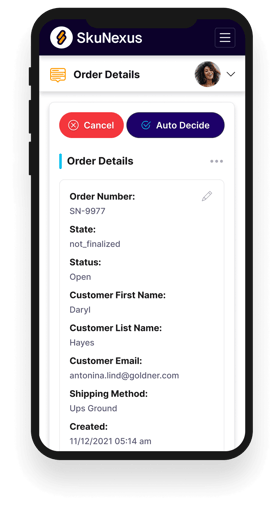
See How SkuNexus Transforms Inventory, Orders, and Fulfillment
- Say goodbye to stock issues with real time inventory tracking
- Make shipping and handling a breeze with our automated system
- Easily manage orders from all your channels in one place