Packing errors in Shopify fulfillment might seem inevitable, but their true operational cost often goes underestimated, until the returns pile up, customer complaints escalate, and shipping budgets spiral. Behind every parcel that leaves a warehouse, there's an intricate dance of systems, people, and processes. When that choreography runs off-beat, mistakes slip into the hands of customers, affecting brand reputation and draining profit. This article examines the most frequent packing mistakes faced by Shopify merchants, explores why these errors happen, and lays out field-tested solutions for minimizing them. Whether scaling from a storefront to a multi-user operation or simply looking to drive error rates down, this is the guide to understanding, catching, and preventing packing mishaps before they impact the bottom line.
Key Takeaways
-
Packing mistakes in Shopify fulfillment lead to hidden costs, including increased returns and customer dissatisfaction.
-
The most common Shopify packing mistakes are incorrect items or quantities, inadequate packaging materials, and missing inserts or documents.
-
Root causes of packing errors include poor station organization, lack of verification steps, and insufficient staff training.
-
Packing mistakes damage brand reputation and drain productivity due to increased support tickets and operational disruptions.
-
Implementing clear checklists, visual aids, and scanning verification can significantly reduce Shopify packing mistakes.
-
Shopify’s native fulfillment tools have QA limitations, so integrating additional processes or tools is often necessary for error reduction.
Common Packing Mistakes in Shopify Fulfillment Operations
Why Packing Errors Are So Costly
The cost of a single packing mistake often ripples far beyond a one-time shipping label. Every incorrect order sets off a chain reaction: returns, reshipping, internal rework, and sometimes even the loss of a customer altogether. Mistakes cost shipping both ways, introduce manual labor to process returns, and might result in the need for expedited replacements to preserve customer goodwill. In some categories, think perishable or regulated goods, the downstream costs of a packing slip can escalate rapidly, especially when compliance issues are triggered. The more mistakes go unchecked, the more the cost of correction rises, not just in dollars but in lost trust and increased overhead.
How Packing Mistakes Show Up in Day-to-Day Operations
Operationally, packing mistakes surface in several stubborn ways: sudden spikes in support tickets, anxious inquiries about missing products, and the telltale increase in reshipment requests. Sometimes, the immediate sign is a backlog in the returns area or an uptick in damaged items reaching customers due to poor packaging. It's common for teams to discover these mistakes only after customers reach out, by then, remediation options become more expensive and time-consuming. For high-volume Shopify operations, even a 1% packing error rate can translate to hundreds or thousands of orders every month that require recovery efforts, draining productivity and eroding service standards.
Typical Types of Packing Mistakes
Wrong Items or Incorrect Quantities Packed
Perhaps the most visible mistake, picking the wrong item or sending the wrong quantity, leads to immediate dissatisfaction and logistical headaches. In busy operations, misreads of packing slips, unclear labeling, or over-reliance on memory drive this error. Without proper cross-verification, a packed order might contain an alternative SKU, triggering a return and reshipment cycle. Bulk orders or kits further compound this risk if all bundle components aren't visually checked and confirmed.
Inadequate or Incorrect Packaging Materials
Using the wrong packaging material isn't just a branding faux pas: it creates a risk of product damage, increased shipping costs, and potential carrier surcharges. Items may show up crushed because the packaging is too flimsy, or lightweight products might get shipped in oversized boxes, leading to dimensional weight charges. Sometimes, hazardous or fragile items are packed without appropriate cushioning or labels, making the entire delivery noncompliant with carrier or regulatory rules.
Missing Inserts, Documents, or Branded Elements
Merchants frequently build customer loyalty through personalized touches, handwritten notes, special coupons, or product instructions. Missing these inserts breaks the intended unboxing experience. Required documents, like customs forms or instructions, when absent, can lead to shipping delays or legal headaches for international orders. Inconsistent execution often traces back to a lack of standardized packing checklists or failure to integrate customized packing requirements into daily workflows.
Root Causes Behind Packing Mistakes
Poor Station Organization and Workflows
When a packing station is cluttered or items are stored inconsistently, it increases the risk of picking errors and delays. Operators might rely on visual cues or ad-hoc memory rather than a controlled flow, blank shipping labels commingle with used ones, and high-frequency products are mixed in with seldom-picked items. Without dedicated zones for specific order components, mix-ups and omissions are almost guaranteed. In peak volume situations, the bottleneck intensifies, amplifying the frustrations and error rates of busy team members.
Lack of Verification or QA Steps
Many Shopify fulfillment environments lack embedded quality assurance steps. In these cases, there is no forced pause for the packer to verify the picked SKU or count: orders move from picking to packing unchecked. Rushed workflows further erode this vital stage, particularly when the team is pressured to meet shipping cut-off times. In environments without a second set of eyes or a secondary scan, it becomes too easy for a simple error to escape detection and ship to the customer, only to be discovered after the fact.
Insufficient Training or Ambiguous Instructions
A surprising number of packing errors stem from inadequate employee onboarding. New or temporary staff are left to interpret ambiguous instructions or outdated SOP binders. Specifics like the correct way to bundle products, when inserts are mandatory, or how to double-check labeled SKUs are glossed over. Over time, small misunderstandings aggregate into systemic error patterns that data audits typically reveal only after significant operational pain.
Operational Impact of Packing Mistakes
Returns, Replacements, and Extra Shipping Costs
The most immediate operational cost of packing mistakes is the double (or occasionally triple) shipping spend they create. Every defective shipment might require a pre-paid return label, a replacement shipment, and sometimes expedited fees to meet customer expectations. Few carriers forgive errors, so the financial burden stays with the merchant.
Customer Experience and Brand Perception Damage
Negative shipment experiences rarely confine themselves to one-time disappointment. Persistent packing errors erode consumer trust, leading to negative reviews and a reluctance to reorder. For stores that invest heavily in unboxing or personalized touches, missed details or incorrect contents can undermine entire marketing campaigns. In cutthroat ecommerce verticals, word of mouth can amplify these mishaps far wider than any single customer interaction.
Internal Firefighting and Lost Productivity
Behind the scenes, every packing error triggers a series of distractions. Customer service teams spend more time troubleshooting problems instead of driving value-added interactions. Warehouse managers must redirect labor to fix past mistakes, slowing down current fulfillment. The compounding effect is lower productivity, a persistent sense of firefighting, and diversion from process improvements that actually reduce future error rates.
Best Practices to Reduce Packing Errors
Clear Checklists and Visual Aids at Stations
One of the simplest yet most overlooked controls is the use of clear, step-by-step checklists at every packing station. Laminated sheets, wall posters, or digitally displayed reference lists keep the process front-of-mind. For complex kits, visual aids such as photographs of completed packs or diagrams map exactly what should go in each box. When each stage is checked or initialed, it creates accountability and makes it easier to diagnose where a miss occurred.
Using Scanning or Confirmation Steps Wisely
Embedding scanning or digital confirmation checkpoints reduces the reliance on memory. Whenever possible, a barcode scan or digital checklist should precede sealing a box, not just at pick. Scanning the packing slip, each item, or even insert barcodes acts as a guardrail, flagging discrepancies in real time. When these steps are built into the workflow (but not so onerous they create friction), error rates plummet. Edge cases, like items with very similar SKUs, benefit most from forced digital verification.
Continuous Improvement Based on Error Data
Savvy operations collect and analyze error data, not just to audit but to refine workflows. Systematically logging packing mistakes, characterizing by type, shift, or SKU, enables targeted retraining and iterative process tweaks. Feedback loops with packers can highlight nuanced pain points, such as certain items getting misplaced or frequent insert oversights, allowing floor managers to revise checklists or signage. Periodic reviews and cross-team debriefs keep best practices current and relevant to fast-evolving fulfillment needs.
Limitations of Shopify’s Native Support for Preventing Packing Mistakes
Gaps in Native QA and Verification Workflows
Shopify's default fulfillment tools offer only limited support for packing verification. The platform is strong in order aggregation and basic fulfillment status but leaves QA to manual checks or external integrations. There's no built-in mechanism to force two-step verification, require digital sign-off at packing, or prevent an order from being marked fulfilled if a checklist hasn't been completed.
Where Additional Tools or Processes Are Typically Needed
Operations seeking high accuracy rates quickly bump up against these native limitations. Workarounds often include custom checklists, third-party integrations, or homegrown documentation to bridge the gap between what Shopify can track and what robust workflows require. Merchants building scale or handling products needing regulatory compliance frequently carry out supplemental training, dedicated QA personnel, or lightweight digital controls layered onto Shopify's core fulfillment views. Recognizing early where Shopify's out-of-the-box support stops can prevent costly surprises as volume scales.
Next Steps and Related Guides
Packing mistakes are an inevitable risk in even the most streamlined Shopify operations, but their frequency and impact can be sharply reduced with pragmatic controls and a relentless focus on process quality. Merchants ready to overhaul error-prone workflows should start by auditing their current error data, mapping physical station layouts to identify bottlenecks, and scheduling regular team huddles on error scenarios. For a detailed overview of broader fulfillment flows and how packing controls fit into the full lifecycle, see the Shopify Picking & Packing Workflows overview, which provides foundational building blocks and connects error-reduction strategies across the entire fulfillment chain.
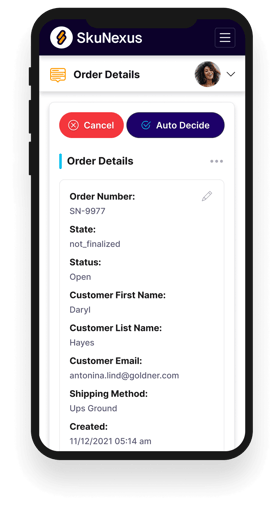
See How SkuNexus Transforms Inventory, Orders, and Fulfillment
- Say goodbye to stock issues with real time inventory tracking
- Make shipping and handling a breeze with our automated system
- Easily manage orders from all your channels in one place